
 Jia Lissa
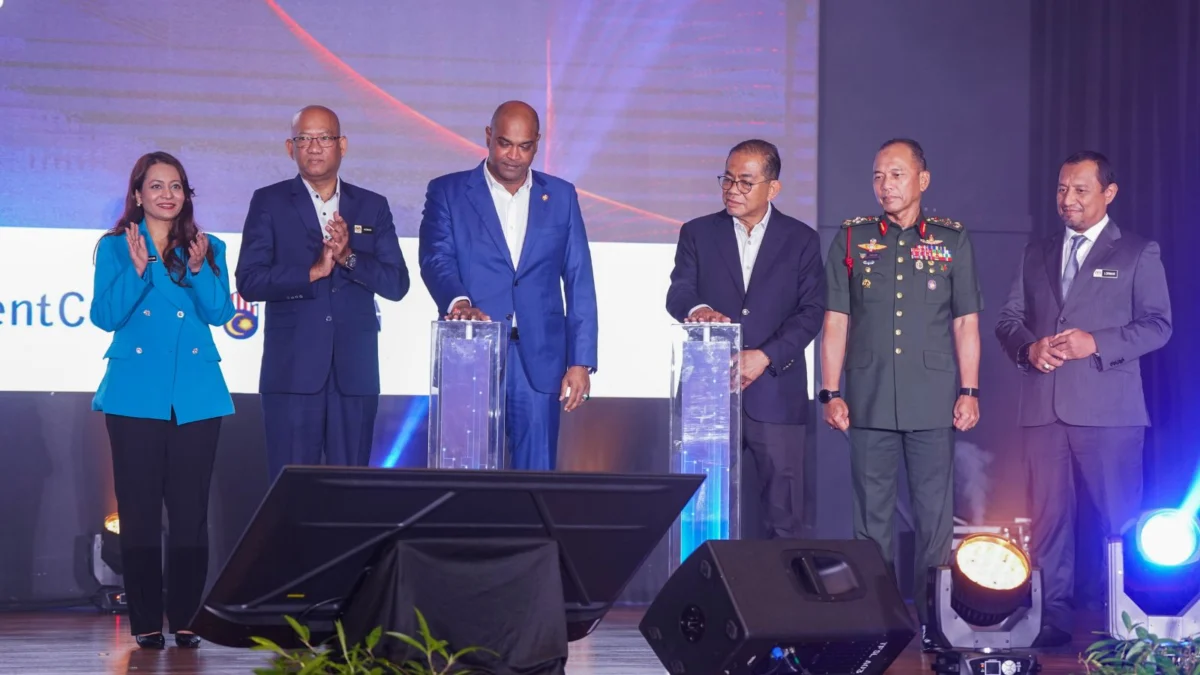
KUALA LUMPUR – In a strategic move designed to bolster Malaysia’s skilled workforce while honoring the service of its military personnel, the Ministry of Human Resources (KESUMA) and the Ministry of Defence (MINDEF) have formalized a comprehensive partnership to revolutionize the transition from military life to civilian employment.
The cornerstone of this collaboration is the expansion of the MyBakat Veteran initiative, a program specifically engineered to align the specialized skills of the Malaysian Armed Forces (ATM) with the evolving demands of the modern industrial and civil sectors. By establishing a structured, multi-agency ecosystem, the government aims to ensure that no veteran is left behind in the nation’s pursuit of high-income status and economic resilience.
I. Main Facts: A Strategic Alliance for Human Capital
On Wednesday, 14 October, a Memorandum of Understanding (MoU) was signed between KESUMA and MINDEF, marking a pivotal shift in how Malaysia manages its retiring military talent. The initiative, coordinated by Talent Corporation Malaysia (TalentCorp), sets an ambitious target: to reach and empower more than 15,000 ATM personnel and veterans by the year 2030.
The agreement focuses on three core pillars:
- Early Career Preparation: Commencing transition protocols at least two years prior to a soldier’s retirement.
- Skills Mapping and Recognition: Translating years of military experience into industry-recognized certifications.
- Direct Employment Support: Leveraging a network of government agencies and private sector partners to facilitate immediate job placement.
The MoU was signed by Datuk Azman bin Mohd Yusof, Secretary-General of KESUMA, and Datuk Lokman Hakim bin Ali, Secretary-General of MINDEF. The ceremony was witnessed by the Minister of Human Resources, Dato’ Sri Ramanan Ramakrishnan, and the Minister of Defence, Dato’ Seri Mohamed Khaled Nordin, signaling the high-level political will behind the project.
II. Chronology: From Service to Civil Society
The transition from military to civilian life has traditionally been a period of uncertainty for many ATM personnel. Each year, between 5,000 and 7,000 members of the armed forces reach their retirement age, often in their early 40s—a stage of life where they remain highly productive and capable.
Historically, the transition process was often reactive, with personnel seeking training only after their service ended, or undergoing generic vocational training that did not necessarily match the immediate needs of the labor market.
The Evolution of MyBakat Veteran:
- The Pre-MoU Phase: Initial assessments identified a gap between military competencies (such as discipline, logistics, and technical engineering) and the formal certifications required by the Malaysian private sector.
- The October 14 Milestone: The signing of the MoU formalizes the integration of KESUMA’s labor market intelligence with MINDEF’s personnel management.
- The 2024-2030 Roadmap: The initiative will now scale up, utilizing TalentCorp’s "MyMahir" platform and a network of 18 Future Skills Talent Councils (FSTC) to ensure that the training provided is future-proof and industry-driven.
III. Supporting Data: The Mechanics of Transition
To understand the scale of this initiative, one must look at the demographic and economic data driving the policy. With 15,000 veterans targeted for the next six years, the program addresses a significant portion of the retiring military population.
The Two-Year Window
One of the most innovative aspects of MyBakat Veteran is the two-year lead time. Rather than waiting for the final months of service, career preparation—including competency profiling and psychological transition support—begins 24 months before the official retirement date. This allows personnel to bridge any "skills gaps" while they are still under the umbrella of the ATM.
Skills Recognition Pathway
A major hurdle for veterans has been the lack of formal paperwork for skills learned in the field. The newly launched Skills Recognition Pathway, developed with the Skills Development Department (JPK), addresses this directly.
- NOSS Mapping: Military training modules are being mapped against the National Occupational Skills Standards (NOSS).
- Certification: Eligible veterans can now obtain the Malaysian Skills Certificate (SKM) and Malaysian Skills Diploma (DKM) based on their prior experience, significantly increasing their employability in technical sectors.
- Pilot Groups: The initial phase focuses on three critical ATM groups:
- The Infantry Corps (Leadership and logistics).
- The Royal Engineer Regiment (Technical and civil engineering).
- The General Services Corps (Education) (Training and development).
IV. Official Responses: A Shared Vision
The leadership of both ministries emphasized that this is not merely a social welfare program, but a vital economic strategy.
Dato’ Sri Ramanan Ramakrishnan, Minister of Human Resources:
"Developing Malaysia’s skilled workforce requires us to recognize the expertise that already exists within our borders. ATM personnel possess a unique blend of discipline and technical aptitude. Through MyBakat Veteran, we are ensuring these competencies are identified and strengthened through training guided by actual job market requirements. This is about drawing on our existing talent to support national competitiveness."
Dato’ Seri Mohamed Khaled Nordin, Minister of Defence:
"This collaboration reflects a fundamental shift in our approach. We are moving away from the old model of ‘training first, searching later.’ Instead, we are focusing on matching competencies with industry needs from the start. By drawing on the expertise of KESUMA’s agencies, we are establishing a more integrated career transition ecosystem that offers our veterans a dignified and prosperous second career."
V. The Ecosystem: A Multi-Agency Collaborative Framework
The success of MyBakat Veteran relies on a complex web of cooperation between various statutory bodies and departments.
- TalentCorp (Secretariat): Acts as the bridge between government and industry. Through its 18 Future Skills Talent Councils, TalentCorp identifies exactly which skills are in demand (e.g., in aerospace, electronics, or green technology) and feeds that information back to the training providers.
- PERHEBAT (Veterans Affairs Corporation): Remains the primary body for career transition training, but its curriculum will now be updated to align with KESUMA’s industry standards.
- SOCSO (Social Security Organization): Through the MYFutureJobs portal, SOCSO provides the technological backbone for job matching, connecting veterans with employers who value military backgrounds.
- JPK (Skills Development Department): Oversees the accreditation process, ensuring that the SKM and DKM diplomas awarded to veterans hold the same weight in the private sector as those from vocational colleges.
- HRD Corp: Will play a role in incentivizing employers to hire and further train veterans through various levy-based schemes and training grants.
VI. Implications: Why This Matters for Malaysia
The KESUMA-MINDEF initiative carries profound implications for the Malaysian economy and social fabric.
1. Solving the Middle-Management Talent Crunch
Many industries in Malaysia, particularly manufacturing and logistics, suffer from a shortage of middle-management talent who possess both technical knowledge and leadership experience. Veterans, who have managed platoons and complex logistical operations in high-pressure environments, are perfectly suited to fill these roles.
2. Enhancing National Productivity
By reducing the period of "frictional unemployment" (the time spent looking for a job after leaving the military), the government is ensuring that thousands of productive citizens remain in the workforce. This contributes directly to GDP and reduces the burden on social safety nets.
3. Professionalizing the Veteran Workforce
For too long, retired military personnel were often relegated to low-skilled security roles. MyBakat Veteran changes this narrative by professionalizing their transition, allowing them to enter high-value sectors such as telecommunications, heavy engineering, and the civil service.
4. Strengthening the Social Contract
Providing a clear, lucrative career path after service is a vital component of the social contract between the state and those who defend it. This initiative boosts morale within the current ranks of the ATM, knowing that their future is secure and their skills are valued by the nation they serve.
VII. Conclusion: The Road to 2030
The MoU signed on October 14 is more than just a document; it is a blueprint for a more inclusive and efficient labor market. By the year 2030, if the target of 15,000 veterans is met, Malaysia will have successfully integrated a small army of highly disciplined, certified, and tech-savvy professionals into its economy.
As the ATM Members’ Second Career Joint Working Committee begins its oversight, the focus now turns to implementation. The pilot programs for the Infantry, Engineers, and Education corps will serve as the testing ground for a system that could eventually become a global model for military-to-civilian transition.
In an era where "talent is the new oil," Malaysia is proving that its most valuable resource may well be the men and women who have already proven their dedication to the country on the front lines. Through MyBakat Veteran, their second act is set to be just as impactful as their first.


 Raul Delapena Setiawan

 Ammar Sabilarrohman

 Reynand Wu

 Iffa Jayyana

 Azzam Bilal Chamdy
 Sagoh

 Suro Senen
