
 Nila Kartika Wati
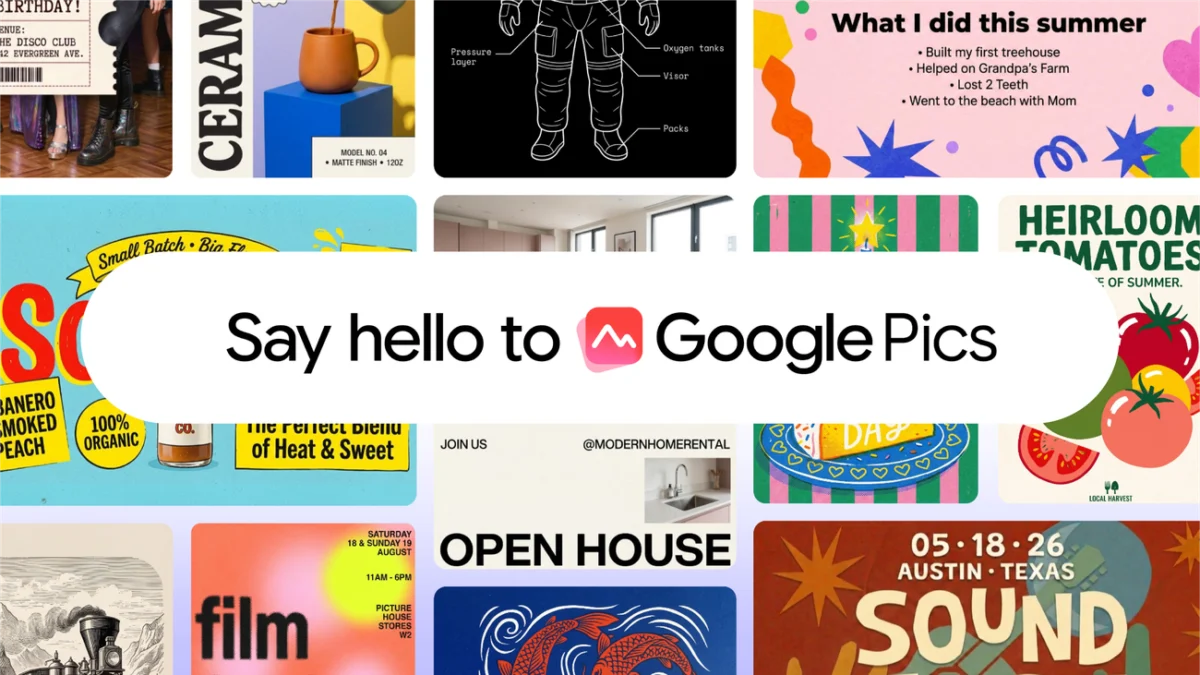
In a move that signals a profound shift in how professionals interact with visual content, Google has officially launched Google Pics, a comprehensive, AI-powered image generation and editing suite integrated directly into the Google Workspace ecosystem. By leveraging the proprietary "Nano Banana" generative model, Google aims to eliminate the friction between creative ideation and technical execution, allowing users to generate, refine, and manipulate high-fidelity imagery without ever leaving their document or presentation workflows.
The rollout, which begins immediately for Google AI Pro and Ultra subscribers as well as select Workspace business customers, marks a milestone in Google’s strategy to infuse generative AI into the daily habits of billions of users.
Main Facts: What is Google Pics?
Google Pics is not merely a standalone image generator; it is a multi-modal creative engine designed for precision. Unlike many early-generation AI image tools that offered "one-and-done" results, Google Pics focuses on iterative control. Users can generate original graphics from text prompts and then perform granular edits—such as adjusting lighting, changing object textures, or refining composition—using a suite of intuitive tools.
Key Capabilities:
- Nano Banana Integration: The core engine is built on Google’s latest Nano Banana model, optimized for high-speed, high-fidelity visual rendering.
- Iterative Refinement: Users are no longer tethered to their initial output. The platform allows for "in-painting" and "out-painting," enabling users to tweak specific elements of an image without regenerating the entire composition.
- Workspace Native: Perhaps the most significant feature is the elimination of "context switching." Users can generate an image within a Google Slide deck or a Doc, effectively ending the era of jumping between browser tabs, downloading files, and re-uploading them to a presentation.
A Chronological Evolution of Creative AI at Google
The journey toward Google Pics represents years of research into generative models and user experience design.
- The Foundational Phase (2022–2023): Google began integrating early generative AI features into its search and creative labs. These experiments were largely isolated and focused on proving the viability of large-scale image generation.
- The Integration Strategy (Early 2024): Recognizing that creative professionals rarely work in a vacuum, Google’s product teams began shifting their focus from "AI as a destination" to "AI as a feature." Internal testing of embedding generative tools into productivity software began in earnest.
- The "Nano Banana" Milestone (Mid-2024): With the refinement of the Nano Banana model, the technical hurdle of speed-to-generation was cleared. This model allowed for the low-latency interaction necessary for a real-time editing interface.
- The Official Rollout (September 2026): Google announces the broad release of Google Pics, positioning it as the visual counterpart to the text-based capabilities of Gemini.
Supporting Data: The Productivity Gap
The impetus for Google Pics is rooted in the significant time-loss metrics associated with traditional graphic design workflows. According to internal Google Workspace research, the average business professional spends approximately 4.5 hours per week managing visual assets—a process that involves sourcing stock photos, editing images in third-party software, and re-sizing them for different platforms.
- Reduction in Friction: By keeping the design process within the Workspace environment, Google estimates a 60% reduction in the time required to create a standard slide deck graphic.
- User Adoption: Early beta testing among enterprise users indicated a 40% increase in "visual engagement" within documents, suggesting that when tools are easier to use, users are more likely to include illustrative support in their professional communications.
- Model Efficiency: The Nano Banana model was engineered to run with 30% less energy consumption per image generation than previous iterations of Google’s creative AI, aligning with the company’s broader sustainability goals.
Official Perspectives: The Vision Behind the Lens
Meg Whittenberger, the Product Manager behind Google Pics, emphasizes that the platform is designed to empower "non-designers" to produce "designer-quality" work.
"We looked at the pain points of the modern professional," Whittenberger stated in the product briefing. "The bottleneck isn’t usually the lack of a good idea; it’s the lack of time to execute that idea. With Google Pics, we are democratizing the ability to visualize data and concepts. You don’t need to be an expert in complex photo-editing software to convey a vision; you just need to be able to describe it or guide the AI through a series of refinements."
Industry analysts have noted that Google’s decision to prioritize "precision" over "speed" is a direct response to the market’s demand for professional-grade reliability. Unlike consumer-grade AI apps, Google Pics includes enterprise-level controls for copyright compliance and image safety, ensuring that businesses can deploy these images with confidence.
Implications: The Future of Professional Communication
The introduction of Google Pics has far-reaching implications for the enterprise software landscape and the creative economy.
1. The Death of the "Stock Photo" Era
With the ability to generate hyper-specific images tailored to a company’s branding or a document’s unique context, the reliance on generic stock photography is likely to decline. Companies will increasingly favor custom-generated visuals that align perfectly with their internal communications, leading to a more consistent visual identity across corporate materials.
2. A Shift in Skill Requirements
As AI takes on the labor-intensive aspects of image creation, the role of the professional communicator will shift toward "prompt engineering" and "curatorial design." The ability to direct an AI to achieve a specific aesthetic will become a high-value skill, essentially making the "creative director" role more accessible to a wider array of employees.
3. Workflow Consolidation
By embedding these tools in Docs, Slides, and eventually Drive, Google is tightening its grip on the "all-in-one" productivity suite. Competitors will be under immediate pressure to offer similar, deep-level integrations. We are entering an era where the operating system and the office suite are becoming indistinguishable from the creative studio.
4. Ethical and Creative Considerations
As with any generative AI tool, questions regarding intellectual property and the role of human artists remain. Google has built guardrails into the system, but the industry will be watching closely to see how these tools impact the freelance graphic design market. The company maintains that Pics is designed to "augment" human creativity rather than replace the nuances provided by professional artists.
Conclusion: How to Get Started
The rollout of Google Pics is happening in phases, with initial availability focused on those already deeply embedded in the Google AI ecosystem. For those who want to begin experimenting with the tool, Google has provided a direct entry point at pics.new.
As the integration expands to Google Drive in the coming weeks, users will find their entire library of assets becoming "interactive." The days of struggling to find the perfect image are ending; the days of creating exactly what you need in seconds have begun. For the modern professional, the visual landscape is about to become significantly more fluid, efficient, and—most importantly—creative.

 Nana
 Siti Muinah

 Raul Delapena Setiawan

 Reynand Wu

 Sagoh


 Azzam Bilal Chamdy

 Ali Ikhwan
