
 Jia Lissa

A comprehensive new report reveals widespread disillusionment within the job market, with a staggering percentage of candidates facing outright rejection without any human or algorithmic interaction.
Published October 23, 2026
By Lara Ewen, Contributor
The modern job search, increasingly influenced by artificial intelligence, has become a source of profound frustration for a significant portion of the workforce. A groundbreaking report, released today, indicates that nearly one-third of job applicants are experiencing a phenomenon akin to being digitally erased – rejected without ever receiving a response, whether from a human recruiter or an automated system. This stark statistic paints a grim picture of a hiring landscape where efficiency may be overshadowing engagement and fairness.
The study, which surveyed over 2,800 individuals actively seeking employment across the United States, United Kingdom, Ireland, Germany, and Australia, highlights a deeply fractured system. Applicants are not only facing the sting of silence but are also resorting to increasingly desperate measures to navigate a process they perceive as opaque and unresponsive. The findings suggest a fundamental disconnect between the aspirations of job seekers and the current realities of recruitment.
The Silent Rejection: A Widespread Phenomenon
The most striking revelation from the report is the sheer volume of candidates who are effectively ghosted by the hiring process. Almost a third of those surveyed reported being rejected before any form of communication, be it human or AI-driven, could even be initiated. This implies that a substantial number of applications are likely being filtered out at an initial stage, possibly by automated systems, without a thorough review or even a basic acknowledgment. This lack of feedback leaves candidates in limbo, unable to understand where they went wrong or how to improve their approach.
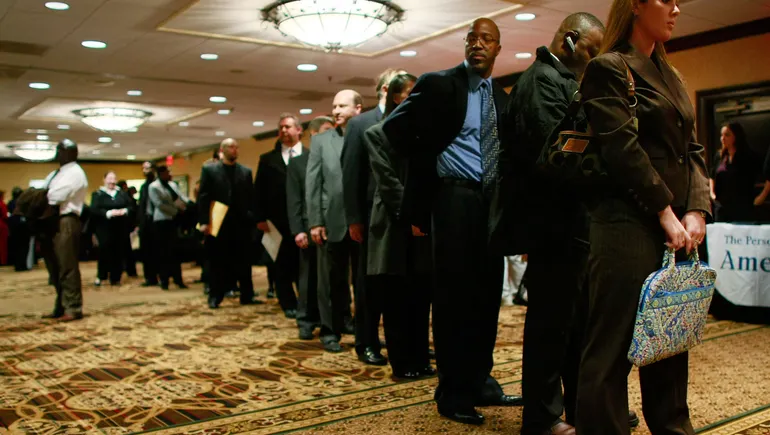
The sentiment among those affected is one of profound disengagement. As one applicant described the current job market, it “feels like a black box.” This metaphor encapsulates the feeling of sending applications into an unknown void, with no visibility into the decision-making process or any indication of their standing.
The Escalating Arms Race: Referrals, Paid Services, and AI Manipulation
In an effort to circumvent the perceived inefficiencies and lack of transparency, job seekers are increasingly turning to unconventional strategies. The report indicates that nearly half of all applicants sought a referral from a contact within a company to boost their chances of being considered. This reliance on personal networks underscores a lack of faith in the standard application channels.
Furthermore, a significant minority, approximately 27%, admitted to paying for resume services, an expense many may not be able to afford, in hopes of presenting a more polished and competitive application. This suggests a market driven by desperation, where individuals are willing to invest financially in the hope of gaining an edge in an increasingly crowded and competitive field.
Even for those who manage to secure an interview, the experience is far from seamless. A remarkable 96% of candidates who reached the interview stage reported having at least one complaint about the process. The most common grievance, cited by just under half of these candidates, was being "ghosted by the employer" – a continuation of the silent rejection experienced earlier in the process, even after investing time and effort into interviews. Other prevalent complaints included having to repeat information already provided in their application, highlighting a perceived redundancy and inefficiency in the hiring workflow.
The Double-Edged Sword of Artificial Intelligence
Artificial intelligence has undeniably permeated the job search landscape, with 77% of U.S. job seekers reporting its use in their job hunt over the past year. However, the integration of AI has created its own set of anxieties and challenges. A significant majority, 60%, stated that they either altered or contemplated altering their application materials to avoid being perceived as AI-generated. This concern is so pervasive that another 39% admitted to rewriting their entire application for this very reason.
This phenomenon speaks to a growing distrust in AI’s ability to accurately assess human potential. Candidates fear that their applications, even if well-crafted, might be automatically flagged or devalued if they exhibit the hallmarks of AI-generated content, leading to an unfair exclusion.

Sharawn Tipton, Chief People Officer at Greenhouse, articulated this sentiment powerfully: "For the first time I can remember, neither side thinks hiring is working," she stated in a press release. "Candidates send applications into a black hole, while employers sift through AI-polished resumes that all look the same. The application used to be a front door. Now, too often, it’s a dead end. Candidates need a system that actually works and gives them a fair shot. Bolting bad AI on top only hurts them and employers."
Gaming the System: Candidates’ Tactics to Bypass AI
The desire to prove their individuality and circumvent perceived algorithmic biases has led many candidates to actively try and outsmart AI screening processes. Nearly two-thirds (62%) of job seekers admitted to employing various tactics to navigate these systems. This included using AI itself to decipher what the screening system was looking for (54%) and, more concerningly, adding skills or keywords they did not possess (40%) to improve their chances of passing initial filters.
Perhaps the most innovative, yet ethically questionable, tactic involved adding hidden text specifically designed to appeal to AI reviewers, a practice adopted by a third of applicants. These methods reveal a candidate pool actively engaged in a sophisticated, and sometimes deceptive, game of cat and mouse with automated hiring tools.
The Unmet Desire for Authenticity and Demonstration of Potential
Despite the widespread use of AI and the adoption of manipulative tactics, the core desire of most candidates remains straightforward: to demonstrate their authentic selves and capabilities to potential employers. The report found that a substantial 96% of job seekers wished for a method to convey more than what a standard job application allows. A significant portion, 52%, specifically expressed a desire to showcase their ability to learn and adapt – a crucial skill in today’s rapidly evolving professional landscape.
However, traditional interviews, often the next step after application review, are also not without their flaws. While they offer a more personal interaction, they too are subject to various issues that can hinder a candidate’s ability to truly shine.
AI Interviews: A Glimpse of the Future, With Caveats
The report also explored the burgeoning trend of AI-powered interviews. Candidates are increasingly willing to engage with these technologies, with nearly half having participated in an AI interview in the past year. A significant majority, 70%, found that these AI interviews allowed them to effectively showcase their skills. Crucially, only a small fraction, 7%, stated they would outright refuse to be interviewed by an AI.

However, this acceptance is heavily contingent on transparency and fairness. A strong majority, 88%, believe that employers should be legally compelled to disclose when AI is being used in interviews. Furthermore, 55% desire advance notice of AI involvement. This indicates a strong preference for open communication and a desire to understand the evaluation criteria.
Ophir Samson, Head of Voice AI at Greenhouse, emphasized the limitations of current AI in capturing nuanced human qualities: "AI can polish a resume or fire off hundreds of applications, but it can’t show an employer how someone thinks or learns," he commented. "A structured conversation early in the process could give the right candidates that chance. But it only works if candidates understand how they’re being evaluated, and know a real person will review their responses. Trust must be built into the process from the start."
The HR Perspective: Efficiency vs. Confidence
The challenges are not confined to job seekers; HR professionals are also wrestling with the optimal integration of AI into their hiring strategies. A separate study by TestGorilla revealed that while 72% of U.S. talent professionals surveyed found that AI accelerated candidate sourcing, a substantial one-third reported that it did not increase their confidence in the candidates identified. Alarmingly, 8% even stated that using AI had actually decreased their confidence.
This suggests that while AI excels at identifying keywords and patterns, it often falls short in providing the qualitative insights that build genuine confidence in a candidate’s suitability for a role. The report from Greenhouse, therefore, serves as a critical wake-up call, urging a re-evaluation of how technology is deployed in recruitment to ensure a more equitable, transparent, and ultimately, more effective hiring process for all involved. The "black hole" of the job application process must be illuminated, and the promise of AI must be realized not as a barrier, but as a bridge to genuine connection and opportunity.


 Raul Delapena Setiawan

 Iffa Jayyana

 Ammar Sabilarrohman

 Asep Darmawan

 Asro

 Layla Zulfa

 Nila Kartika Wati

 Muslim
