
 Dwi Wanna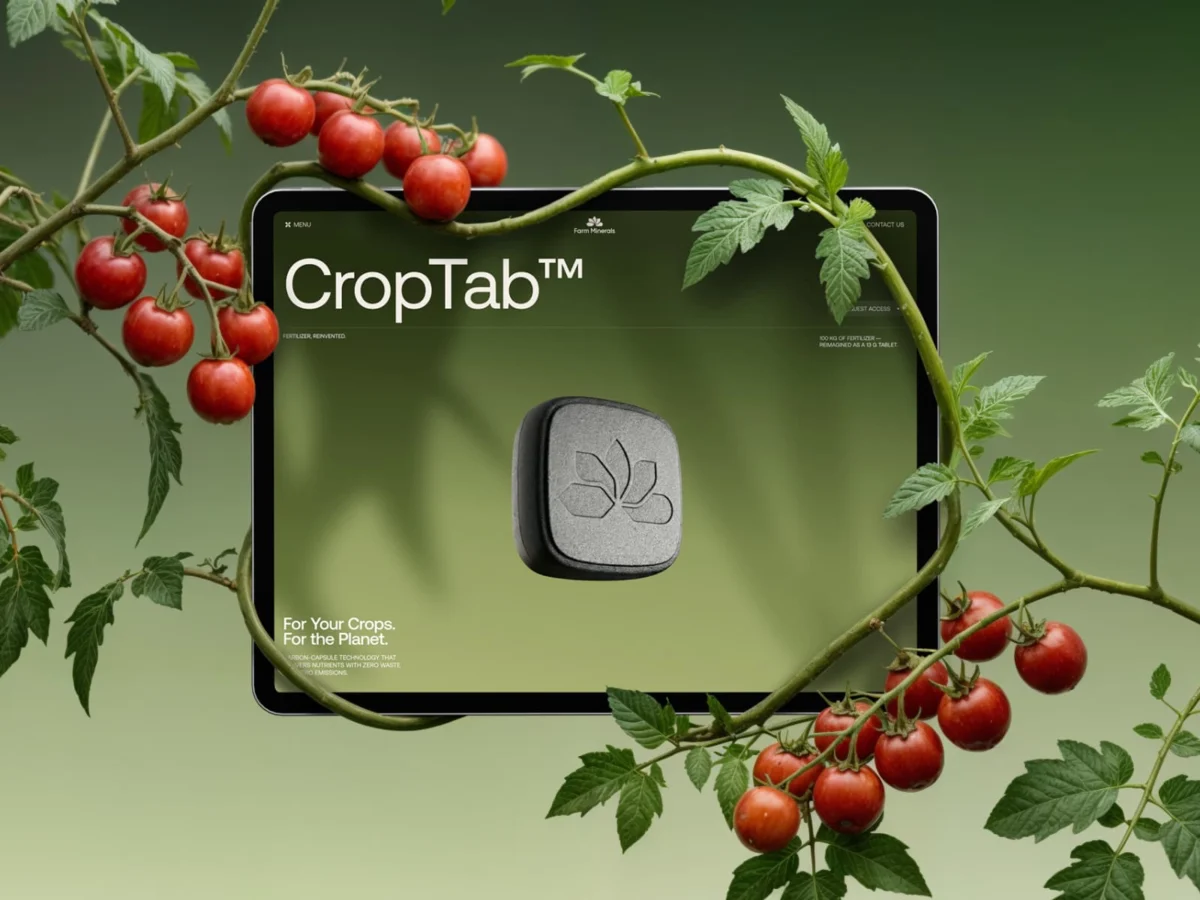
In the rapidly evolving landscape of AgriTech, the barrier between groundbreaking scientific innovation and practical field application is often a chasm of complexity. For farmers, agronomists, and industry stakeholders, the promise of "sustainability" often rings hollow when detached from measurable, bottom-line performance. Enter Farm Minerals, an innovative venture determined to overhaul the efficiency of crop fertilization through emission-free, cellular-delivery technology.
To bridge the gap between microscopic plant science and the reality of modern farming, Farm Minerals partnered with Adelt, a design studio specializing in digital product storytelling. The resulting website is more than a digital storefront; it is a masterclass in translating highly technical, science-driven data into a credible, grounded, and persuasive user experience.
The Core Challenge: Inefficiency in the Field
To understand the magnitude of Farm Minerals’ mission, one must first confront the systemic inefficiencies of current agricultural practices. Modern agriculture, while highly productive, is notoriously wasteful.
Data from agricultural research indicates that up to 70% of nitrogen applied to crops is lost before the plant can ever utilize it. This nitrogen does not simply disappear; it evaporates into the atmosphere as greenhouse gases, leaches into local water tables, or remains trapped in the soil structure. This "leakage" creates a cycle of dependency: farmers are forced to increase application volumes and frequency, leading to spiraling operational costs and increased environmental degradation.
For Farm Minerals, the goal was not just to present a new product, but to solve this fundamental imbalance. Their technology bypasses the traditional, scattershot approach to fertilization by delivering nutrients directly into plant cells. However, communicating this required a digital strategy that could overcome two major hurdles:
- The Complexity Barrier: The science of cellular nutrient uptake is abstract and, if presented poorly, appears overly futuristic or theoretical.
- The Credibility Gap: The agricultural sector is notoriously conservative. Farmers are not swayed by marketing buzzwords; they require evidence, precision, and tangible results.
A Strategic Chronology: The Evolution of the Digital Narrative
The Adelt team recognized early on that a conventional "marketing-first" approach would fail. Instead, they adopted a narrative architecture structured into four distinct phases: Problem, Explanation, Evidence, and Application.
Phase 1: The Problem (Setting the Stage)
The user journey begins by acknowledging the status quo. By highlighting the 70% nitrogen loss statistic, the website immediately aligns itself with the farmer’s perspective: the frustration of wasted resources and rising costs. This established common ground, turning the product into a solution for a shared industry pain point rather than an abstract invention.
Phase 2: The Explanation (Demystifying the Tech)
With the problem defined, the narrative moves to the solution. Adelt utilized a "progressive disclosure" design, where information is revealed as the user scrolls. This ensures that the user is never overwhelmed. By breaking down the science into manageable chapters, the technology becomes accessible without losing its intellectual rigor.
Phase 3: The Evidence (Building Trust)
In the agricultural sector, trust is built on performance. The website integrates data-driven storytelling to demonstrate how Farm Minerals’ technology functions under real-world conditions. By focusing on measurable efficiency, the design team avoided "greenwashing" and instead leaned into the precision of the product.
Phase 4: The Application (The Human Element)
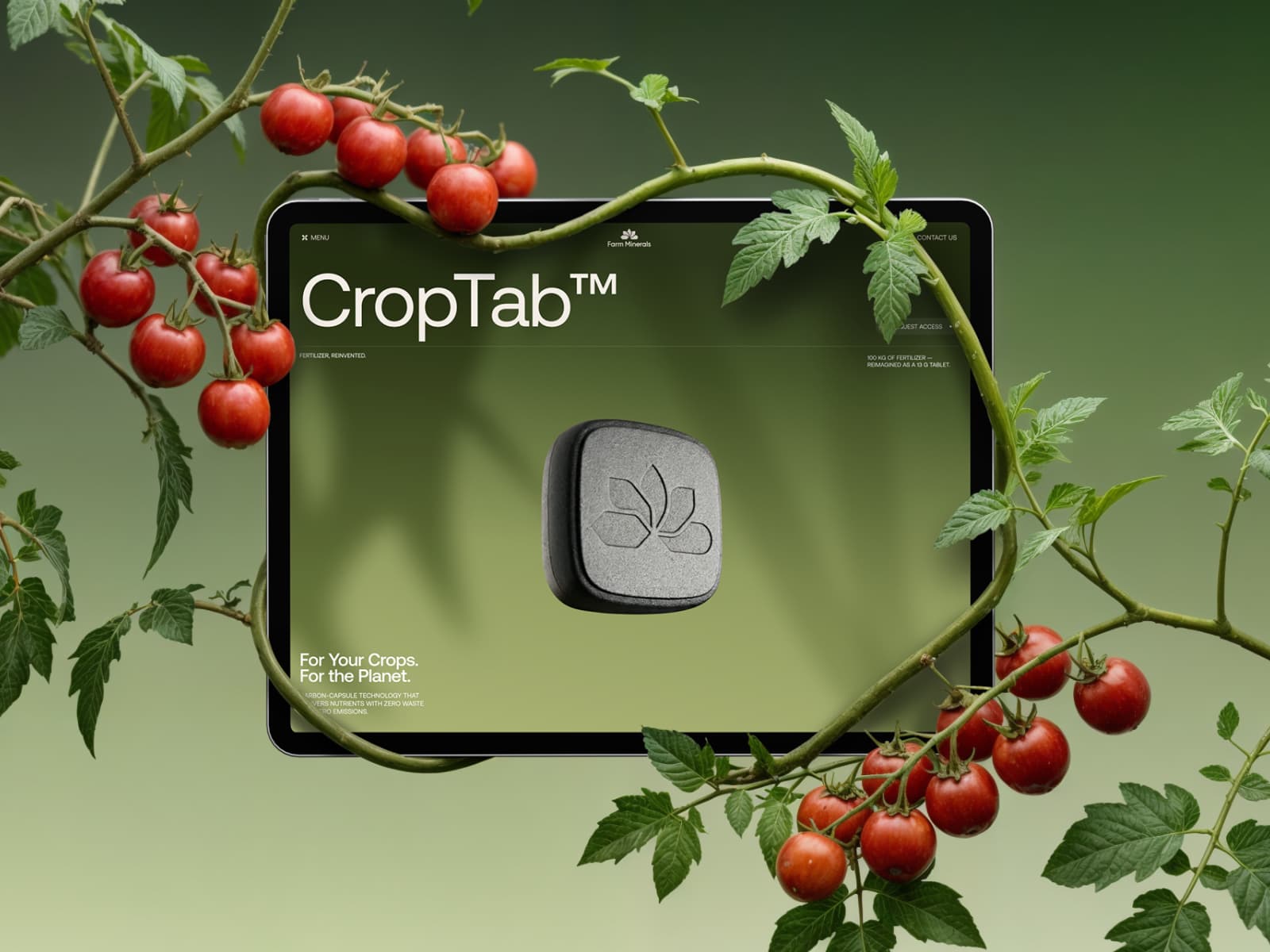
Finally, the narrative bridges the gap to the field. Through imagery and product visualization, the user sees exactly how the CropTab tablet—the core of the Farm Minerals product—integrates into daily agricultural operations. This anchors the digital experience in the physical world.
Supporting Data: The Power of Intentional Design
Adelt’s design philosophy for Farm Minerals was governed by a "less is more" ethos. In an industry often cluttered with overly complex charts and marketing jargon, Adelt chose:
- Visual Hierarchy: Large, legible typography and generous white space were used to reduce cognitive load.
- Controlled Motion: Rather than utilizing flashy, distracting animations, the team implemented subtle, physics-based transitions that mimic the precision of the product itself.
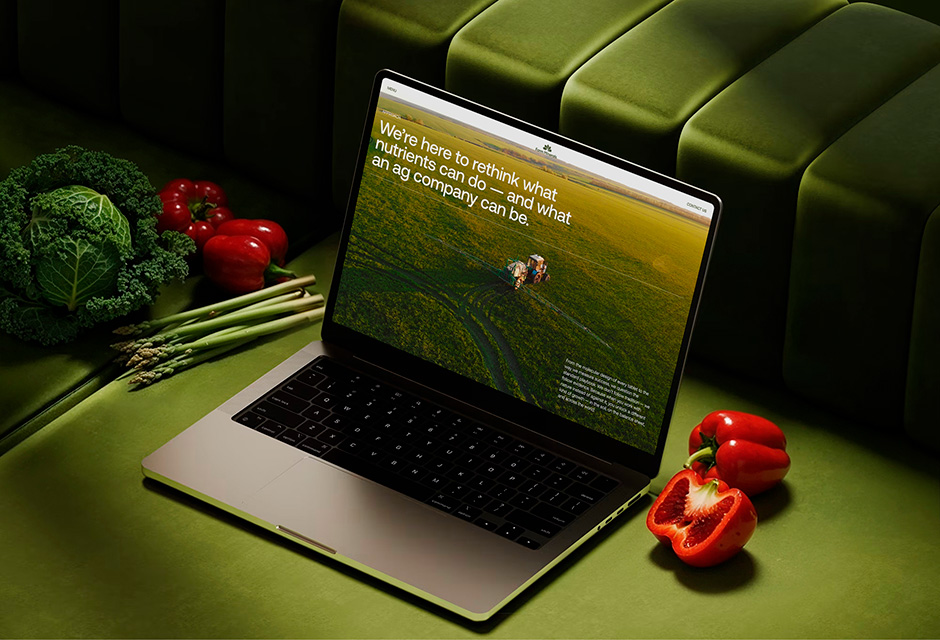
- Product-Centric Visualization: Instead of attempting to animate microscopic cellular interactions—which can often look like science fiction—the team focused on the CropTab as a tangible, physical object. By showing the product in environmental contexts, they made the intangible technology feel "real."
The impact of this design strategy is quantifiable. By transforming the website into an educational tool, Farm Minerals has successfully moved the conversation away from "speculative sustainability" to "proven field efficiency."
Official Perspective: The Adelt Philosophy
In reflecting on the project, the Adelt team emphasized the importance of deep, cross-disciplinary collaboration. "You can introduce complex science," the studio noted, "as long as the story stays grounded in reality and the visuals and animations help translate it."
This philosophy was critical in ensuring that the Farm Minerals brand was perceived as a bridge between the next generation of agricultural innovators and the seasoned professionals currently working the land. For Adelt, the website became a core component of the product itself—a digital interface that serves as a proof-of-concept for the company’s precision-oriented values.
Technical Infrastructure and Execution
The project’s success was not merely aesthetic; it was supported by a robust technical framework designed for high performance and global accessibility.
- Frontend Precision: The site was built using Webflow, providing a balance between creative design control and a scalable Content Management System (CMS). This allows the Farm Minerals team to update their scientific findings as new field data becomes available.
- Dynamic Storytelling: To achieve the smooth, interactive transitions required for their narrative, the team utilized GSAP (GreenSock Animation Platform). GSAP allowed for high-performance animations that remain fluid across devices, ensuring that the storytelling experience is consistent regardless of the user’s hardware.
- Performance at Scale: Given the reliance on high-quality visuals and motion, the site utilizes Webflow’s native global CDN (Content Delivery Network). This ensures that heavy assets load quickly, a necessity for a global audience of researchers and farmers who may be accessing the platform from rural areas with variable connectivity.
Implications: The Future of AgriTech Marketing
The collaboration between Farm Minerals and Adelt serves as a blueprint for how technical industries should approach their digital presence. As the agriculture sector moves toward more sustainable and technologically advanced models, the ability to communicate how a product works is becoming as important as the technology itself.
The implications for the industry are significant:
- Democratization of Knowledge: By making complex biology understandable, companies can foster better adoption rates among farmers who are rightfully skeptical of unproven "black-box" solutions.
- Elevated Standards: The success of this project sets a new standard for what AgriTech brands should look like. No longer can companies rely on outdated, cluttered websites; they must provide clean, functional, and highly educational digital environments.
- Trust-Based Marketing: In an era of skepticism, the move toward transparency—showing the science rather than just claiming the results—is the most effective way to build long-term brand equity.
As Farm Minerals continues to scale, their digital platform will remain their most potent tool for education and recruitment. By proving that a website can be both a scientific resource and a beautiful, intuitive experience, Adelt has not only designed a site for a client—they have redefined how the agricultural industry introduces the future to the present.
For those watching the intersection of design and technology, the Farm Minerals project is a reminder that even the most complex, microscopic innovations can be made clear, credible, and compelling if they are rooted in a narrative that respects both the science and the user.

 Sagoh
Sagoh
 Asep Darmawan
 Raul Delapena Setiawan
 Reynand Wu


 Azzam Bilal Chamdy
 Ali Ikhwan