
 Ammar Sabilarrohman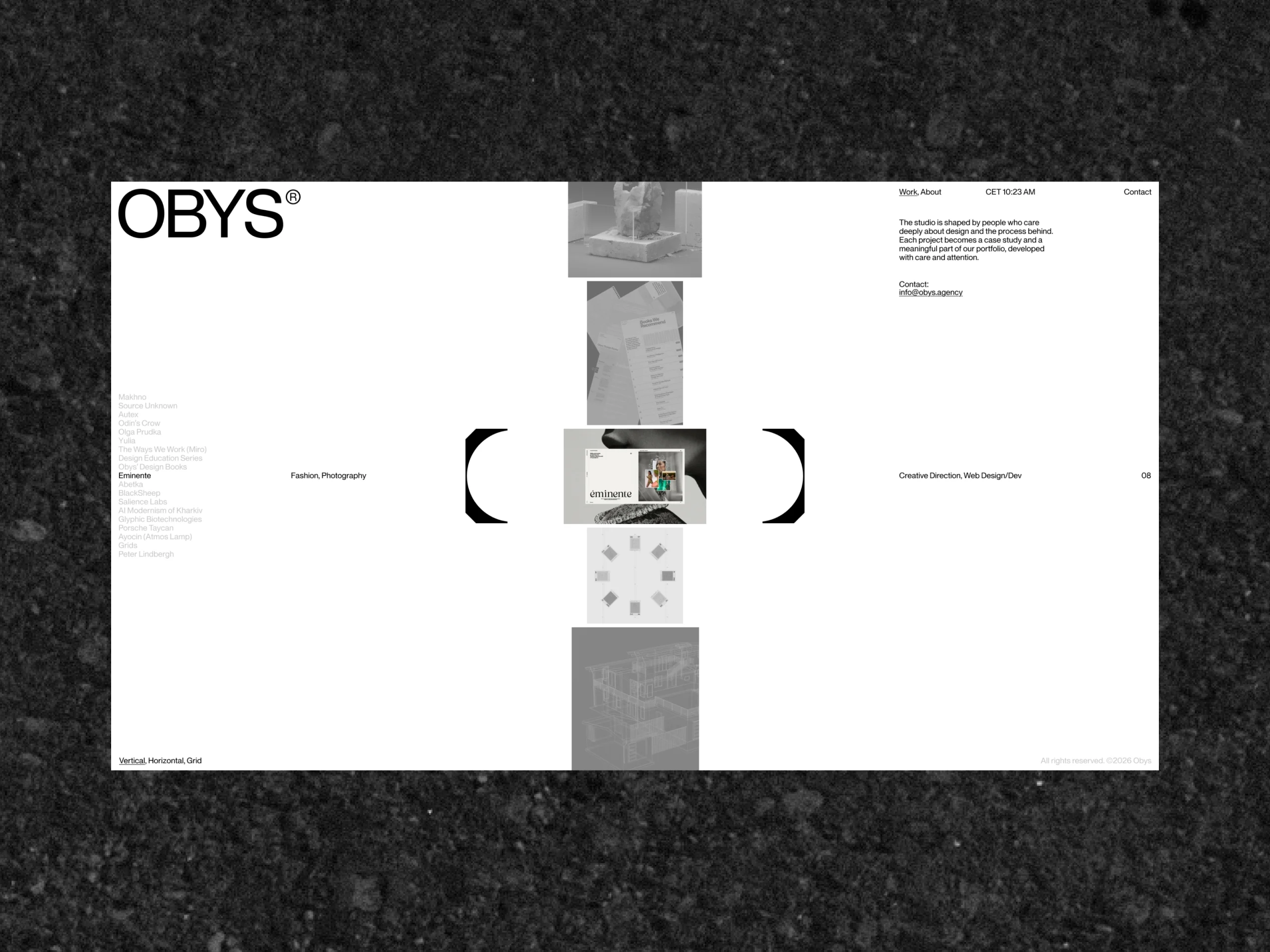
In the rapidly shifting landscape of digital design, the ability to pivot is often the difference between stagnation and relevance. For the renowned creative studio Obys, the decision to overhaul their digital presence was not a reactionary measure, but a deliberate, years-long journey of self-discovery. Since their last major website launch in 2019, the studio has experienced a period of exponential growth, working with global brands and refining their creative philosophy. Today, that transformation culminates in the unveiling of a new, modernist identity and a high-performance, system-driven microsite.
Main Facts: A New Chapter for Obys
The unveiling of the new Obys identity represents more than a visual refresh; it is a recalibration of the studio’s core mission. The project serves as a transitional bridge—a "microsite" that distills the studio’s current capabilities into a refined, minimalist aesthetic. By moving away from the clutter of their previous iteration, Obys has opted for a "less is more" philosophy, placing the spotlight squarely on their project portfolio.
The central pillar of this transformation is the custom typeface, OTF Obys NG. Developed in-house, this neo-grotesque font serves as the foundational rhythm for the entire brand system. It is designed to be as versatile as the agency itself, functioning equally well as a crisp, readable text face and as a bold, expressive display typeface. This typeface is supported by a logo evolution that frames the agency as a "space"—a structural environment that houses ideas, projects, and evolving digital states.

Chronology: A Multi-Year Evolution
The road to the current site began shortly after the 2019 launch. What was initially intended to be a routine update gradually transformed into an ongoing, introspective process.
- 2019–2021: The Recognition Phase. As Obys gained industry accolades and attracted high-profile international clients, a disconnect emerged. The agency’s internal standard of work had outpaced their external presentation.
- 2022–2024: The Strategic Pivot. The team began the arduous task of defining their own vision. Rather than focusing on design trends, the studio prioritized identifying their target audience and the specific types of projects that truly represent the "Obys DNA."
- 2025: Development and Refinement. The technical implementation began. For the first time, Obys collaborated with an external developer to challenge their internal perspectives. The focus shifted toward the nuance of motion, micro-interactions, and the technical architecture of the site.
- 2026: The Launch. The release of the current microsite marks the end of the conceptual phase and the beginning of a long-term, scalable brand evolution.
Supporting Data: Engineering a High-Performance System
The technical backbone of the new Obys website is a testament to the agency’s commitment to craft and performance. Departing from the common reliance on heavy client-side frameworks, the team opted for a bespoke codebase that prioritizes speed and control.
The Stack
- Infrastructure: The site is powered by Bun.js, acting as both the HTTP server and the bundler. This choice allows for a high-performance environment that streamlines the development workflow.
- Templating: React is utilized strictly as a server-side templating layer, ensuring the client-side remains lightweight and free of unnecessary overhead.
- Interactivity: TypeScript handles all SPA (Single Page Application) routing, virtual scrolling, and page transitions.
- Motion System: To achieve the "effortless" feeling of the site’s transitions, Obys developed an in-house animation system built upon
requestAnimationFrameand the Web Animations API. - Content Management: Strapi serves as the headless CMS, providing the flexibility needed to update the project portfolio without compromising the integrity of the design system.
The result is a digital environment where the logo, transitions, and layout elements feel cohesive. The site’s "intro" sequence—a transition from a dark, legacy-inspired background to a crisp, white-space-dominant environment—acts as a metaphor for the agency’s shift from the past to the future.

Official Insights: The Philosophy of "Less"
When asked about the most difficult aspect of the project, the team at Obys admits that the design phase was not the primary hurdle. Instead, the greatest challenge was the process of "subtraction"—deciding what to leave out.
"The hardest part wasn’t the design," the studio stated. "It was the gradual alignment of our vision. It wasn’t a single decision, but a process of removing uncertainty."
By intentionally excluding archives, exhaustive award lists, and heavy corporate copy, the studio has created a focused experience. They view this version of the website not as a final product, but as a "moment in between." It is a curated selection that allows the work to speak for itself. The studio emphasizes that they are not trying to explain everything at once; they are presenting their current state of clarity before the next, larger iteration of the platform is released.

Implications for the Creative Industry
The new Obys identity and website offer a significant takeaway for the broader design community: the importance of "designing oneself" with the same rigor one applies to client work.
- Motion as a Functional Utility: Obys demonstrates that motion should not be decorative. By using it to connect layouts and guide the user experience, they prove that animation can be a functional component of a system’s navigation.
- The Rise of Bespoke Systems: As the web becomes increasingly saturated with generic, template-driven sites, the move toward custom, server-side-optimized systems represents a trend toward reclaiming digital sovereignty.
- Identity as an Evolving Space: The conceptualization of the brand as a "space" rather than a static logo allows for infinite scalability. As the studio grows, their brand system can accommodate new projects and identities without needing a total redesign.
Conclusion
The release of the new Obys identity is a masterclass in controlled, intentional branding. By focusing on the "rhythm" of their identity—defined by their custom typeface and a system-first development approach—they have successfully bridged the gap between their 2019 roots and their current status as a leader in digital design.
As the studio continues to iterate, this microsite stands as a clear, bold statement of intent. It is a reminder that the most powerful brand updates are not those that shout the loudest, but those that find the most accurate way to define who a company has become. The "Obys space" is now open, and it is clear that for this agency, the evolution is only just beginning.

 Sagoh
Sagoh
 Asep Darmawan
 Raul Delapena Setiawan
 Reynand Wu


 Azzam Bilal Chamdy
 Ali Ikhwan