
 Sagoh
Sagoh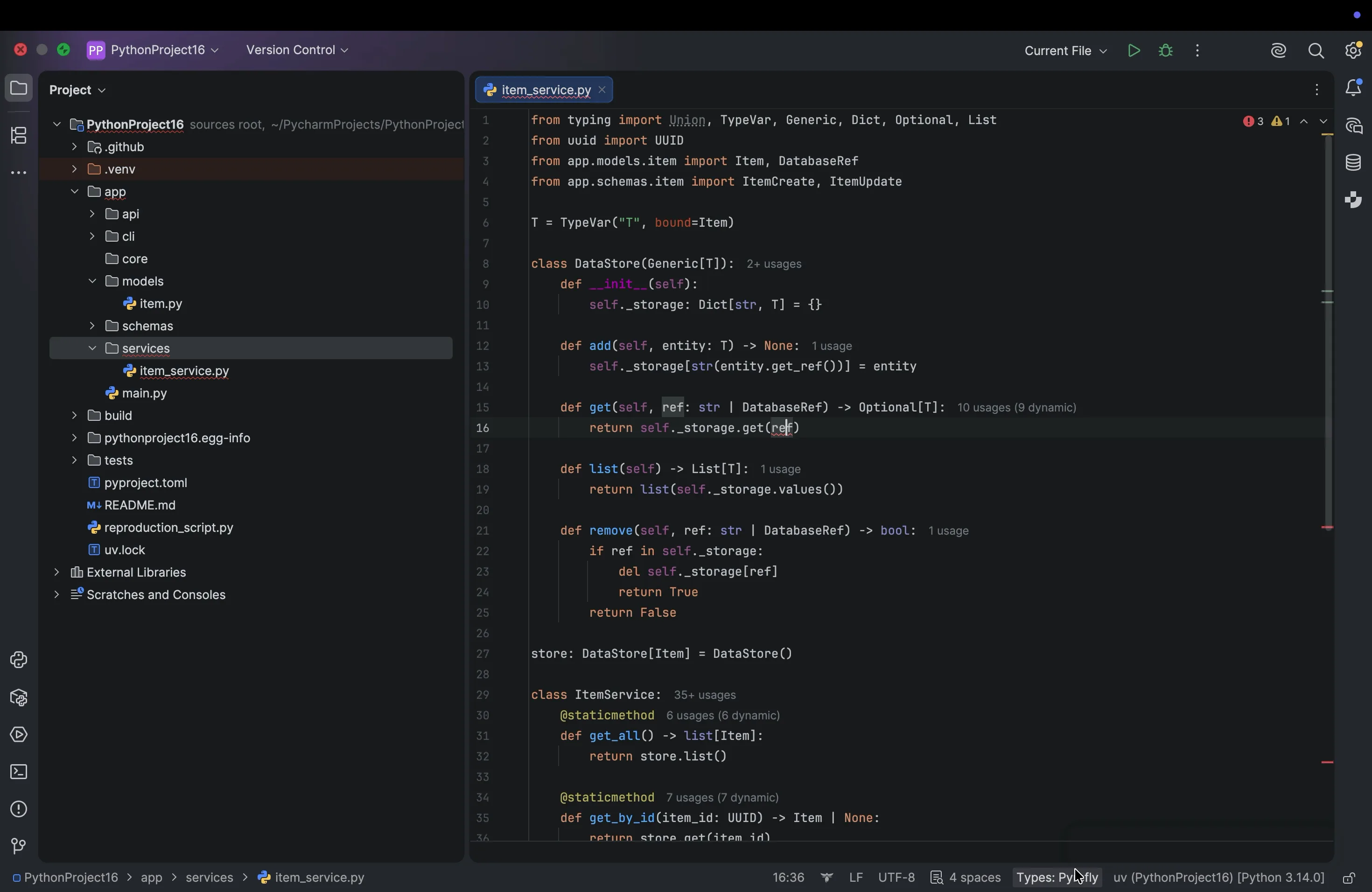
The landscape of Python development is undergoing a seismic shift in performance, as JetBrains officially announces the integration of Meta’s Pyrefly into the latest iteration of its flagship IDE, PyCharm 2026.1.2. This update represents a major leap forward for developers working with large-scale, complex codebases, introducing a high-performance Rust-based type-checking engine that replaces the older OCaml-based Pyre. By leveraging the Language Server Protocol (LSP), PyCharm is bridging the gap between standard IDE functionality and high-speed, scalable static analysis.
Main Facts: A New Era for Code Insight
The core of this update lies in the ability for PyCharm users to swap the built-in type engine for Pyrefly, a modern, blazing-fast type checker developed by Meta. Designed from the ground up in Rust, Pyrefly is engineered to address the inherent bottlenecks of analyzing massive Python repositories.
In PyCharm 2026.1.2, this integration allows for near-instantaneous type inference, rapid diagnostics, and enhanced inlay hints. For developers, this means the "waiting time" traditionally associated with deep code analysis is reduced to a sub-second experience, typically resolving files in just 0.5 to 1 second. This move signals JetBrains’ commitment to modularity and performance, allowing the IDE to offload complex computational tasks to specialized, highly optimized engines.
Chronology: From Pyre to Pyrefly
The journey toward this integration is rooted in the broader evolution of static analysis in the Python ecosystem.
- The Pre-Rust Era: For years, Meta (formerly Facebook) relied on Pyre, a type checker written in OCaml. While effective for its time, it struggled with the mounting performance demands of Meta’s own massive Python monorepo.
- The Shift to Rust: Recognizing the limitations of its existing infrastructure, Meta initiated the "Pyrefly" project. By rewriting the engine in Rust, they capitalized on memory safety and extreme parallel processing capabilities, effectively solving the performance hurdles that plagued OCaml-based tools.
- LSP Standardization: Concurrently, the rise of the Language Server Protocol (LSP) provided the architectural foundation for this change. LSP allowed for a decoupled relationship between the editor (PyCharm) and the intelligence engine (Pyrefly).
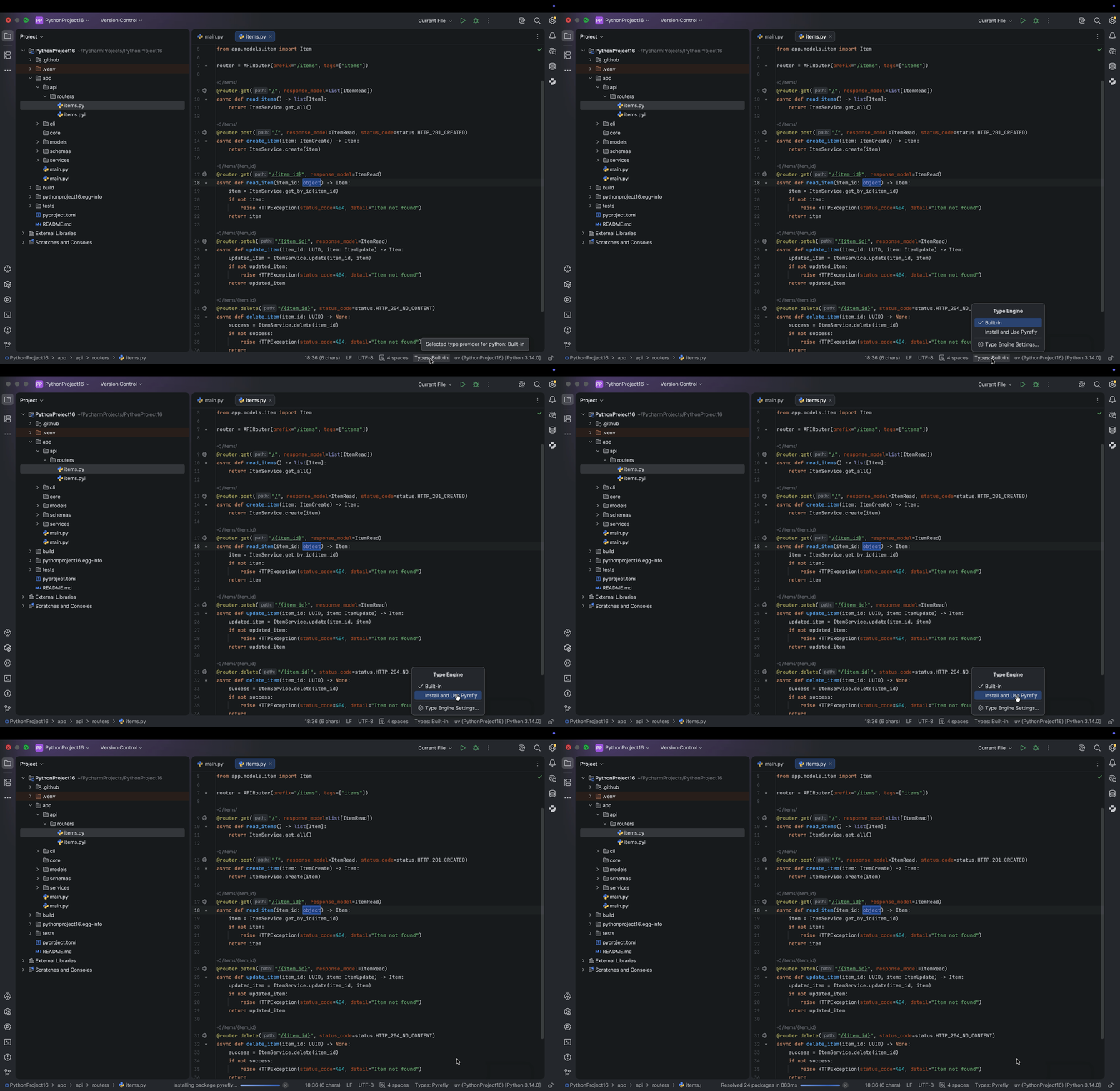
- The 2026.1.2 Milestone: Following months of internal testing and beta releases, JetBrains integrated the Pyrefly LSP into the standard PyCharm distribution. This enables users to toggle between the classic built-in engine and the new Pyrefly engine directly via the IDE’s Type widget.
Supporting Data: Why Rust Matters for Python
The performance gains observed in Pyrefly are not merely incremental; they are architectural. Python, by nature, is a dynamic language, which presents significant challenges for static analysis tools. In large codebases—those comprising millions of lines of code—the computational cost of tracking types across complex module imports often leads to "analysis lag."
Performance Benchmarks
- Resolution Speed: Pyrefly reduces file resolution times to approximately 0.5–1.0 seconds. Traditional engines often struggle to maintain this pace as project dependency graphs grow more complex.
- Resource Efficiency: Because it is written in Rust, Pyrefly benefits from zero-cost abstractions and superior memory management, allowing it to maintain a smaller footprint even while performing deep semantic analysis.
- Scalability: Unlike older engines that may experience exponential performance degradation as a codebase expands, Pyrefly’s architecture is designed for linear scaling, ensuring that as a project grows, the IDE remains responsive.
The Role of the Language Server Protocol (LSP)
To understand why this update is so significant, one must understand the role of the LSP. Before the advent of universal protocols, IDEs had to implement their own custom, language-specific logic for every feature—go-to-definition, hover documentation, type checking, and error reporting.

The LSP acts as a standardized communication bridge. By adopting this protocol, PyCharm does not need to "reinvent the wheel" for every new technology. Instead, it creates a pipeline that can "talk" to any language server that speaks the LSP dialect. This modular approach ensures that as specialized tools like Pyrefly evolve independently of the IDE, the IDE can benefit from those upgrades without requiring a complete overhaul of its internal architecture.
Official Perspectives: The Developer Experience
JetBrains, through its official blog and technical documentation, has positioned this update as a strategic necessity for the "modern Python developer." According to team members, the goal is to remove the friction of development.
"The integration of Pyrefly is about more than just speed; it’s about confidence," says the development team. "When an IDE provides immediate, accurate feedback on types, the developer spends less time debugging runtime errors and more time architecting features."
However, the team is transparent about the current limitations. As of version 2026.1.2, the integration is optimized primarily for local interpreter configurations. Users working within Docker containers, SSH environments, or complex multi-module projects may find that the built-in engine remains more stable for now. JetBrains has explicitly stated that support for these more complex environments is high on the roadmap for subsequent releases.
Implications for the Python Ecosystem
The integration of Pyrefly into PyCharm carries several long-term implications for the Python community.
1. The Standardization of "Fast" Analysis
By making a high-performance engine accessible to the general user base, JetBrains is setting a new expectation for tooling. Developers will increasingly demand sub-second feedback loops. This will likely pressure other IDEs and tool-chain providers to adopt similar Rust-based engines, accelerating the overall quality of Python development tools.

2. Bridging the Gap Between Dynamic and Static
Python’s greatest strength is its flexibility; its greatest weakness in large teams is the lack of strict type enforcement. By making type checking faster, Pyrefly encourages developers to adopt type hinting more aggressively. When type checking is fast and unobtrusive, it stops being a chore and starts being a productivity tool.
3. A Shift in Tooling Paradigms
We are witnessing a shift where the "IDE" is becoming an orchestrator of specialized tools. Rather than being a monolithic piece of software, PyCharm is increasingly behaving like a professional-grade hub for various specialized engines—like Pyrefly for type checking, Ruff for linting, and various other LSPs for niche language requirements.
Troubleshooting and Limitations
While the performance benefits are clear, users should be aware of the "early adopter" nature of this release. As seen in the recent testing examples provided by JetBrains, while Pyrefly is generally more precise, it is not yet infallible. In a test case involving a complex FastAPI project, the engine identified three out of four errors, missing a specific edge case in the _storage attribute access.
This highlights an important takeaway for developers: Pyrefly is a powerful assistant, not a replacement for human judgment. Users should view it as a high-speed diagnostic layer. For mission-critical code, or in environments where the integration is not yet fully supported (such as WSL or Docker), sticking to the built-in, battle-tested engine remains a viable and recommended strategy.
Conclusion: How to Get Started
For those ready to embrace the future of Python development, the transition is seamless. Users simply need to:
- Update to PyCharm 2026.1.2.
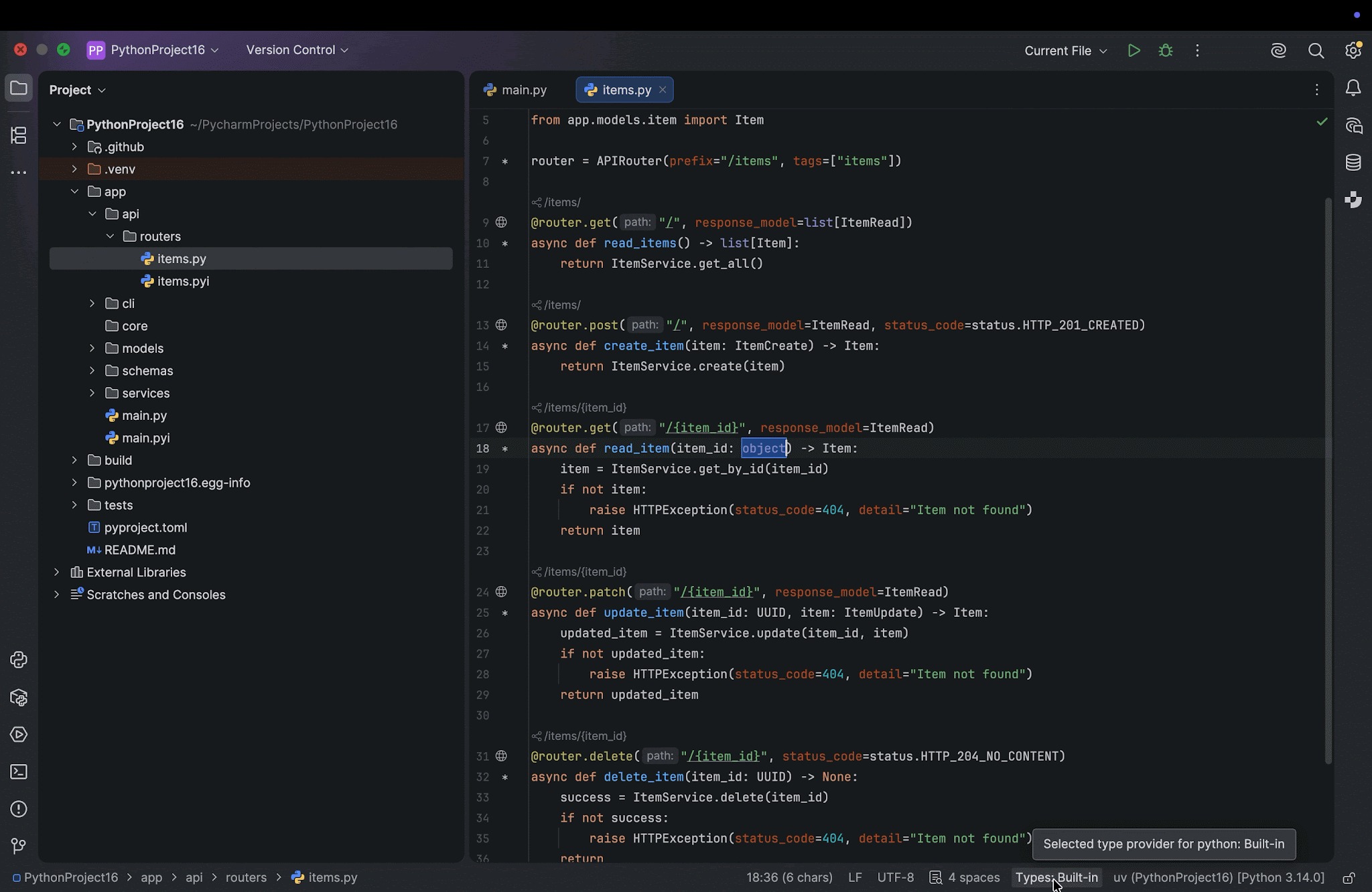
- Navigate to the Type Widget: Located in the bottom right-hand corner of the IDE.
- Select Pyrefly: If the engine is not yet installed, PyCharm will handle the download and configuration automatically.
- Monitor the Icon: Once active, the Pyrefly icon will appear, providing information on the version in use.
As PyCharm 2026.1.2 continues to roll out to users globally, the integration of Pyrefly stands as a testament to the power of cross-collaboration between tech giants like Meta and platform leaders like JetBrains. It is a defining moment for Python development, promising a future where large-scale codebases are no longer a burden, but a canvas for high-velocity innovation. By investing in the speed and reliability of the developer experience, JetBrains has ensured that PyCharm remains the primary tool for the next generation of software engineers.


 Jia Lissa
 Nila Kartika Wati
 Raul Delapena Setiawan
 Reynand Wu


 Azzam Bilal Chamdy
 Ali Ikhwan