
 Lina Hope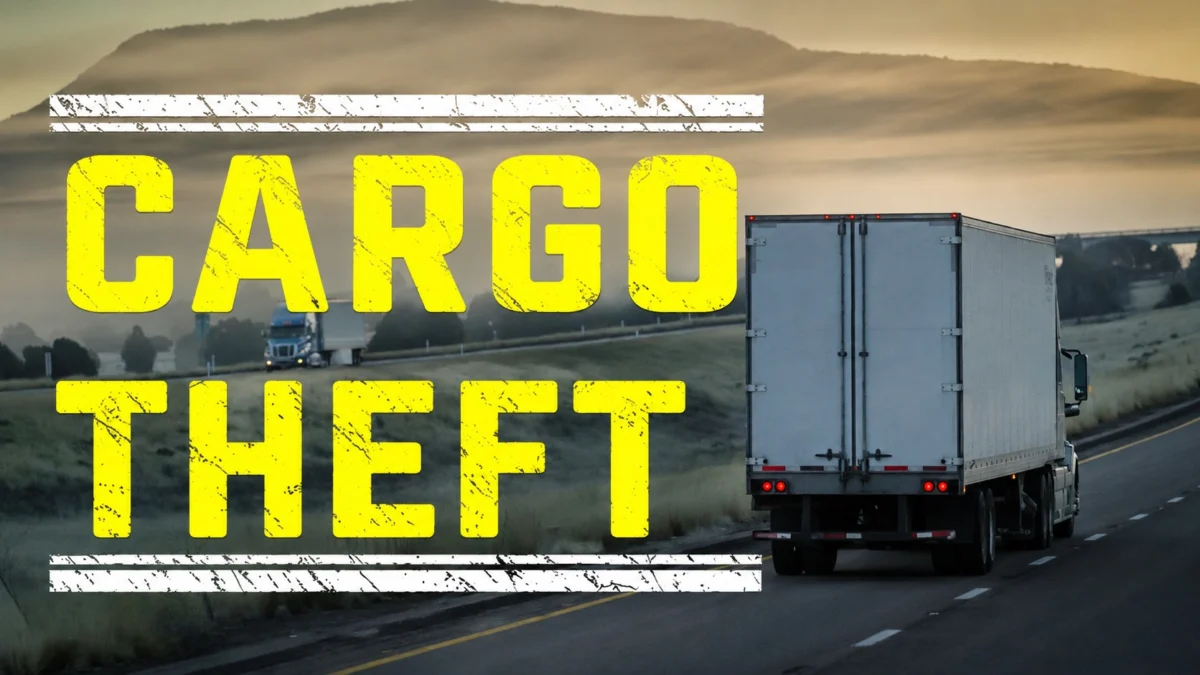
Weekly Rundown: Mexico’s logistics landscape is currently defined by a sharp dichotomy—while official government statistics suggest a retreat in criminal activity, private sector intelligence paints a more volatile picture. Simultaneously, the manufacturing engine in Nuevo León continues to fire on all cylinders, and major global players like Mitsubishi Logistics are doubling down on U.S. infrastructure to support shifting supply chains.
The Security Paradox: Government Optimism vs. Ground Reality
The narrative surrounding logistics security in Mexico has entered a period of profound contradiction. On one hand, the federal government reports significant progress in curbing cargo theft; on the other, supply chain intelligence firms warn that organized crime is not only active but becoming increasingly sophisticated.
Official Stance: The "Balam" Strategy
According to Guillermo Briseño Lobera, commander of Mexico’s National Guard, the tide is turning against cargo thieves. Official projections for 2026 suggest a 37% decline in total incidents compared to the 6,263 thefts reported in 2025. Data provided by the government indicates that 2,519 cargo thefts have occurred so far this year, continuing a multi-year downward trend that has seen total reported incidents fall by more than 52% since 2018.
The centerpiece of this success, according to federal officials, is the "Balam" highway security strategy. Currently operational across 12 states, this targeted security initiative reportedly contributed to a 37.19% reduction in incidents between 2024 and 2025, while simultaneously boosting the recovery rates of stolen vehicles. Notable success stories include the Mexico-Querétaro route, which saw a staggering 85.7% decline in theft, and the Mexico-Puebla corridor, which boasted a 90% reduction. In some regions, such as the Mazatlán-Culiacán highway, authorities reported zero cargo theft incidents, signaling a potential stabilization of once-notorious hotspots.
The Private Sector Warning
Despite these figures, supply chain risk management firm Overhaul offers a sobering counter-narrative. In their Mexico Q2 2026 Cargo Theft Report, the firm asserts that while the geography of theft may be shifting, the threat remains acute. The core issue is the persistent use of violence; Overhaul found that 76% of all recorded incidents involved physical confrontation, highlighting a lethal risk to drivers and fleet personnel.
While the government highlights national averages, Overhaul emphasizes that the concentration of crime in specific "epicenters" remains a significant barrier to logistics efficiency. The reality on the ground, for many carriers, is that they are operating within a landscape where criminal groups are merely relocating their efforts rather than abandoning their trade.
Chronology of Trends: A Shifting Tactical Landscape
To understand the current state of Mexican logistics, one must examine the evolution of criminal tactics over the past eighteen months.
- Early 2025: The implementation of the Balam strategy begins to show results in key central corridors. Authorities begin to see a decrease in frequency along high-traffic routes as law enforcement presence increases.
- Q1 2026: While official reports show a decline in overall numbers, private sector data indicates a rise in sophisticated, organized criminal activity. The "express kidnapping" of drivers begins to emerge as a preferred method for securing not just the cargo, but the vehicle itself.
- August 2026: A major enforcement success occurs as the Secretariat of Security and Citizen Protection (SSPC) arrests three high-level suspects linked to a criminal cell operating on Federal Highway 150-D. This group was specifically targeted for their role in orchestrating cargo theft, driver kidnappings, and the systemic corruption of local municipal officials.
- Present Day: The logistics industry finds itself in a state of "wait and see." Carriers are increasingly relying on private security escorts and real-time tracking, even as government claims of safety grow louder.
Data Analysis: The Regional and Commodity Breakdown
The disparity between government and private data often comes down to regional focus. Overhaul’s data reveals that 77% of all cargo theft incidents remain concentrated in the Center and West regions of Mexico.
Top Affected States
The "Big Three" states—The State of Mexico (18% of incidents), Puebla (17.9%), and Guanajuato (10.8%)—account for nearly half of all nationwide theft activity. While theft in the State of Mexico and Puebla has seen a slight year-over-year decline, this has been offset by worrying surges in other states:
- Guanajuato: Seeing increased pressure on transit routes.
- Veracruz: A hub for criminal activity involving corrupt local actors.
- San Luis Potosí, Jalisco, Michoacán, and Tlaxcala: All recording significant year-over-year upticks in incidents.
Target Commodities
The nature of the goods being stolen provides insight into the motivations of criminal organizations. Food and beverage shipments continue to lead the list (30%), likely due to the high liquidity and ease of re-selling these products in local informal markets. Miscellaneous freight (11%) and auto parts (9%) follow. Most notably, the theft of agricultural products—specifically fertilizers and pesticides—has spiked by four percentage points. Analysts suggest this is a result of the rising market value of these inputs as agricultural demand increases globally.
Temporal Predictability
Criminal groups operating in Mexico are demonstrating a high degree of operational discipline. 85% of thefts occur on business days (Monday–Friday), with the peak period of activity falling between 6 p.m. and midnight. This suggests that criminals are intentionally targeting the end of the shift, when driver fatigue is at its highest and the visibility of law enforcement patrols may be lower.
Economic Resilience: Nuevo León’s Industrial Surge
While security remains a hurdle, the manufacturing sector in northern Mexico is experiencing a golden age. Nuevo León, the industrial powerhouse of the region, recently reported $17 billion in IMMEX (manufacturing and export) exports during the first five months of 2026—an 8.9% increase over the same period in 2025.
The Nearshoring Effect
Governor Samuel García has been vocal about the state’s performance, noting that Nuevo León now accounts for 16% of all Mexican IMMEX exports. The state currently employs over 401,000 workers in the manufacturing sector, the highest number in the country. This growth is directly tied to the "nearshoring" trend, where global companies are moving production facilities closer to the U.S. consumer market.
The automotive, electronics, and industrial logistics sectors are the primary drivers of this growth. As these companies invest in Monterrey and its surrounding areas, the pressure on the local logistics infrastructure—and the demand for secure transport routes—continues to intensify.
Global Investment: Mitsubishi Logistics Expands U.S. Footprint
As Mexico cements its position as a global manufacturing hub, logistics providers are responding by expanding their North American infrastructure. Mitsubishi Logistics Corp. has announced a $40 million investment in two major U.S. distribution centers.
- Houston, Texas: A 710,000-square-foot facility slated for completion in July 2027.
- Alabama: A secondary facility expected to be completed in June 2027.
This move is part of a broader strategy by the Japanese conglomerate to strengthen its real estate and asset-turnover business. By positioning itself in Houston and the Southeast U.S., Mitsubishi is effectively creating a "bridge" between the rapidly expanding manufacturing base in Mexico and the distribution requirements of the U.S. market.
Implications: The Road Ahead
For shippers and carriers, the current environment presents a complex risk-reward profile. The "paper" improvements in security statistics provide some comfort, but they do not negate the reality of organized, violent crime that persists in key corridors.
Recommendations for Industry Players:
- Diversify Risk: Companies should move away from sole reliance on high-risk corridors like the 150-D and look toward routes where local law enforcement and federal oversight are more synchronized.
- Advanced Tracking: Given the 6 p.m. to midnight danger zone, fleets should mandate night-time parking only in secure, monitored facilities, avoiding "roadside stops" at all costs.
- Intelligence-Led Logistics: Firms must integrate real-time data from platforms like Overhaul into their daily dispatch planning, rather than relying on outdated static maps of "safe" routes.
As Mexico continues to solidify its role as the primary manufacturing partner for the United States, the security of the supply chain will become the most significant differentiator for success. The investment by firms like Mitsubishi demonstrates that confidence in the regional economy remains high; however, the persistent shadow of organized crime requires a sustained, collaborative effort between the public and private sectors to ensure that economic growth is not derailed by logistical instability.

 Sagoh
Sagoh
 Ali Ikhwan
 Raul Delapena Setiawan
 Reynand Wu


 Azzam Bilal Chamdy
