
 Sagoh
Sagoh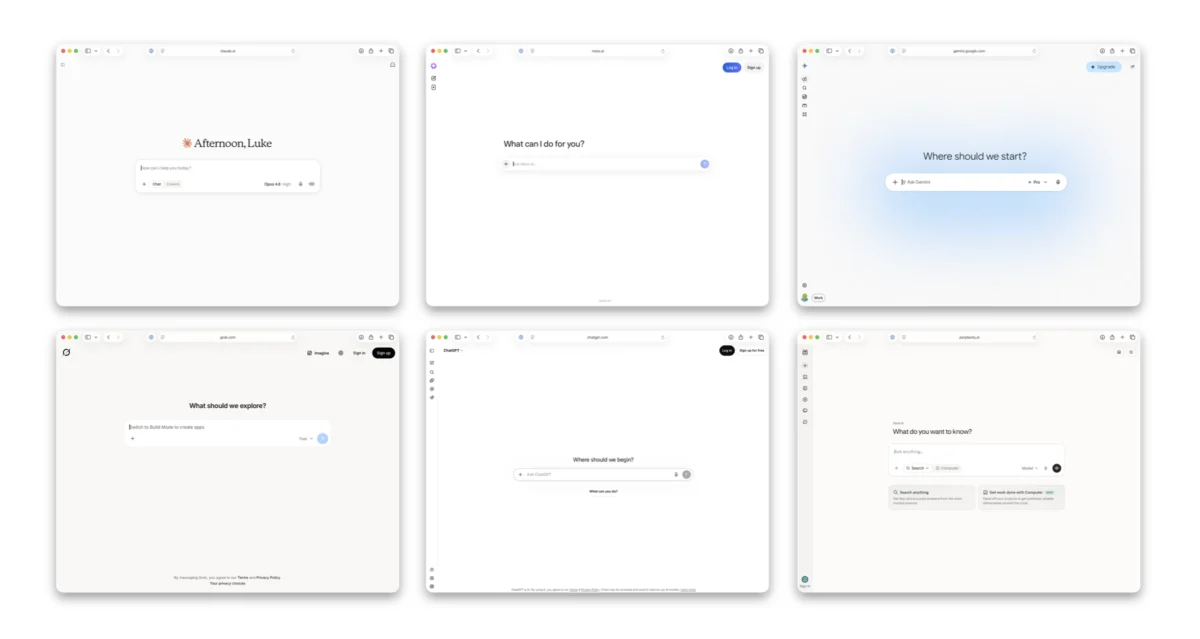
In the rapidly evolving landscape of generative AI, the industry has largely converged on a singular, minimalist interface design: the blank text box. From ChatGPT to Claude and Gemini, users are greeted with a variation of the prompt, "What would you like to do today?" While this "question-first" approach is intended to provide maximum flexibility, it inadvertently places a significant cognitive burden on the user. It assumes that users possess the inherent knowledge of what a tool is capable of and, perhaps more dauntingly, the skill to articulate that intent effectively.
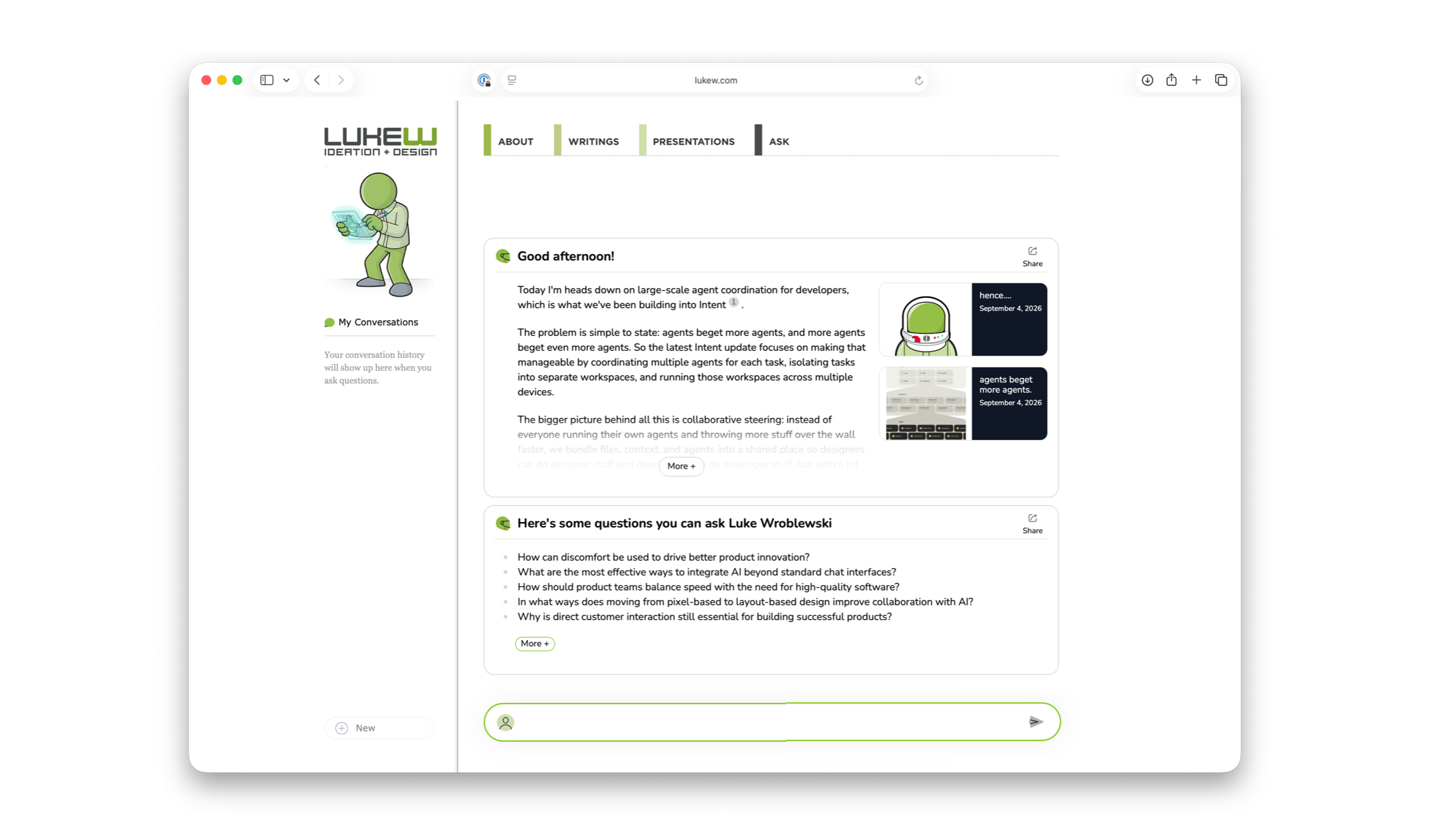
Digital product design expert Luke Wroblewski is challenging this prevailing orthodoxy. By experimenting with his own platform, "Ask LukeW," he has begun to pivot away from the empty prompt, arguing that the future of AI usability lies not in asking questions, but in providing immediate, context-aware answers.
The Main Facts: The Burden of the Blank Box
The primary issue plaguing current AI applications is "capability awareness." When a user lands on a site and is presented with a void—an empty text field—they are forced to perform a mental audit of the AI’s capabilities. Without guidance, many users experience "writer’s block," unsure of whether the AI is meant to act as a creative assistant, a data analyst, or a conversational partner.
Wroblewski’s research into "Ask LukeW," a tool designed to answer questions based on his extensive library of writings and digital files, identified a recurring trend in usability testing. Even with the inclusion of suggested questions, users often hesitated. The "question-first" model assumes the user is an active seeker, but in many contexts, the user is merely an explorer. By shifting to an "answer-first" model, the interface changes from a demand for input to an invitation for engagement.
A Chronological Evolution of AI Interface Design
Phase 1: The Era of the Blank Prompt
When generative AI first entered the mainstream in 2022 and 2023, the design paradigm was heavily influenced by traditional search engines. The assumption was that the AI was a "super-powered" version of Google. Users were expected to know how to "prompt" the system. However, this ignored the reality that prompting is a learned skill, not an innate human trait.
Phase 2: The Rise of Suggestion Chips
As developers realized the friction caused by the blank prompt, they introduced "suggestion chips"—pre-written prompts that users could click to get the ball rolling. This was a significant improvement in usability. It allowed users to understand the scope of the system’s knowledge. As Wroblewski noted in his testing, simply reading these suggestions helped users conceptualize the site’s utility.
Phase 3: The "Answer-First" Breakthrough
The most recent phase, which Wroblewski has pioneered, involves the integration of dynamic, time-based content. Following an update to his retrieval-augmented generation (RAG) system, he realized that he could automate the discovery process. By analyzing the frequency of certain user queries, he identified a recurring pattern: "What are you writing about right now?" Instead of waiting for a user to ask this, he began feeding the answer directly into the landing page.
Supporting Data: Why Context Matters
Usability studies conducted on the "Ask LukeW" interface provide compelling evidence that proactive content delivery improves user retention and satisfaction.
- Cognitive Offloading: When users are presented with a summary of recent content (e.g., "What’s Luke thinking about now?"), the need for them to generate a high-quality prompt is reduced. The interface does the heavy lifting.
- Capability Demonstration: By showing an answer, the system implicitly demonstrates its ability to synthesize information. This creates a "show, don’t tell" dynamic.
- Engagement Metrics: Data indicates that when users are greeted with an answer, they are more likely to click on related links or follow-up questions than when they are faced with a blank field. The initial answer acts as a "hook" that leads into a deeper, multi-turn conversation.
The Philosophy of Outcome-Based Design
At the heart of this shift is a broader movement in product design: "Skip the tools and make the outcome." For years, digital interfaces have been obsessed with building better tools—more buttons, more settings, more granular control. But the modern user is less interested in the mechanics of the tool and more interested in the immediate utility of the outcome.
In the context of AI, the "tool" is the chat interface, and the "outcome" is the information the user seeks. By presenting the answer first, the developer is prioritizing the outcome. This is a subtle but profound change in the user-product relationship. It shifts the AI from being a passive servant awaiting instructions to an active participant that contributes to the discourse before being asked.

Implications for Future AI Product Development
The implications of this shift for the broader tech industry are significant. If developers follow the "answer-first" model, we can expect to see several changes in how AI products are built:
1. Dynamic Homepages
Future AI homepages will likely move away from static designs. Instead of a single landing page, we will see "living" homepages that update their content based on the latest data ingested by the system. If an AI is built for a financial firm, the homepage might display a "Market Summary of the Day" rather than just a search bar.
2. Reduced Prompt Engineering
The industry-wide obsession with "prompt engineering" may see a decline as systems become better at anticipating user needs. If the system provides the right context immediately, the user’s need to craft the "perfect prompt" decreases.
3. Personalization at Scale
The "answer-first" model relies heavily on a robust retrieval system. To provide a relevant answer to a user who has just arrived, the AI must know what that user cares about. This will necessitate deeper, more ethical integrations of user preferences and session history, creating a more personalized and frictionless experience.
4. The End of the "Blank Screen"
The blank, white screen—the hallmark of 20th-century computing—is increasingly looking like a relic. The future of software is content-dense and context-rich. Designers will need to balance this with the need for simplicity; the goal is to be helpful without being overwhelming.

Expert Perspectives and Industry Response
The tech community has largely lauded this approach as a necessary evolution. Industry analysts have pointed out that while ChatGPT and other large models are designed for "general purpose" interactions, niche and professional AI tools must differentiate themselves through UX.
"We are moving past the novelty phase of AI," says one product strategist. "Users no longer want to play ‘guess the prompt.’ They want to know what the product can do for them, and they want to see it in action immediately. LukeW’s approach is a blueprint for how professional AI tools should behave—they should be proactive, not reactive."
However, there are challenges. The primary hurdle remains the cost of computation. Generating a summary or a "current state" answer every time a user loads a page requires significantly more processing power than simply loading a blank input field. As compute costs decrease and efficiency in RAG systems improves, these "answer-first" interfaces will become the standard rather than the exception.
Conclusion: The Shift Toward Proactive Intelligence
The transition from "question-first" to "answer-first" is not merely a design trend; it is a fundamental shift in the philosophy of human-computer interaction. It acknowledges that users are often looking for value rather than a challenge.
By prioritizing the outcome over the tool, developers can lower the barrier to entry, increase user trust, and demonstrate the true capabilities of their AI systems. As we look toward the future of digital product design, the most successful AI applications will likely be those that stop asking us what we want, and instead, start showing us what they have to offer.

The blank prompt was a necessary starting point, but it was never the destination. The future of AI is a conversation that is already in progress, waiting for the user to join in—not just from the beginning, but from the middle of the story.


 Reynand Wu
 Evan Lee Salim
 Basiran
 Neng Nana
 Iffa Jayyana
 Raul Delapena Setiawan
 Rifan Muazin
 Asro
Asro