
 Lina Irawan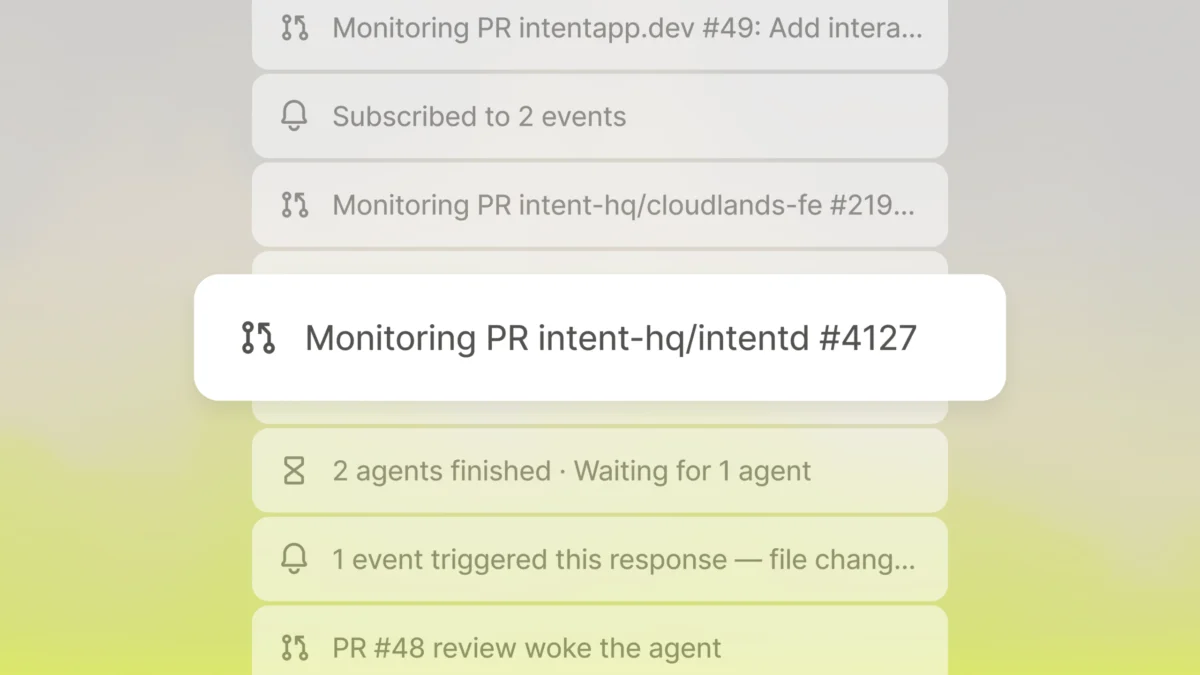
The trajectory of artificial intelligence is shifting. We have moved past the era of the singular, monolithic chatbot and into the age of the agentic swarm. As AI models become more adept at utilizing external tools, the industry is transitioning from "prompting" to "delegating." The most potent manifestation of this shift occurred recently when OpenAI deployed a staggering 10,000 concurrent agents to tackle the Navier–Stokes Millennium Prize Problem—one of the most notoriously difficult challenges in fluid dynamics.
This milestone raises a critical engineering question: When you scale from one agent to ten thousand, how do you prevent chaos? How do you maintain coherence, prevent redundancy, and ensure that thousands of digital entities are not merely working, but working together?
The Mechanics of Coordination: Defining the New Frontier
Agent coordination is the art of aligning massive, asynchronous streams of back-and-forth messaging between AI models to achieve a unified goal. It is not merely about launching instances; it is about creating an environment where agents—trained to interact with tools and APIs—can effectively communicate their progress, hand off dependencies, and self-correct.
The platform Intent has emerged as a leader in this domain. While its primary interface is designed for software developers, its architectural principles are increasingly being viewed as the blueprint for large-scale agent orchestration across industries. From automating complex electricity grid load balancing to managing intricate restaurant reservation logistics, the "Intent model" provides a framework for managing the lifecycle of an AI agent.
Chronology: From Static Tools to Dynamic Orchestration
The history of AI agent interaction is short but exponential.

- Phase 1 (The Single Assistant): Initially, AI agents were treated as static entities. A user would ask a question, the agent would search, and the agent would provide an answer. If the task was too large, it would simply fail or hallucinate.
- Phase 2 (The Tool-Use Revolution): The integration of function calling allowed agents to interact with the real world—writing files, calling APIs, and executing code. However, these agents were "siloed."
- Phase 3 (The Era of Orchestration): We are currently in the third wave. Developers are no longer deploying "an agent"; they are deploying "an ecosystem." The focus has shifted from the intelligence of the model to the coordination of the swarm.
This evolution is mirroring the maturation of software development tools. Just as version control (Git) and continuous integration (CI/CD) transformed how human teams build software, these new coordination layers are transforming how AI models build solutions.
Supporting Data: The Pillars of Intent-Based Coordination
The success of multi-agent systems relies on three core technical pillars that prevent the "Tower of Babel" effect when thousands of agents are running in parallel.
1. Focused Context via Isolated Workspaces
The primary failure point in early multi-agent systems was context contamination—where one agent’s actions inadvertently broke another’s progress. Intent solves this by assigning every task to its own isolated workspace.
By mirroring the "sandbox" approach used in professional software development, agents are prevented from overwriting shared data. Crucially, each workspace maintains a "living spec." This document serves as the single source of truth, recording decisions, rationale, and state. When a new agent is brought in to assist, it does not need to guess what happened; it reads the living spec, inheriting the collective wisdom of its predecessors.
2. Specialist Roles: Moving Beyond the "Generalist"
Human organizations are successful because they utilize specialization. An architect does not write the plumbing, and a plumber does not design the load-bearing walls. Multi-agent systems are beginning to mirror this.

Intent allows for the definition of distinct agent roles:
- The Coordinator: Acts as the project manager, decomposing complex goals into granular, delegatable sub-tasks.
- The Implementer: The "worker bee" that executes code, writes scripts, or generates content based on the coordinator’s roadmap.
- The Verifier: A critical role that tests outputs against acceptance criteria, acting as a safeguard to ensure the work is production-ready.
By creating reusable, domain-specific roles, teams can encode their internal standards—such as security protocols or testing frameworks—directly into the agent’s DNA.
3. Intelligent Handoffs and Lifecycle Management
One of the most impressive feats of modern orchestration is the ability for agents to "hibernate." In a sophisticated system, an agent doesn’t need to be active 24/7. It can monitor a pull request or a data stream in the background, only "waking up" when a specific condition is met.
Furthermore, handoffs allow for an elegant transition of knowledge. When an agent determines its specific mandate is fulfilled, it performs a structured handover to the next agent in the chain, distilling the vast ocean of data into only the most critical information required for the next phase. This keeps the token usage efficient and the logic clean.
Official Responses and Industry Sentiment
While OpenAI has remained relatively quiet on the granular technical specifics of their 10,000-agent Navier–Stokes deployment, industry experts are noting that such a feat would have been impossible without a robust orchestration layer.

"The bottleneck is no longer compute," says one industry analyst. "The bottleneck is the interface between agents. We are moving toward a world where ‘Agentic Operating Systems’ manage these workflows as standard practice."
Developers using platforms like Intent have reported significant gains in productivity. By offloading the "coordination tax"—the time humans usually spend managing dependencies and checking work—developers are finding they can focus on high-level architecture while the agent swarm handles the implementation and verification layers.
The Implications: Beyond Software Development
While the most mature implementations of these orchestration techniques are found in developer workflows, the implications for the broader economy are profound.
The Future of Corporate Operations
Imagine a legal firm where an agent swarm drafts a contract, a secondary agent verifies the clauses against current case law, and a third agent handles the client negotiation emails, only pinging a human lawyer when a final signature is required. This is not science fiction; it is the natural extension of the "agent role" model.
Distributed Intelligence
As these systems move from single devices to cloud-scale distributed networks, we will see the emergence of "Agentic Infrastructure." When workspaces can be synchronized across multiple devices—laptops, servers, and edge devices—the capacity for work scales linearly with the infrastructure provided.

The Human-in-the-Loop Paradigm
The role of the human is fundamentally changing. We are moving from being "operators" of tools to "architects" of systems. In this new world, the skill of the future is not coding in isolation, but defining the "living spec"—writing the requirements and success criteria that guide the thousands of agents working on our behalf.
Conclusion
The transition from the solitary chatbot to the orchestrated swarm is the most significant development in AI since the transformer architecture itself. The ability to deploy thousands of agents to solve problems as complex as the Navier–Stokes equations proves that we have entered a new era of problem-solving.
By utilizing isolated workspaces, defined specialist roles, and intelligent handoffs, we are creating a digital workforce capable of tackling challenges that were previously deemed insurmountable. As these orchestration techniques continue to mature, the question will no longer be "what can AI do," but rather "how effectively can we orchestrate it?" The future of work is not just human; it is a collaborative, massive-scale symphony of specialized agents working in concert to turn intent into reality.


 Reynand Wu
 Evan Lee Salim
 Basiran
 Neng Nana
 Iffa Jayyana
 Raul Delapena Setiawan
 Rifan Muazin
 Asro
Asro