
 Nana Muazin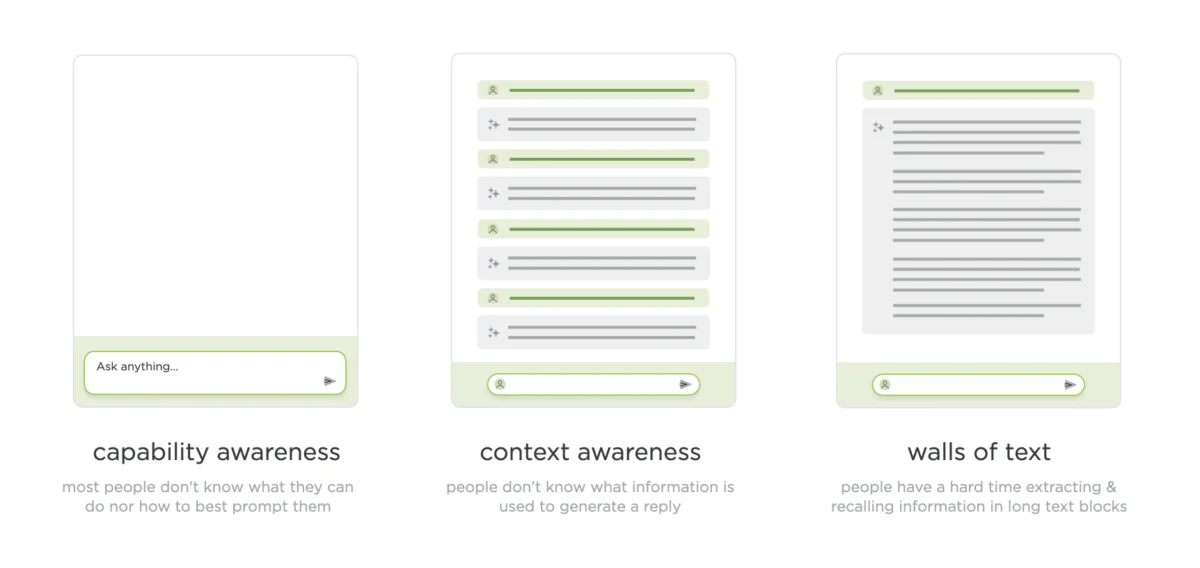
In the rapidly evolving landscape of software development, a fundamental shift is underway—one that threatens to render the traditional concept of the "user interface" obsolete. Luke Wroblewski, a pioneer in web and mobile design, recently joined Mark Swaine on The UX Institute podcast to unpack a provocative thesis: that the digital tools we rely on are fundamentally flawed because they force humans to think like machines.
As AI agents move from the periphery to the core of our digital interactions, the industry is approaching a reckoning. For decades, we have optimized for "users"—people who must navigate complex menus, layers, and commands. But as the interface begins to dissolve into intent-based systems, designers are finding that the old rulebook no longer applies.
The Paradigm Shift: Beyond the "Hammer User"
For the better part of four decades, the tech industry has been obsessed with "user experience." Yet, according to Wroblewski, the very nomenclature is part of the problem.
From Operators to Creators
"We don’t call carpenters ‘hammer users,’" Wroblewski notes. "We call them carpenters. We focus on what they make." By labeling our audience as "users," the software industry has historically prioritized the mechanics of the tool over the expertise of the individual. The goal of technology should not be to make a person a master of a specific software interface, but to empower them to accomplish their goals without the friction of operating a computer.
The current state of professional software—such as Photoshop—serves as a primary example of this friction. For over thirty years, creative professionals have been forced to master pixel manipulation. If a designer wants to adjust a subject’s hair in a photograph, they are forced to perform a series of technical abstractions: selecting pixels, creating masks, applying transformations, and managing layers.
At his company, Reve, Wroblewski is advocating for "object-oriented editing." Instead of manipulating digital coordinates, the software recognizes semantic objects—a person, hair, a vase. The interface moves closer to the user’s mental model, allowing them to issue an instruction like "make the hair flow to the left" rather than manually selecting pixels. This is the future of design: a transition from technical operation to intent-based creation.
Chronology of the Interface: From CLI to AI
To understand where we are going, we must look at the trajectory of digital interaction.
- 1980s – 1990s (The Command Era): Users were required to speak the language of the machine via Command Line Interfaces (CLI). The barrier to entry was high, and the user was subservient to the syntax of the OS.
- 1990s – 2010s (The Graphical Era): The birth of the GUI (Graphical User Interface) brought us the desktop metaphor. We learned to interact with files, folders, and icons. This democratized computing but introduced the "User" label—a person who manages files rather than solving problems.
- 2010s – 2023 (The Mobile/Touch Era): The interface dissolved slightly into touch-based gestures, but the underlying structure remained rigid. We became "app users," constantly toggling between siloed experiences.
- 2024 – Present (The Agentic Era): We are now entering the era of AI-driven interfaces. Here, the machine does the heavy lifting, and the UI shifts from "doing" to "directing."
UI for AI: The Pet vs. Cattle Dichotomy
One of the most compelling insights shared during the conversation is the psychological split in how people interact with Artificial Intelligence. A developer collaborator of Wroblewski’s coined a framing that categorizes users into two camps: Pet People and Cattle People.
The Pet Person
These users treat AI as a companion. They want to see the "why" behind every decision. They crave transparency—the full trace, every step of the reasoning process, and every tool call exposed. If the UI hides the process, these users feel anxious, blind, and skeptical. They need to nurture the AI, ensuring it is behaving correctly at every turn.
The Cattle Person
In contrast, these users treat AI as a utility—an engine for output. They don’t care how the sausage is made; they want the clean, final result. For them, a wall of reasoning traces or "tool call" logs is just noise. They want the outcome, and they want it fast.
The Design Challenge
This creates a massive divergence in UI requirements. If a designer builds an interface for "pet people," they alienate the "cattle people" with information density. If they cater to "cattle people," they trigger anxiety in the "pet people." Balancing this remains one of the most difficult challenges in modern software design.
Wroblewski highlights three core pillars that designers must navigate:
- Capability Awareness: Does the user know what the AI is actually capable of performing?
- Context Awareness: Does the AI understand the current state of the user’s intent?
- The "Wall of Text" Problem: How do we present complex reasoning without overwhelming the human operator?
Data Freshness: The Hidden Achilles’ Heel
While the conversation often centers on the interface, the engine behind the AI is only as good as its data. Many organizations are currently rushing to connect their "data" to AI agents, but they are ignoring a fundamental truth: most enterprise data is stale.
In a typical company, a CRM is updated sporadically. It is a static snapshot of a past reality. However, the true "source of truth" in any modern organization is dynamic: the sales call happening right now, the Slack conversation from five minutes ago, or the live collaborative whiteboard.
Software engineers have it easier; code is a "live" exception because the codebase is, by definition, the current source of truth. For everyone else, building an AI agent that is actually "in the loop" requires a move away from static databases and toward real-time stream processing. If an AI is making decisions based on last quarter’s CRM data, it is not an intelligent agent—it is a hallucinating librarian.
Implications for the Future of Design
The implications for designers, developers, and product managers are profound. We are no longer designing "pages" or "screens." We are designing workflows and intent-loops.
The Skills Gap
Designers who cling to the traditional "wireframe and layout" mindset will find the ground shifting beneath them. The next generation of digital products will not be defined by how beautiful a navigation bar is, but by how effectively an agent can interpret human intent and resolve it with real-time data.
Call to Action
The technology available today—large language models, multimodal agents, and real-time inference—was largely science fiction just eighteen months ago. We are in a period of unprecedented capability expansion. Wroblewski’s advice is simple: stop waiting for the "perfect" framework to emerge. The tools are here. Go build, iterate, and solve actual problems.
Conclusion
The era of the "user" is coming to a close. We are moving toward a future where the interface is secondary to the outcome. As designers, our job is not to build better hammers; it is to build systems that understand the carpenter. By focusing on semantic objects, managing the psychological split between "pet" and "cattle" users, and ensuring our AI agents are fed with live, truthful data, we can finally begin to create software that feels less like a chore and more like a partner.
For the full, unfiltered discussion on the future of design and the dissolution of the interface, you can listen to the full episode on The UX Institute Podcast.

 Sagoh
Sagoh

 Nila Kartika Wati
 Jia Lissa
 Basiran
 Lina Hope