
 Evan Lee Salim
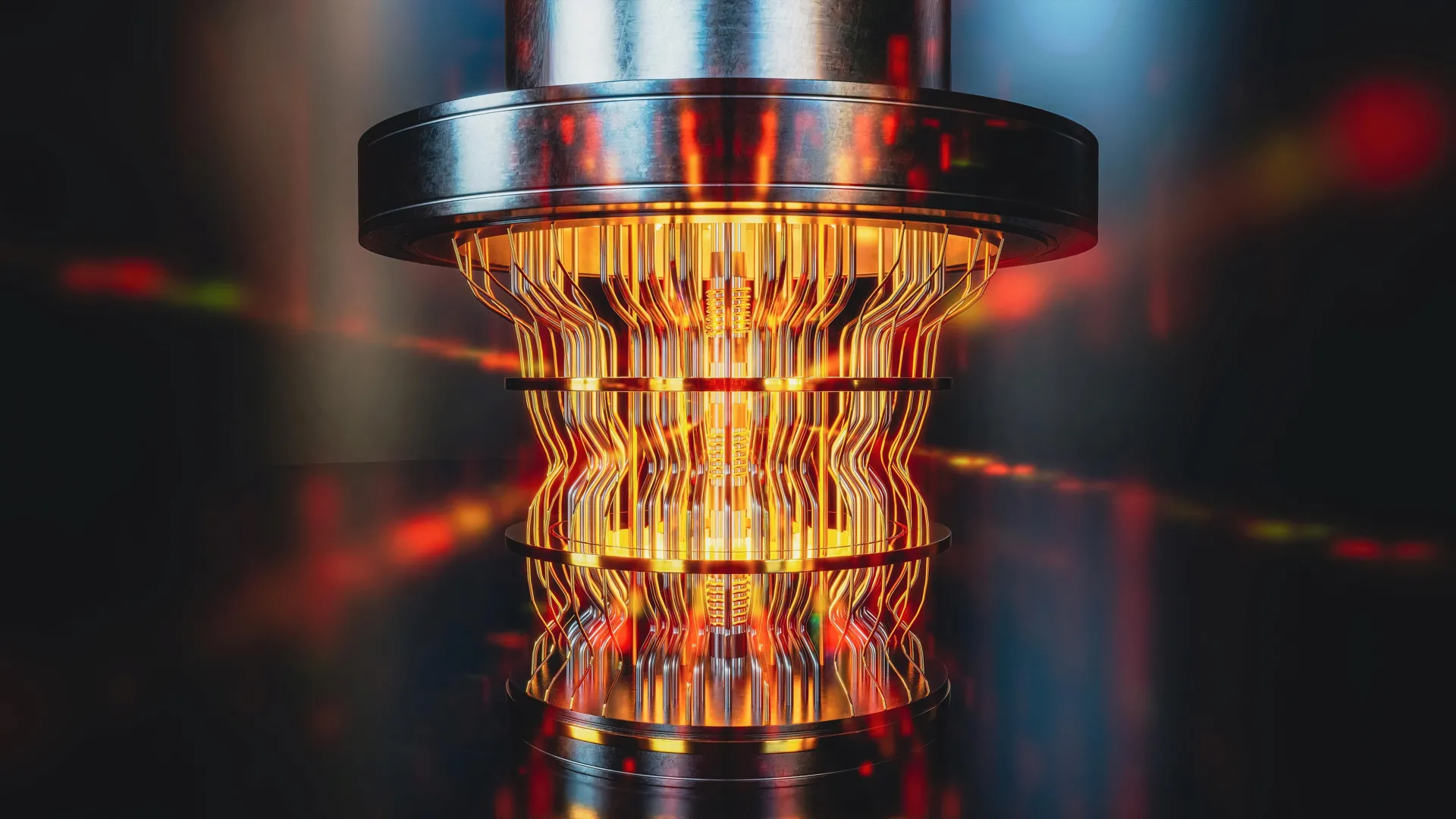
In the quest to build a functional, large-scale quantum computer, the industry has long been hampered by a single, stubborn reality: quantum bits, or qubits, are incredibly fragile. They are prone to decoherence, where the slightest vibration or temperature fluctuation causes the quantum information to vanish. To combat this, current designs rely on massive, resource-heavy error correction protocols. However, a groundbreaking study published in the journal Nature has introduced a potential paradigm shift, utilizing exotic "non-Abelian anyons" to perform universal quantum computation without the traditional, costly overhead.
This research, a collaborative effort between the University of Chicago Pritzker School of Molecular Engineering (UChicago PME), Harvard University, Stony Brook University, and the quantum computing firm Quantinuum, represents a significant milestone in experimental physics. By demonstrating a "universal gate set" using these emergent particles, the team has proven that we may be able to bypass the most cumbersome bottlenecks in quantum hardware design.
The Quest for Universal Flexibility
For a quantum computer to be truly useful—akin to a conventional laptop capable of running various software applications—it must possess "universality." This means the hardware must be able to perform any possible quantum operation. Historically, achieving this level of control while maintaining stability has been the "Holy Grail" of the field.
Most quantum computers attempt to preserve information by distributing it across a large array of physical qubits. While this protects data, it often creates a gap: the protected state is static, and performing actual computations on that state requires complex, auxiliary operations. Engineers typically fill this gap with "magic states," which are highly resource-intensive to produce through a process known as distillation. This process is so demanding that it can consume the majority of a quantum computer’s available processing power, leaving little room for actual calculations.
The researchers at UChicago PME and their partners have demonstrated that non-Abelian anyons can act as a "dark horse" in this race. By encoding information into these topological objects, the system can perform the necessary logic gates intrinsically, potentially rendering magic state distillation unnecessary.
Chronology of a Breakthrough: From Theory to Laboratory
The path to this discovery was not linear; it was a multi-year effort that bridged theoretical high-energy physics and applied quantum engineering.
2003: The Theoretical Foundation
The journey began conceptually in 2003, when Carlos Mochon, then a student of the renowned physicist John Preskill at Caltech, proposed that certain symmetry groups could theoretically support universal quantum operations through a combination of braiding and fusion. For over two decades, this remained a compelling, yet untested, hypothesis.
2024: The First "D4" Milestone
In early 2024, a research team that included Ruben Verresen, an assistant professor at UChicago PME, achieved the first experimental demonstration of non-Abelian anyons on a Quantinuum trapped-ion processor. They utilized a symmetry group known as "D4"—the mathematical patterns governing the rotations and reflections of a square. While this was a monumental success in showing that these exotic particles could be synthesized within a quantum circuit, it had a limitation: the "D4 universe" was not mathematically complex enough to support universal computation.
The Present: The "S3" Breakthrough
For the current study, the researchers pivoted to a different symmetry group: "S3," which describes the symmetries of an equilateral triangle. By mapping these symmetries onto Quantinuum’s H2 trapped-ion processor, the team successfully utilized 54 entangled qubits to create the required anyons. Unlike the previous experiment, the S3 system provided the necessary complexity to perform a full, universal set of quantum gates.
The Physics of Non-Abelian Anyons: "Alternative Universes"
To understand why this approach is so revolutionary, one must move past the traditional definition of a particle. In standard physics, we think of electrons or photons as standalone entities. Non-Abelian anyons are different; they are "emergent" particles.
"The way I think about these codes is they’re creating little universes—alternative universes, but ones that reflect some of the properties of our own," says Ruben Verresen. These particles are created by entangling a massive number of conventional qubits into a collective state. Within this state, the qubits behave as if they are a new, single object that follows specific, exotic rules of movement.
The Power of Braiding and Fusion
The term "non-Abelian" refers to a property of the particles’ state changes. When one anyon is moved around another—a process known as "braiding"—the internal state of the system changes. Crucially, the order in which these braids are performed changes the outcome. This sensitivity to sequence allows for the encoding of complex logic.
However, as the team discovered, braiding alone is insufficient for universality. The missing link was "fusion." When two anyons are brought together (fused) and their collective state is measured, it collapses the quantum information into a definitive result. By combining the topological protection of braiding with the decisive measurement of fusion, the team created a suite of tools capable of executing any quantum algorithm.
Supporting Data and Technical Architecture
The experiment utilized 54 qubits on the Quantinuum H2 processor, a hardware platform renowned for its high-fidelity trapped-ion gates. The team encoded "topological qutrits"—a system with three possible states, rather than the binary 0 or 1 of standard qubits—to perform their calculations.
The results demonstrated three specific operational building blocks:
- Entangling gates achieved through the braiding of anyons.
- Topological measurements achieved through the fusion of anyons.
- Magic state synthesis performed directly via topological operations, avoiding the standard distillation pipeline.
The data confirmed that the S3 symmetry group allowed for these operations to occur with a consistency that matched theoretical predictions. While active error correction was not the focus of this specific proof-of-concept, the researchers confirmed that the underlying mechanism is naturally robust, as the information is stored in the collective, entangled state of the system rather than in a single, vulnerable location.
Official Responses and Scientific Perspective
The academic community has received the findings with significant interest. The integration of high-level theoretical topology with practical, high-fidelity quantum hardware is seen as a maturation of the field.
"Non-Abelian codes are a dark horse in the race to quantum error correction," said Henrik Dreyer, managing director and scientific lead at Quantinuum’s Munich office and a co-author of the study. "In this work, we show the first universal gate set in a non-Abelian code, which demonstrates that fault-tolerant computations can in principle be done without resorting to magic state distillation or cultivation, which are the most expensive operations in standard quantum error correction codes."
Graduate students Anasuya Lyons and Chiu Fan Bowen Lo, who led much of the experimental work in the group of Harvard professor Ashvin Vishwanath, expressed the personal significance of the project: "It is gratifying to see ideas we have spent our PhD work thinking about realized in the lab, and it has been made possible by remarkable advances in quantum hardware over the past few years."
Implications for the Future of Quantum Computing
The implications of this work extend far beyond the laboratory. If these techniques can be scaled, they offer a viable roadmap toward "fault-tolerant" quantum computing—machines that can correct their own errors in real-time without losing their computational capacity to the overhead of error-mitigation protocols.
Breaking the Bottleneck
If the need for magic state distillation is eliminated or significantly reduced, the "resource cost" of building a quantum computer drops drastically. This could accelerate the timeline for achieving quantum advantage in fields such as drug discovery, materials science, and cryptography, where current quantum computers are still too noisy to be reliable.
Fundamental Physics
Beyond computing, the ability to create and manipulate these anyons provides a playground for physicists to study the laws of nature. Because these particles are essentially simulated, researchers can "tune" the properties of these synthetic universes to study phenomena that are otherwise impossible to observe in our own, such as the behavior of matter under extreme topological constraints.
The Path Ahead
While the current results are a successful proof-of-principle, the researchers are careful to manage expectations. "So far, we’ve ignored the question of error correction. Here, it’s more like a proof of principle," Verresen noted.
The next phase of the research involves integrating these operations into an active error-correction cycle. Verresen is already collaborating with other researchers at UChicago PME to develop new techniques for stabilizing non-Abelian quantum memories. As the hardware continues to improve, the transition from "proof of principle" to a "fault-tolerant module" could represent the most significant jump in quantum computing history—moving us from the era of experimental curiosities to the era of industrial-grade quantum machines.

 Jia Lissa
 Asep Darmawan

 Lina Irawan
 Pevita Pearce

 Suro Senen

 Muslim

 Ammar Sabilarrohman

 Raul Delapena Setiawan
