
 Asep Darmawan
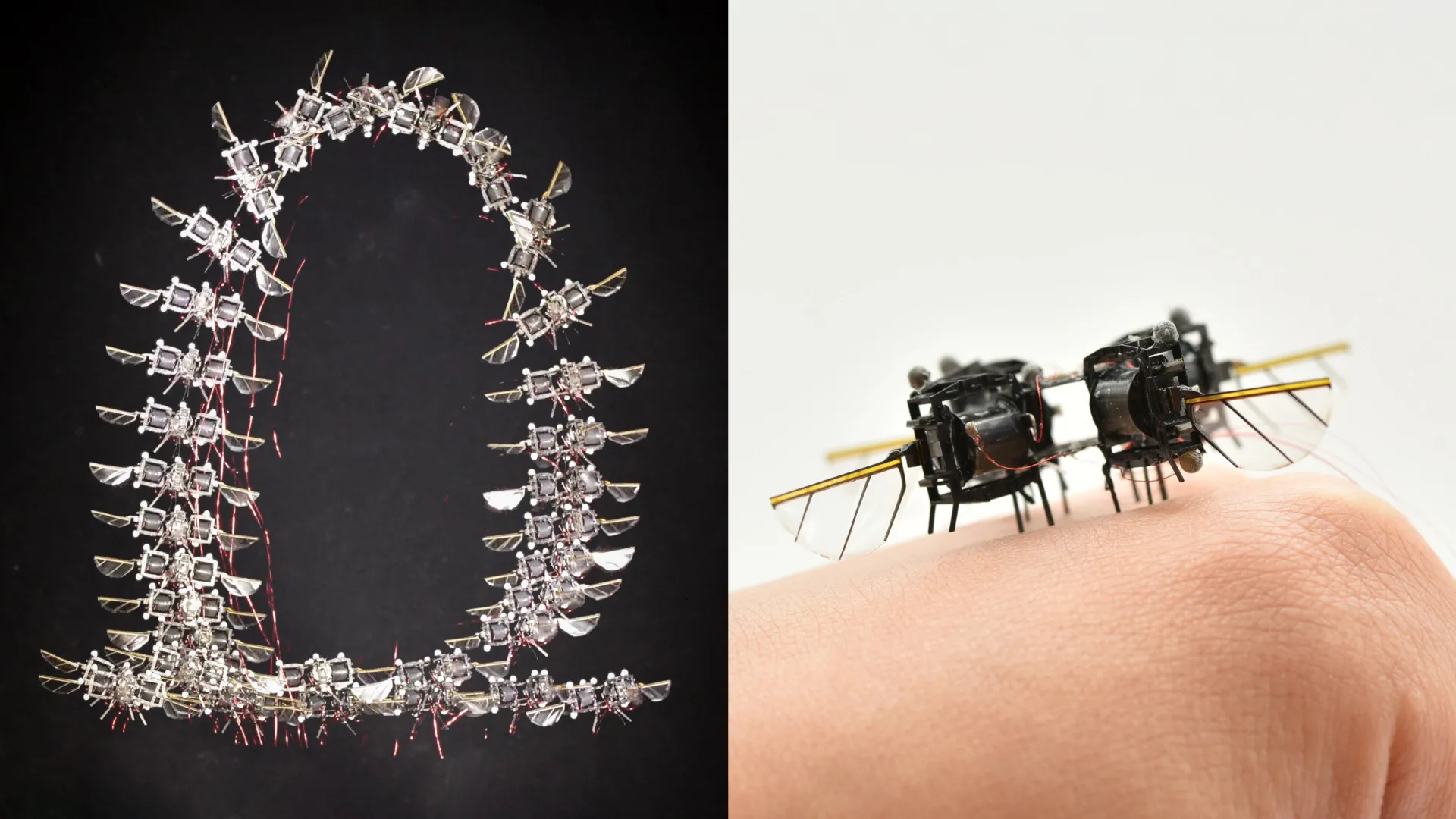
In the aftermath of catastrophic earthquakes, every second counts. Rescuers often face a race against time to locate survivors buried under tons of unstable debris. For years, the vision of deploying swarms of tiny, insect-sized robots to crawl through the narrow, precarious voids of a collapsed building has been a staple of science fiction. Today, thanks to a breakthrough at the Massachusetts Institute of Technology (MIT), that vision is moving rapidly toward reality.
Researchers at MIT’s Soft and Micro Robotics Laboratory have unveiled a new AI-based control framework that grants aerial microrobots a level of speed, agility, and maneuverability previously thought impossible for their size. By mimicking the flight dynamics of natural insects, these robots can now execute high-speed, aggressive maneuvers—such as repeated somersaults—while navigating complex environments that remain inaccessible to traditional, larger drones.
The Evolution of Aerial Microrobotics: A Chronological Overview
The journey toward autonomous, insect-scale flight has been a grueling process of trial and error spanning more than five years.
Early Limitations
In the early days of the project, the primary hurdle was the "brain" of the robot. While the hardware—inspired by the flapping mechanisms of bees and flies—had reached a point of functional stability, the software controlling it was rudimentary. Early prototypes were sluggish, relying on simple, linear flight paths that were easily disrupted by minor wind currents or mechanical inconsistencies. Because the aerodynamics of such small, lightweight machines are highly volatile, even a slight gust of wind could send a robot spinning out of control.
Hardware Refinements
The team, led by Associate Professor Kevin Chen, first focused on upgrading the physical architecture. By developing a more durable version of the robot—roughly the size of a microcassette and weighing less than a standard paperclip—they created a platform capable of handling more stress. These robots utilize soft artificial muscles that contract with lightning speed, allowing for high-frequency wingbeats. However, as the physical design improved, the need for a smarter controller became the project’s most significant bottleneck.
The AI Breakthrough
The turning point arrived when Chen’s lab collaborated with Professor Jonathan P. How’s team at the Laboratory for Information and Decision Systems (LIDS). Recognizing that human-tuned controllers were insufficient for high-speed, dynamic flight, the researchers pivoted toward a two-part AI-driven control system. This system, which debuted in their recent study published in Science Advances, represents a fundamental shift in how microrobots process environmental information and react to flight disturbances.
Unlocking Agility: Supporting Data and Technical Performance
The most striking aspect of the MIT team’s achievement is the sheer leap in performance metrics. In comparison to their previous generation of microrobots, the new AI-equipped machines demonstrated a 450 percent increase in flight speed and a 250 percent boost in acceleration.
The Power of Two-Step Control
The technical elegance of the solution lies in its two-part architecture, designed to solve the age-old conflict between computational complexity and real-time performance:
- The Expert Planner (Model-Predictive Controller): This component acts as the "architect" of movement. Using a dynamic mathematical model, it predicts how the robot will behave under various conditions, planning complex paths that include sharp turns and aggressive body flips. Because this requires heavy computational power, it is used to generate the "ideal" flight path while accounting for the physical limits of torque and thrust.
- The Policy (Deep Learning): The team used "imitation learning" to train a deep-learning model based on the expert planner’s output. By teaching the policy to replicate the expert’s behavior, they created a streamlined, real-time decision-making system. This allows the robot to react to its environment in milliseconds without needing an onboard supercomputer.
The Somesault Test
To prove the efficacy of this new framework, researchers put the robot through a grueling test: 10 consecutive somersaults. Under normal circumstances, a small error in the first flip would compound, leading to a catastrophic crash by the third or fourth iteration. However, the AI-driven robot completed the full sequence in 11 seconds, even while researchers introduced artificial wind disturbances to force it off-course. The robot remained within a four-to-five-centimeter margin of its target trajectory throughout the entire flight, a feat that sets a new benchmark for the field.
Official Perspectives from the MIT Team
The significance of this work is not lost on the researchers. According to Kevin Chen, the goal is to bridge the gap between traditional quadcopters and the biological grace of insects.
"We want to be able to use these robots in scenarios that more traditional quadcopter robots would have trouble flying into," Chen stated. "Now, with our bioinspired control framework, the flight performance of our robot is comparable to insects in terms of speed, acceleration, and the pitching angle. This is quite an exciting step toward that future goal."
Jonathan P. How, the Ford Professor of Engineering, noted the symbiotic nature of the hardware and software development. "The hardware advances pushed the controller so there was more we could do on the software side," he explained. "As Kevin’s team demonstrates new capabilities, we demonstrate that we can utilize them."
Co-lead author Yi-Hsuan Hsiao, an MIT graduate student, emphasized the broader implications of the study. "This work demonstrates that soft and microrobots, traditionally limited in speed, can now leverage advanced control algorithms to achieve agility approaching that of natural insects and larger robots," she said.
Future Implications: Beyond the Laboratory
The successful demonstration of this AI controller is merely the first step toward a more autonomous future. The team is already looking ahead to the next series of challenges.
Integration of Onboard Sensing
Currently, the robots rely on an external motion capture system—essentially a set of cameras tracking the robot’s position—to function. The team’s next major objective is to miniaturize sensors and cameras so they can be mounted directly onto the robot. This would allow the machines to function autonomously in "blind" environments, such as the dark, dusty, and debris-filled interiors of a collapsed building.
Swarm Intelligence and Coordination
Beyond individual performance, there is the potential for swarm behavior. By integrating onboard sensing, multiple robots could communicate with one another, coordinating their search patterns to cover large areas of a disaster site efficiently. They would need to navigate tight spaces while simultaneously avoiding collisions with each other and the surrounding rubble.
Bio-Mimicking Saccades
The researchers have also begun exploring "saccades," a rapid, jerky movement observed in insects. By pitching the body sharply to change position and then quickly braking, insects maintain clear vision despite their movement. If the MIT team can replicate this in their robots, it will allow future iterations to carry sensors that can provide stable, high-resolution imagery even during high-speed transit.
A Paradigm Shift
As this research moves forward, it promises to redefine the role of microrobotics in public safety, environmental monitoring, and perhaps even search-and-rescue operations. By showing that complex, high-speed movement is possible at the sub-gram scale, the MIT team has effectively removed one of the largest obstacles to the widespread adoption of micro-aerial vehicles.
The research, which was supported by the National Science Foundation, the Office of Naval Research, the Air Force Office of Scientific Research, MathWorks, and the Zakhartchenko Fellowship, stands as a testament to what is possible when interdisciplinary expertise—merging soft robotics with advanced AI—is applied to one of the most challenging problems in engineering. While we may not see these mechanical insects in the field tomorrow, the path toward a future where they assist in saving human lives has never been clearer.


 Jia Lissa

 Sagoh

 Lina Irawan

 Pevita Pearce

 Suro Senen

 Muslim

 Ammar Sabilarrohman

 Raul Delapena Setiawan
