
 Jia Lissa
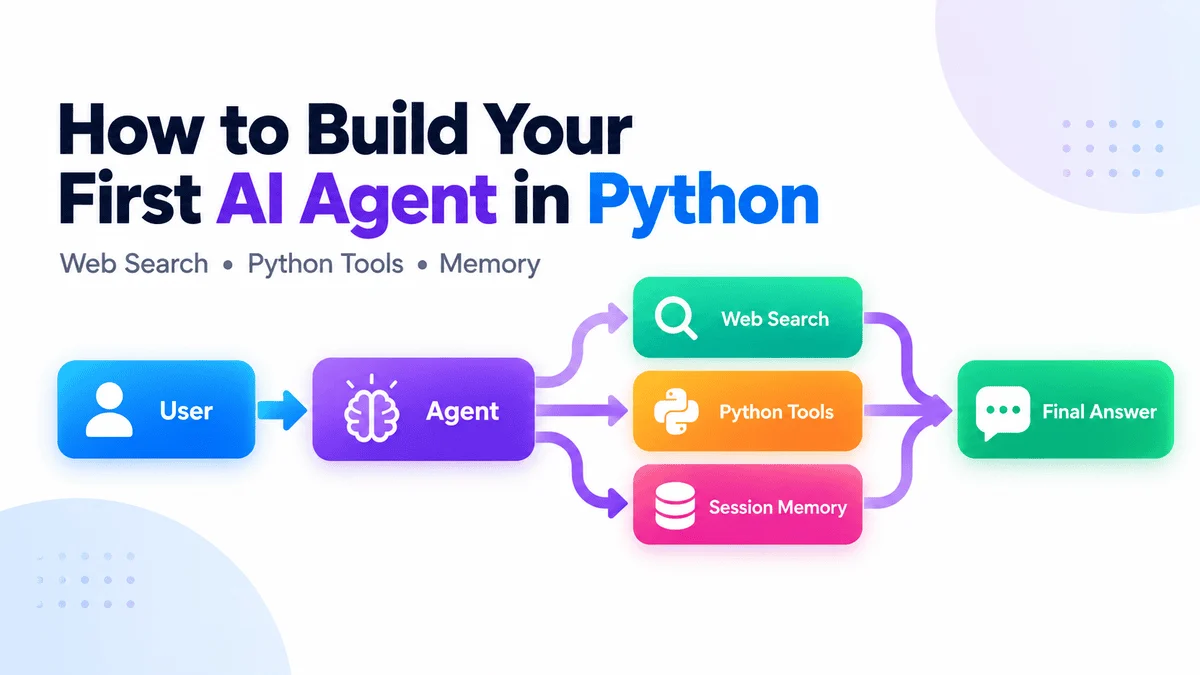
The landscape of artificial intelligence is shifting rapidly. For years, developers interacted with Large Language Models (LLMs) through a rigid, linear paradigm: a user submits a prompt, the model generates a response, and the interaction concludes. However, the true potential of generative AI lies not in static text generation, but in agency—the ability for software to reason, utilize external tools, and execute multi-step workflows toward a goal.
With the release of the OpenAI Agents SDK, the barrier to entry for building these sophisticated autonomous systems has plummeted. Developers no longer need to architect complex, brittle tool-calling loops from scratch. Instead, they can leverage a robust framework designed to manage state, tool integration, and execution flows automatically.
Understanding the Architecture of an AI Agent
To grasp the power of the new SDK, one must first differentiate between a traditional LLM application and an AI agent. A standard LLM application follows a deterministic, unidirectional path: Prompt → Model → Response.
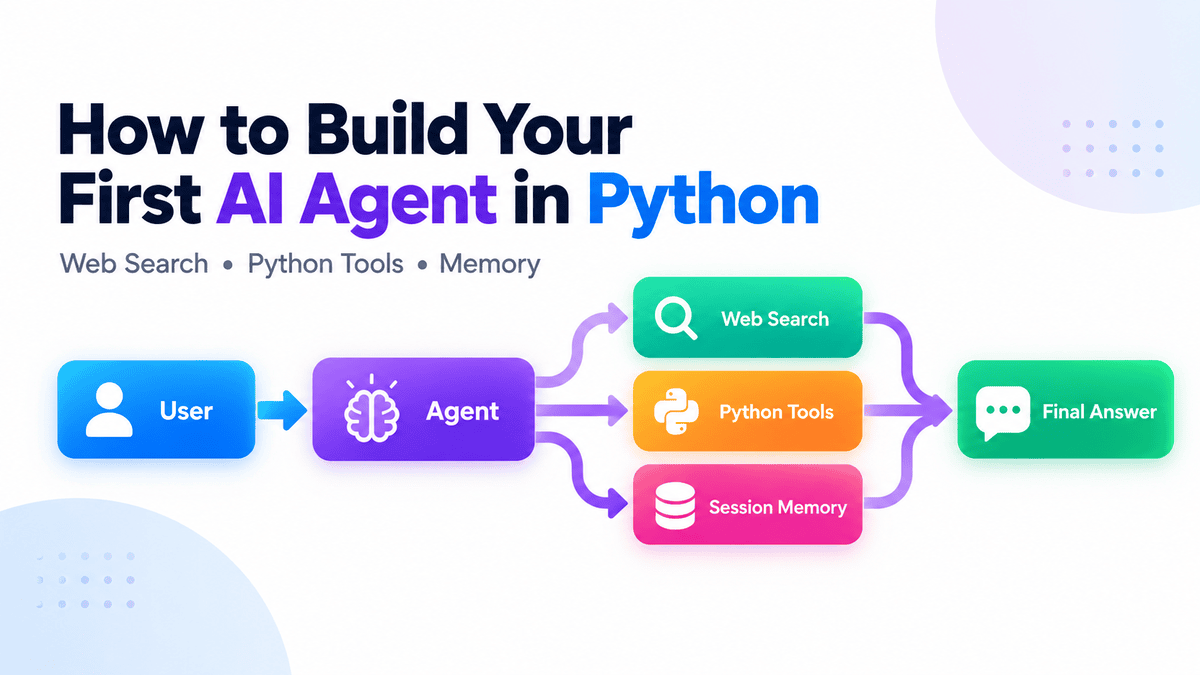
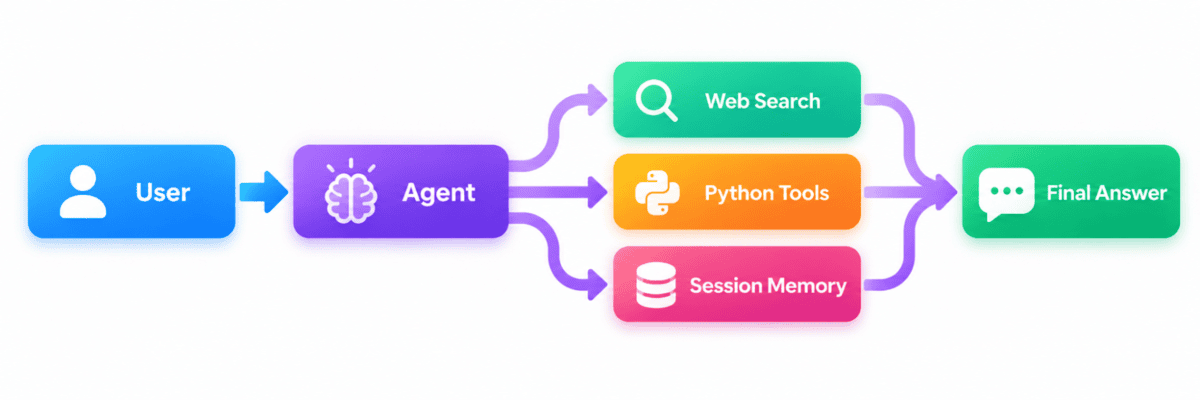
An AI agent, by contrast, introduces a feedback loop and an environment of tools. Its architecture is better represented as: User → Agent → Tool (if needed) → Agent → Final Response.
In this ecosystem, the "Runner" component of the OpenAI Agents SDK acts as the orchestrator. It manages the communication between the model and the outside world. When a model determines that it lacks sufficient information to answer a query, it can trigger a tool—such as a web search engine or a mathematical calculator. The SDK executes this request, feeds the result back to the model, and allows the model to refine its output. This iterative reasoning process is what separates a simple chatbot from a functional, problem-solving agent.
Chronology: Building the Foundation
The process of constructing an agent has been streamlined into a manageable workflow. Below is the step-by-step evolution from a basic script to a stateful, tool-augmented assistant.
Phase 1: Environment Setup
Modern Python development emphasizes isolation and speed. Utilizing tools like uv ensures that your environment remains pristine. By executing uv init and uv add openai-agents, developers can initialize a project in seconds. The final step in this phase is the configuration of the OPENAI_API_KEY, which acts as the fuel for the agent’s reasoning capabilities.
Phase 2: The Core Agent Implementation
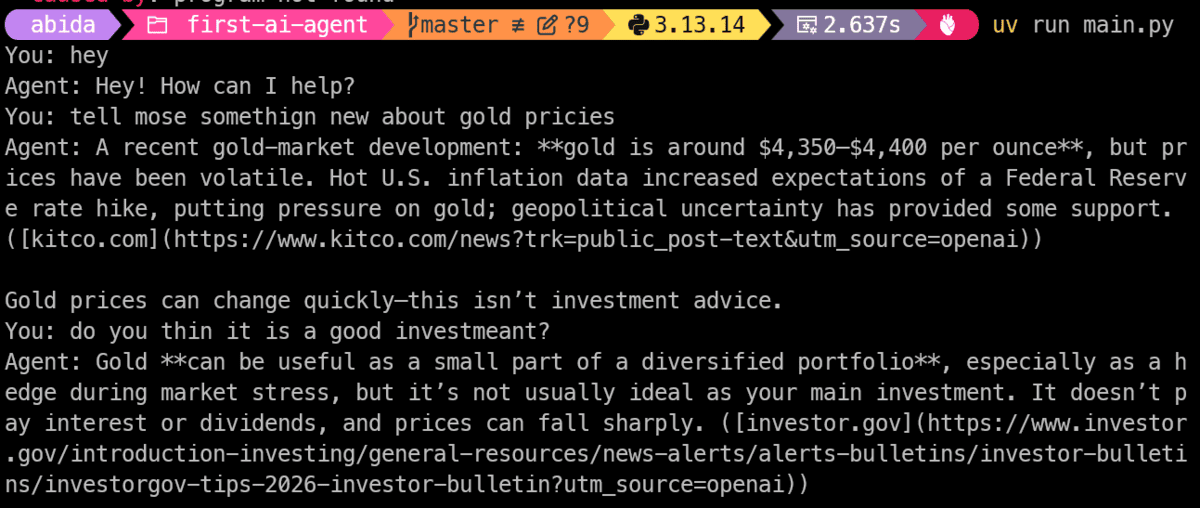
Once the environment is configured, the initial implementation is surprisingly lean. A simple main.py file can instantiate an Agent object, define its persona through "instructions," and attach a WebSearchTool. This tool is a hosted solution, meaning the agent autonomously decides when to query the live web versus relying on its internal knowledge base.
Phase 3: Extending Functionality with Custom Tools
While web search is invaluable, the true utility of an agent emerges when it integrates with a user’s private codebase. By using the @tool decorator, developers can transform standard Python functions into capabilities the agent can invoke. For instance, a function designed to calculate the cost of a multi-unit order can be handed to the agent. The SDK automatically inspects the function’s signature, docstrings, and type hints to create a schema that the model can interpret. This eliminates the need for manual JSON schema definitions.
Phase 4: Enabling Persistence
An agent that forgets its context after every interaction is a mere toy. To create a professional-grade assistant, one must implement session management. By utilizing SQLiteSession, developers can store conversation history in a persistent database. This allows the agent to maintain context across multiple interactions, enabling it to understand references such as "the latest version" or "the previous calculation."
Supporting Data and Technical Nuances
The efficacy of an agent relies heavily on the quality of its instructions and the clarity of its tool documentation. When creating custom tools, the model relies on the docstring provided in the Python code to decide when a tool is relevant. If the docstring is vague, the agent may fail to use the tool, or worse, use it incorrectly.
Furthermore, the SDK provides comprehensive tracing. In complex agentic workflows, it is often difficult to determine why a model chose a specific path. The tracing feature allows developers to inspect every step of the execution—including internal tool calls, arguments passed, and the model’s intermediate reasoning. This data is viewable within the OpenAI dashboard, providing a clear window into the "thought process" of the agent. This level of observability is critical for debugging and for optimizing the agent’s instructions to ensure higher reliability in production environments.
Official Perspectives: The Shift Toward Agentic Workflows
Industry experts and the development teams at OpenAI have framed the transition toward agents as the next logical step in the "LLM stack." By moving away from custom-built loops and toward standardized SDKs, the community is moving toward a more interoperable future.
The official documentation emphasizes that the "Runner" logic is designed to be extensible. While the current implementation covers local Python execution and web searches, the framework is built to support future integrations with more complex infrastructures, including Multi-Cloud environments and specialized APIs. The consensus among lead developers is that the "agentic pattern"—defined by tools, memory, and reasoning—is the standard for any application requiring more than a single turn of conversation.
Implications for the Future of Software Development
The implications of this shift are profound for several key sectors:
- Automation of Business Processes: With the ability to connect to custom Python functions and external APIs, agents can now serve as the "glue" between disparate business systems. An agent could, for example, pull data from a CRM, calculate financial projections using a custom Python script, and summarize the findings via a web search.
- Reduction in Boilerplate: By abstracting the tool-calling loop, the SDK allows developers to focus on the logic of the agent rather than the mechanics of the API calls. This leads to faster iteration cycles and more robust, maintainable code.
- The Rise of Specialized Assistants: We are moving toward a future where "generalist" models are augmented by "agentic" capabilities. This means that instead of training a massive model for every niche task, developers can build small, efficient agents that use specialized tools to get the job done.
Conclusion: Starting Small, Thinking Big
Building your first AI agent is an exercise in incremental design. You begin by providing the model with a defined persona and a singular tool. From there, you introduce complexity only as needed: persistent memory to handle long-term context, custom tools to interface with proprietary logic, and tracing to ensure the system is behaving as expected.
The pattern is consistent: define the scope, provide the tools, and trust the SDK to manage the execution.
As the ecosystem matures, we can expect to see more advanced features, such as agent-to-agent communication (handoffs), sophisticated guardrails for enterprise compliance, and integration with the Model Context Protocol (MCP). For now, the focus remains on building small, reliable workflows. By mastering the fundamental architecture of the agent—reasoning, action, and state—developers are positioning themselves at the forefront of the next wave of artificial intelligence integration.
Start with a simple research assistant today, and you will find that the leap to building enterprise-ready autonomous systems is far shorter than it appears. The tools are ready; the logic is clear; the only variable remaining is the problem you choose to solve.


 Asep Darmawan
 Sagoh

 Lina Irawan

 Pevita Pearce

 Suro Senen

 Muslim

 Ammar Sabilarrohman

 Raul Delapena Setiawan
