
 Jia Lissa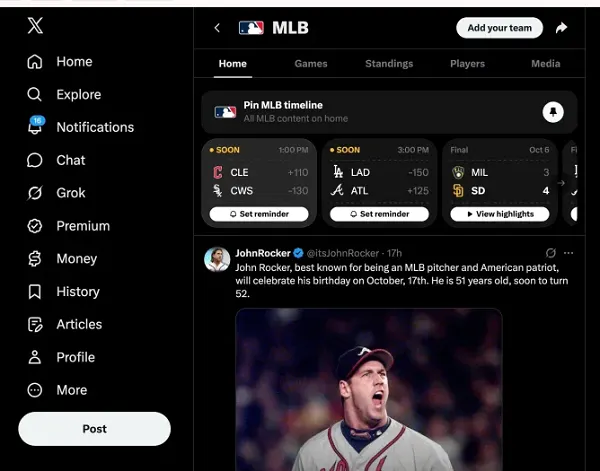
In an era where social media platforms are constantly jostling for user retention, X (formerly Twitter) is making a strategic pivot toward the one vertical that has remained its undisputed powerhouse: live sports. Following the successful rollout of an enhanced NFL Gametime hub in August, the platform has officially announced the expansion of this feature to include Major League Baseball (MLB), with plans to integrate additional sports leagues in the near future.
This initiative is not merely a superficial interface update; it represents a calculated effort to solidify X’s position as the "global town square" for real-time sports conversation. By centralizing live scores, statistical breakdowns, and curated community discussions into a single, cohesive interface, X is attempting to transform passive spectatorship into an active, high-engagement digital experience.
The Core Mechanics: What is the ‘Gametime’ Experience?
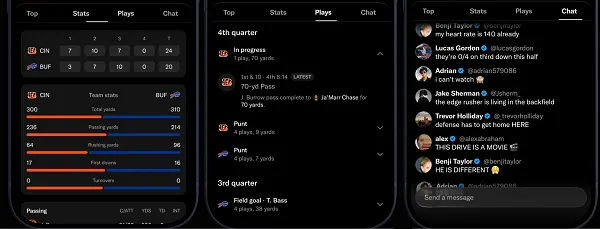
At its heart, the Gametime experience is designed to mitigate the "second-screen" friction that often plagues sports fans. Traditionally, a fan might watch a game on television while scrolling through a fragmented feed of posts to catch reactions or updates. X’s Gametime feature eliminates this divide by pulling disparate elements of the viewing experience into one dedicated hub.
Powered by technology developed by SpaceXAI, the Gametime interface provides:
- Real-time Data: Live scores, play-by-play updates, and critical player statistics.
- Integrated Content: Official team posts, league-sanctioned highlights, and news updates.
- Curated Conversations: A dedicated stream of discourse from verified creators, analysts, and fellow fans, preventing the "noise" of the general timeline from drowning out game-specific chatter.
By embedding these features directly into the app, X is creating a frictionless ecosystem where users do not need to navigate away to third-party apps or websites to stay informed.
A Chronology of the Sports-First Strategy
The evolution of X’s sports strategy has been marked by a series of deliberate, iterative releases designed to test user appetite for integrated hubs.
Phase 1: The NFL Blueprint
In August 2024, X debuted the "Expanded NFL Gametime" experience. This served as the pilot program for the current initiative. The platform recognized that the NFL, which drives massive engagement spikes on Sundays, was the perfect testing ground. The success of the NFL integration—measured by time spent on the app and interaction rates during game windows—provided the empirical justification for expanding the product.
Phase 2: MLB Integration
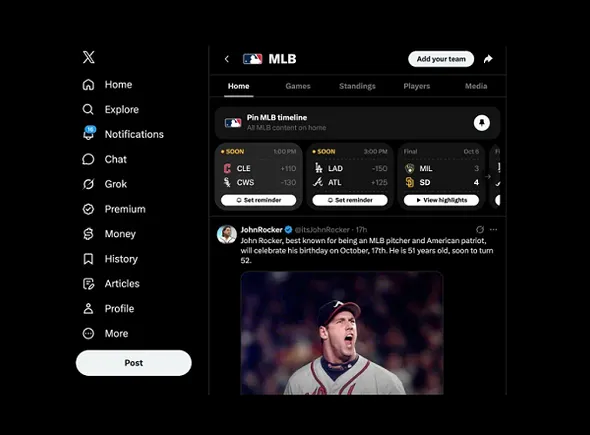
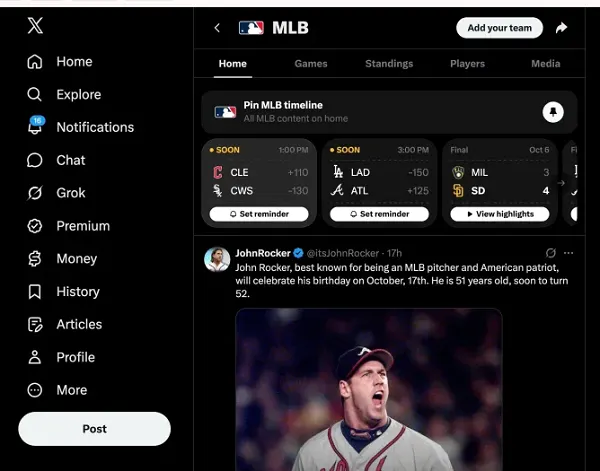
Following the positive reception of the NFL hub, X has now rolled out the feature to MLB. This represents a significant shift in scope; while the NFL is defined by high-intensity, once-a-week windows, baseball requires a different approach due to its daily, high-volume schedule. The success of the MLB hub will serve as the litmus test for whether X’s infrastructure can handle the sustained, daily engagement required for leagues like the NBA or NHL.
Phase 3: The Roadmap for Future Sports
According to internal sources at X, the platform is currently evaluating the integration of international sports, including global soccer leagues and major tennis tournaments. The goal is to create a "sports calendar" that keeps users tethered to the app throughout the entire year, regardless of the season.
Supporting Data: Why Sports is the Anchor of X
Despite the intense media focus on Elon Musk’s political rhetoric and the subsequent shifts in X’s content moderation policies, the underlying usage data tells a different story. For many users, X remains the premier destination for breaking sports news and community commentary.

The Dominance of Sports Conversations
Recent internal reports from X regarding platform influence highlight that sports-related content is not just popular—it is the platform’s primary engine. Data comparing various interest categories shows that sports-related impressions are nearly double those of the next closest category.
When users log into X, they are looking for immediacy. Whether it is a referee’s controversial call, a last-minute buzzer-beater, or a trade deadline blockbuster, the speed at which information travels on X is unrivaled. This "habitual engagement" is a commodity that other platforms—such as Instagram or TikTok—struggle to replicate, as their algorithms are generally built around discovery and algorithmic feeds rather than the chronological, live-reaction nature of X.
Audience Retention in a Fragmented Market
While other segments of the platform’s user base have fluctuated due to brand safety concerns or competitive alternatives like Threads or Bluesky, the sports community has remained remarkably sticky. Sports fans are, by nature, highly attentive audiences. They represent a demographic that is highly desirable for advertisers because they are prone to peak-moment consumption. By enhancing the Gametime experience, X is essentially building a "walled garden" that keeps this high-value audience from drifting elsewhere.
Official Responses and Strategic Intent
The corporate rationale behind these changes, as articulated by X, is twofold: user experience and advertiser value.
"Developed by SpaceXAI, Gametime on X brings real-time scores and stats, official team content, news, creators, and the live conversation together in one destination built into the platform," an X spokesperson stated in a recent release.
For X, this is about more than just utility; it is about commercial viability. The company noted that as the Gametime feature extends across the broader sports calendar, it creates more opportunities for brands to reach highly attentive audiences during "the biggest moments." This is a clear play to win back advertisers who have been hesitant to commit to the platform. By providing a structured, safe, and highly relevant environment around a live event, X can offer advertisers the "premium" placement they require.
Implications: The Future of X as a Sports Media Hub
The expansion of the Gametime feature carries profound implications for both the sports media industry and X’s future as a business entity.
1. Challenging the Traditional Sports Broadcaster
Traditionally, the "second-screen" experience was dominated by cable networks and dedicated sports apps like ESPN or The Score. By integrating these features, X is moving from a passive platform where fans talk about games to an active participant in the sports ecosystem. If X continues to secure official partnerships, it could eventually evolve into a primary hub for sports streaming or high-level analysis, bypassing traditional media intermediaries.
2. The Battle for "Live" Supremacy
In the digital age, "live" is the only thing that holds significant premium value. Everything else is on-demand. X is leaning into its strongest asset: its ability to provide a real-time, shared human experience. By focusing on Gametime, X is acknowledging that its future is not in competing with Netflix or YouTube for long-form video, but in dominating the "live reaction" market.
3. A Strategic Hedge Against Political Volatility
By leaning heavily into sports, X is effectively diversifying its content profile. When political discourse becomes toxic or controversial, the sports hub acts as a neutral, high-engagement sanctuary. This allows the platform to maintain its daily active user (DAU) counts and ad revenue potential, even if other areas of the platform face scrutiny or user churn.
4. Technical Hurdles and Future Scalability
While the AI-driven approach provides a sleek interface, the challenge for X will be consistency. As the number of supported sports grows, the infrastructure must remain stable during high-traffic events. If the Gametime feature crashes during a Super Bowl or a World Series game, the brand damage would be significant. The reliance on SpaceXAI technology suggests that X is leveraging its internal cross-company resources to ensure the backend is robust enough to handle the massive concurrent loads that live sports generate.
Conclusion: A Pivot to Relevance
X’s move to expand its Gametime experience is a classic case of a platform leaning into its core competency. While the landscape of social media is shifting, the fundamental human desire to share the excitement of a live game with a massive, global community remains constant.
By integrating the tools of the modern sports fan directly into the interface, X is attempting to secure its place in the daily habits of millions. It is a bold, necessary, and strategic expansion. If successful, it will prove that despite all the noise, the "global town square" remains the best place to talk about, watch, and follow the games that define our culture. The question remains: will this be enough to turn the tide of advertiser sentiment and cement X’s status as a profitable media entity? For now, the sports fans are watching—and they are staying.


 Suro Senen
 Raul Delapena Setiawan
 Laily UPN
 Iffa Jayyana
 Rifan Muazin
 Lina Hope
 Lina Irawan