
 Pevita Pearce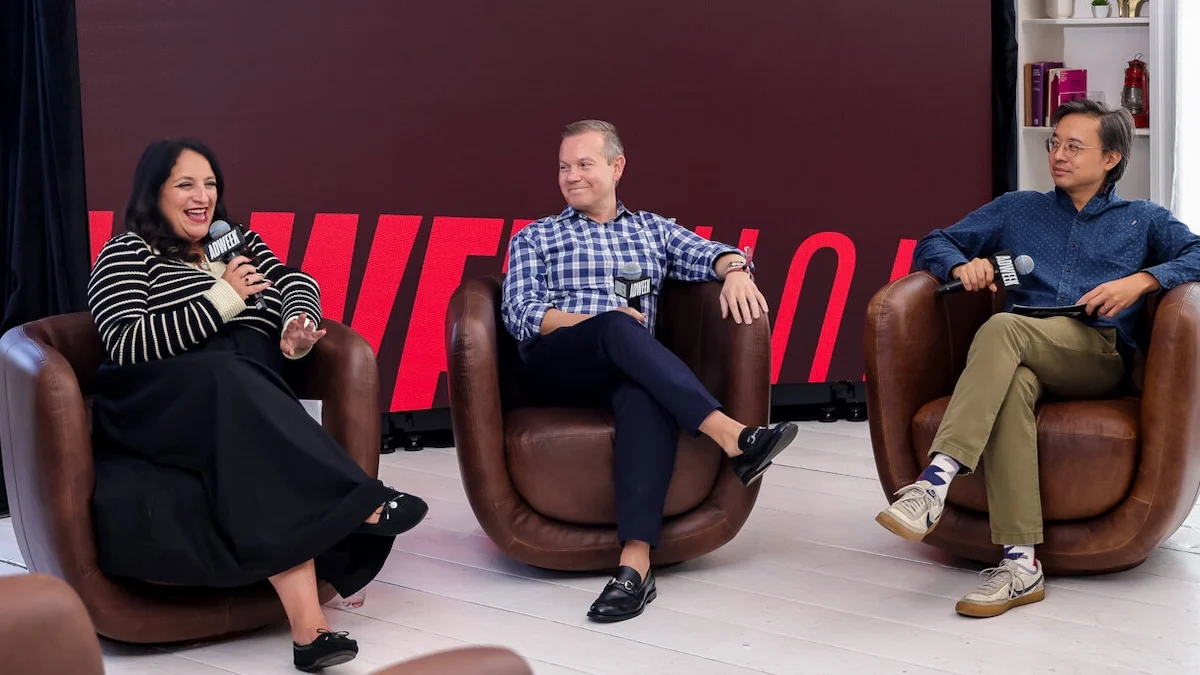
This feature was created in partnership with Ibotta.
As the retail landscape faces a convergence of persistent inflation and evolving holiday shopping habits, the relationship between brand and consumer is undergoing a fundamental transformation. Shoppers, once driven by brand habit, are now increasingly pragmatic, meticulously curating their grocery carts to navigate tighter household budgets. In this high-stakes environment, the traditional "spray and pray" approach to advertising is rapidly becoming obsolete.
To unpack how leading brands are pivoting, ADWEEK recently hosted an Advertising HQ panel featuring industry heavyweights. Moderated by ADWEEK editor-in-chief Ryan Joe, the discussion included Chris Dungan, VP of client partnerships at Ibotta, and Krystle Rocci, integrated strategy director at global spirits leader Pernod Ricard. The conversation provided a roadmap for how data-driven media spend is no longer just a marketing luxury—it is an essential operational strategy for connecting with consumers in the "moments that matter."
The Strategic Shift: Data as the New Currency of Connection
The panel opened with a sobering reality: consumers are becoming significantly more selective. Elevated grocery prices have forced a shift in behavior where brand loyalty is increasingly competing with price sensitivity. For a company like Pernod Ricard, which manages an extensive portfolio of premium spirits, the challenge is twofold: maintaining brand equity while ensuring their products remain the preferred choice in a crowded, cost-conscious marketplace.
Bridging the Measurement Gap
For decades, the efficacy of promotions was measured in aggregate—how many units moved versus how much revenue was generated. However, this high-level view often lacked the nuance required to understand why a consumer chose one product over another.
By leveraging Ibotta’s robust first-party data, Pernod Ricard has moved beyond vanity metrics. Chris Dungan explained that the partnership allows the brand to trace the direct impact of specific promotions on individual buying behaviors. "It allows you to better measure and attribute the success of the campaign," Dungan noted. By identifying exactly what triggers a purchase—whether it is a digital coupon, a specific retail activation, or a targeted media placement—brands can refine their spend to focus on what actually drives incremental growth rather than simply subsidizing sales that would have occurred anyway.
Chronology of a Changing Season: The "Flattened" Holiday Curve
A recurring theme throughout the discussion was the changing temporal nature of holiday shopping. Historically, retail activity during the fourth quarter was defined by a massive, compressed surge in the weeks leading up to major holidays. Today, that model is effectively dead.
The Rise of the "Elongated" Holiday
"Consumers are elongating that purchasing period," Dungan observed. "They’re trying to flatten that consumption curve."
This shift is not merely a logistical change; it is a psychological one. Driven by a desire to spread out expenses and avoid the frantic, price-sensitive environment of December, consumers are starting their holiday planning as early as October. For marketers, this means the window of opportunity to capture "share of throat" or "share of stomach" has widened significantly.
Krystle Rocci emphasized that the key to winning this elongated season lies in interception. "The timing is getting earlier and earlier," she said. "So how can we get in their mind before they’re at the shelf or at the cart, so that when they do actually make the decision, they’re choosing one of our products?"
By identifying these earlier decision-making windows, Pernod Ricard is able to shift its media spend earlier in the season, ensuring their brands are top-of-mind long before the consumer enters the store.
Supporting Data: Moving Beyond Impressions to Intent
In the digital advertising ecosystem, the industry has long been obsessed with "reach"—the number of eyeballs on a creative asset. However, the panel argued that reach is a hollow metric without context.
The Funnel and the Mindset
Krystle Rocci highlighted that for a brand like Pernod Ricard, where the consumption of spirits is often tied to social occasions and emotional experiences, context is everything.
"Are they seeing an ad in the right moment, in the right mindset, to get them to perform an intended action, and is it driving them down that purchase funnel through the journey?" Rocci asked.
This inquiry touches on the core of modern performance marketing. It is not enough to be seen; the brand must be present when the consumer is in the "consideration" phase of their journey. For spirits, this might be during the planning of a holiday party or the act of browsing recipes online. By aligning messaging with these specific intent signals, brands can ensure that their advertising investment translates into tangible movement through the purchase funnel.
Building a Path to Loyalty in a Promotional World
A critical concern for any brand relying on discounts is the risk of "promotional cannibalization"—where a brand trains its customers to only buy when a discount is offered. Dungan and Rocci addressed this by reframing the role of the promotion.
Promotions as the "Acquisition Engine"
Promotions, according to Dungan, should be viewed as an acquisition tool for new or lapsed buyers. "Getting the consumer to choose the brand the next time they buy the category is the true loyalty test," he stated.
Once the consumer is through the door, the responsibility shifts to brand-building. Rocci noted that loyalty is forged through a combination of elements: the quality of the product (the bottle), the sensory experience (the flavor profile), and the ongoing narrative provided by the brand. "Whether that is the bottle or the flavor profile or the price point or the continued re-engaging content to give them meaning around that brand, I think that’s all helpful," she added.
The Portfolio Effect: Cross-Category Synergy
Another innovative strategy discussed was the concept of "basket growth." Pernod Ricard isn’t just selling individual spirits; they are selling occasions. By encouraging consumers to view their brands as complementary, they can increase the total value of the shopping trip.
"Sometimes our brands can complement one another," Rocci explained, citing the classic combination of Absolut and Kahlua for an espresso martini. This strategy encourages a more holistic approach to brand management. Rather than operating in silos, individual brand leaders are encouraged to collaborate to grow the "collective equity" of the organization.
Implications: The CFO-CMO Alignment
The final takeaway from the discussion was perhaps the most significant for the future of marketing budgets: the convergence of creative strategy and financial performance.
For years, marketing departments were often seen as cost centers, with advertising budgets being the first to be cut during economic downturns. However, the ability to leverage data to drive incremental sales and demonstrate ROI is changing this dynamic.
"If we can ultimately think about growing baskets and collective equity for the organization, making consumers buy more products overall, it benefits that organization meaningfully," Dungan concluded.
This data-backed approach creates a common language between the CMO, who is focused on brand awareness and consumer engagement, and the CFO, who is focused on top-line growth and bottom-line efficiency. By proving that specific media investments directly correlate to measurable increases in basket size and frequency of purchase, marketers are securing their seat at the strategic table.
The Future of Retail Engagement
As we move into the future, the lessons from the Pernod Ricard and Ibotta partnership are clear: the brands that win will be those that use data not just to monitor the consumer, but to understand the nuances of the consumer’s journey. By embracing the reality of the elongated holiday season, focusing on the quality of the interaction rather than the quantity of impressions, and fostering long-term loyalty through meaningful brand storytelling, companies can weather the volatility of the current market and emerge stronger.
The retail landscape may be more challenging than ever, but for those willing to lean into the precision of data-driven media, it is also a landscape of immense opportunity. The path forward is no longer defined by how much a brand spends, but by how intelligently that spend is deployed to meet the consumer in the moments that matter most.

 Suro Senen
 Raul Delapena Setiawan
 Laily UPN
 Iffa Jayyana
 Rifan Muazin
 Lina Hope
 Lina Irawan