
 Raul Delapena Setiawan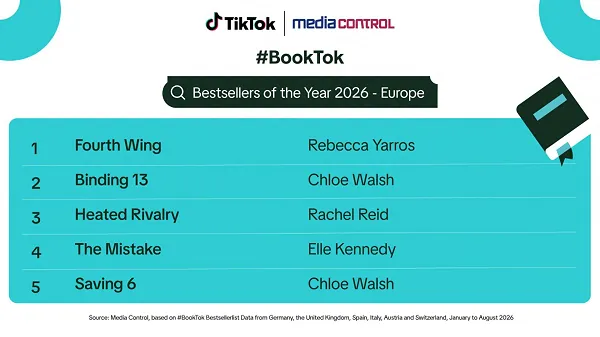
The literary world has undergone a seismic shift, moving away from traditional gatekeepers toward the decentralized, community-driven influence of social media. This transformation is best exemplified by the meteoric rise of "BookTok," a subculture on TikTok that has fundamentally altered how books are discovered, discussed, and sold. In a definitive move to formalize this influence, TikTok has announced its inaugural European Bestseller of the Year for 2026, crowning Rebecca Yarros’s fantasy juggernaut Fourth Wing as the definitive title of the movement.
This announcement is more than just a list; it is a declaration of TikTok’s status as a primary engine for the publishing industry. With data revealing that the platform catalyzed 50 million book sales across the European Union in 2025 alone, the implications for authors, publishers, and marketers are profound.
Main Facts: The 2026 European BookTok Bestseller
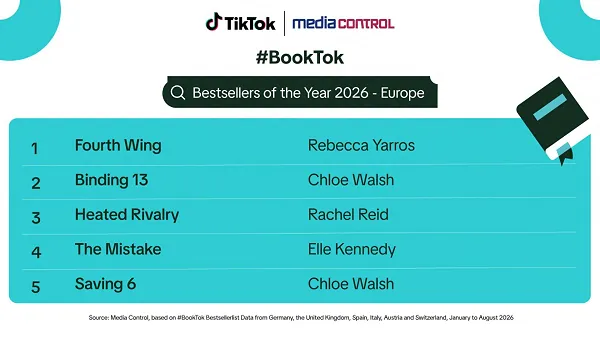
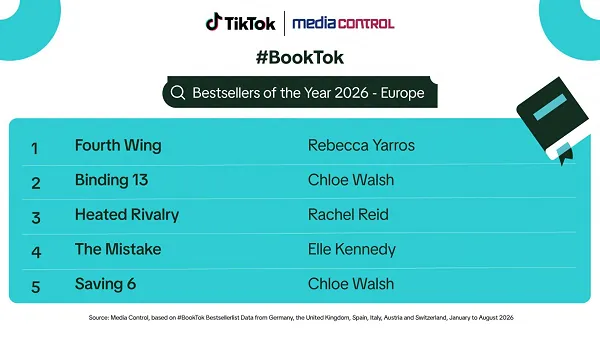
The crown jewel of the inaugural awards belongs to Rebecca Yarros, whose novel Fourth Wing captured the top spot. The selection process was a rigorous exercise in data synthesis, combining in-app community engagement metrics with verified point-of-sale data from Media Control.
The list serves as a snapshot of the contemporary reader’s appetite. It highlights a distinct preference for commercial fiction—specifically romance, fantasy, and character-driven narratives that lend themselves to emotional discourse. Alongside Yarros, the list features heavy hitters of the community:
- Chloe Walsh: A double entry for Binding 13 and Saving 6.
- Rachel Reid: Recognized for the fan-favorite Heated Rivalry.
- Elle Kennedy: Represented by the enduringly popular The Mistake.
These titles were not selected by a panel of traditional literary critics, but by the collective voice of millions of users who translate their online enthusiasm into physical bookstore purchases.
Chronology: From Niche Hashtag to Industry Powerhouse
To understand the significance of the 2026 awards, one must look at the evolution of the BookTok phenomenon.
2020–2021: The Emergence
What began as a disparate collection of users sharing short videos about their favorite reads quickly coalesced into a unified movement. During the pandemic, the hashtag #BookTok provided a sense of connection for isolated readers. Algorithms began to surface these videos to audiences with similar tastes, creating "echo chambers" of enthusiasm that acted as organic marketing campaigns.
2022–2024: The Mainstream Integration
Publishers began to take notice. Marketing departments shifted budgets away from traditional print advertising and toward influencers on TikTok. The "BookTok Made Me Buy It" trope became a legitimate retail phenomenon, with bookstore chains like Barnes & Noble and Waterstones creating dedicated "As Seen on TikTok" display tables.
2025: The 50-Million-Sale Milestone
By 2025, the cultural impact was quantifiable. TikTok reported a staggering 50 million book sales in the EU directly linked to platform trends. This was the year the platform transitioned from a mere discovery engine to a sales powerhouse.
2026: Formalization of the Ecosystem
The announcement of the "European Bestseller of the Year" represents the current zenith of this timeline. By institutionalizing the award, TikTok has signaled that it intends to remain a permanent stakeholder in the literary lifecycle.
Supporting Data: The Quantitative Impact of Digital Discovery
To validate the anecdotal evidence of BookTok’s success, TikTok partnered with research firm Qualtrics to survey over 5,000 users globally. The findings paint a picture of a demographic that is more engaged with reading than any generation in recent history.
The Rise of the Reader
The data reveals that 4 out of 5 readers aged 16 to 39 have reported an increased interest in reading over the past several years. This defies the common narrative that digital platforms are "killing" the attention span required for long-form literature. Instead, the short-form nature of the platform serves as a "gateway" to long-form reading.

Conversion Metrics
The influence of the community is direct and measurable:
- 49% of BookTok users explicitly stated that the platform inspired them to purchase a specific book or audiobook.
- Discovery: The platform acts as a recommendation engine, introducing users to genres they might have ignored in a traditional bookstore, such as niche sub-genres of fantasy and contemporary romance.
These numbers suggest that the "TikTok effect" is not just about hype; it is about reducing the friction between finding a book and purchasing it.
Official Responses and Industry Perspectives
In the official announcement, TikTok highlighted the symbiotic relationship between the platform’s algorithm and the literary community. "The community helps drive reading discovery and book sales across Europe," the company stated in its newsroom release.
Publishing industry experts view these developments with a mix of awe and caution. On one hand, authors like Rebecca Yarros and Chloe Walsh have seen their careers reach heights that would have taken decades under the traditional publishing model. On the other hand, there is a noted "homogenization" of content; if a book does not fit the specific aesthetic or emotional "hook" that performs well on TikTok, it risks being overlooked.
Despite this, the consensus among marketers is that BookTok is currently the most effective tool for reaching the coveted Gen Z and Millennial demographics.
Implications: The Future of Literary Marketing
The 2026 rankings serve as a bellwether for the future of the publishing industry. For stakeholders, the implications are three-fold.
1. The Shift to "Author as Influencer"
The era of the "mysterious author" is fading. To succeed in the current market, writers are increasingly expected to participate in the digital ecosystem. Authors who engage authentically—sharing behind-the-scenes content, discussing their writing process, or engaging with fan theories—are seeing significantly higher sales conversions than those who remain detached.
2. The Power of Aesthetic and Community
Marketing is no longer about the blurb on the back of the book; it is about the "vibe" of the story. The success of titles like Fourth Wing is linked to their strong visual identity and the ease with which they can be shared in short, emotive video formats. Marketers are now prioritizing visual storytelling as much as the narrative quality itself.
3. A New Discovery Paradigm
The traditional bookstore display is no longer the primary driver of discovery. Instead, the algorithmic feed has become the modern digital librarian. Publishers are now analyzing TikTok data to predict trends, inform cover designs, and even influence editorial decisions. This creates a feedback loop where the community influences the production of the very books they consume.
Conclusion: A New Chapter for Books
The crowning of Fourth Wing as the European BookTok Bestseller of the Year is a milestone that marks the end of the "experimentation" phase of social media in literature. We are now in the age of platform-integrated publishing.
As TikTok continues to refine its role, the boundary between social media content and literature will continue to blur. For readers, this means a more accessible, vibrant, and interactive reading experience. For the publishing industry, it means a total overhaul of the marketing playbook. One thing is certain: as long as the #BookTok community continues to thrive, the appetite for stories will not only persist—it will expand into digital corners of the world that were once thought unreachable.
The 2026 report is not merely a summary of the past year’s sales; it is a roadmap for the future of storytelling. As we look toward the remainder of the decade, the question is no longer whether social media will influence the book market, but how far that influence will stretch. Based on the current trajectory, the next chapter of literature is being written in 60-second increments, one video at a time.

 Suro Senen
 Siti Muinah
 Laily UPN
 Iffa Jayyana
 Rifan Muazin
 Lina Hope
 Lina Irawan