
 Layla Zulfa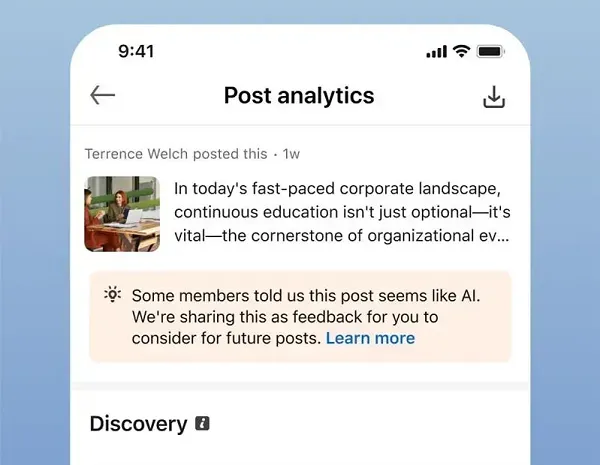
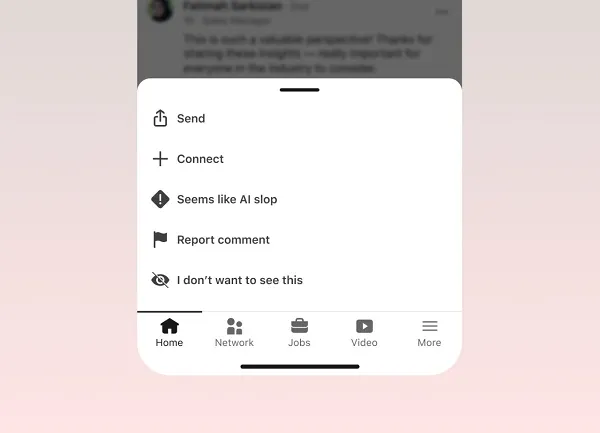
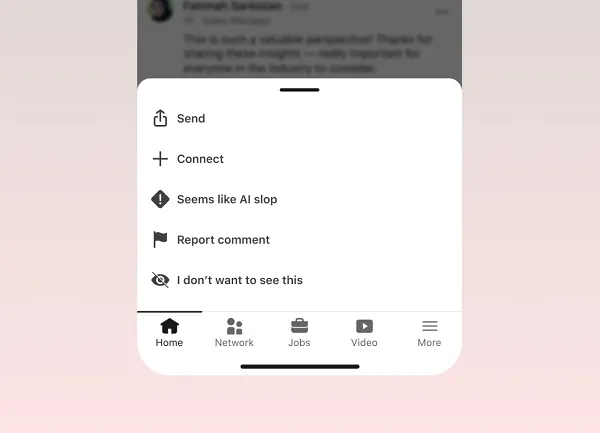
In the rapidly evolving landscape of professional social networking, LinkedIn is facing a modern existential crisis: the proliferation of "AI slop." As generative artificial intelligence tools have become increasingly sophisticated and accessible, the platform has seen an influx of content that, while grammatically polished, is fundamentally hollow. In response, LinkedIn has launched a dedicated reporting mechanism—the "Seems like AI slop" option—marking a significant shift in how the platform manages user experience and content quality.
Since its introduction earlier this month, the feature has become a primary lever in LinkedIn’s broader strategy to maintain its reputation as a hub for professional, human-centric discourse. The rollout represents a nuanced, non-punitive approach to content moderation that prioritizes user agency over heavy-handed algorithmic censorship.
The Genesis of the "AI Slop" Reporting Tool
The decision to implement this tool was not made in a vacuum. For months, users have expressed frustration over feeds clogged with repetitive, formulaic, and substance-free posts. These posts, often generated by LLMs (Large Language Models) with little to no human oversight, are designed to game the algorithm rather than foster genuine professional connection.
A Chronology of the Rollout
- Early 2024: User complaints regarding an uptick in low-quality, automated content reach a crescendo, with many users noting that their feeds feel less like a professional network and more like an automated content farm.
- October 2024: LinkedIn internal teams finalize the "Seems like AI slop" reporting option, aiming to provide a direct feedback loop between the audience and the content creators.
- November 2024 (Initial Launch): The feature is rolled out to the global user base, allowing individuals to flag content that appears to be low-effort, AI-generated fluff.
- Late November 2024: Data analysis from the first two weeks confirms the tool’s immediate adoption, with over one million reports submitted.
- December 2024: LinkedIn releases data suggesting a 40% decline in views for content identified as "AI slop," validating the effectiveness of the community-driven moderation approach.
Defining "AI Slop": Beyond Simple Automation
One of the most critical aspects of LinkedIn’s current strategy is how it defines "slop." LinkedIn’s leadership has been careful to distinguish between harmful automation and helpful assistance.
Sam Corrao Clannon, LinkedIn’s Creator Product Lead, has been instrumental in clarifying the company’s stance. According to Clannon, "AI slop" is defined as content that is "potentially sophisticated or polished in its presentation, but lacks substance." It is, effectively, digital noise—empty text posted solely to occupy feed space and chase engagement metrics without offering an original experience, perspective, or unique insight.
The Nuance of AI Usage
It is vital to understand that LinkedIn is not anti-AI. The platform recognizes that many professionals use generative tools to refine their language, summarize notes, or structure their thoughts more effectively. The "AI slop" reporting option is not a tool to banish all AI-assisted writing. Instead, it is a surgical instrument intended to filter out content that lacks human intent. If a user utilizes AI to polish a genuine insight, that is viewed as a legitimate use case. The target is the "junk" content that prioritizes quantity over quality.
Data-Driven Insights: The Impact of Community Moderation
The scale of the adoption for this new feature is perhaps the most striking indicator of the problem’s magnitude. Chief Product Officer Hari Srinivasan revealed that over a million users engaged with the reporting option within the first 14 days of its existence.
Key Metrics of Success
- User Adoption: Over 1,000,000 reports in the first two weeks alone.
- Content Visibility: A 40% reduction in views for content flagged under the "AI slop" category compared to pre-launch levels.
- Engagement Dynamics: The feedback is functioning as a signal to the algorithm to calibrate what content should appear in an individual’s feed, rather than a global blacklist.
These figures indicate that LinkedIn’s user base is not only highly aware of the "AI slop" problem but is also eager to participate in cleaning up the ecosystem. By crowd-sourcing the definition of quality, LinkedIn is effectively training its recommendation engines to prioritize human-centric, high-value professional content.
Official Responses and Strategic Philosophy
LinkedIn’s leadership has been remarkably transparent about the limitations and the goals of this feature. They have emphasized that this is not a traditional moderation tool designed to enforce policy violations or legal compliance. Instead, it is a tool for user control.
The "Informative, Not Punitive" Approach
Srinivasan and Clannon have both stressed that the goal is to educate rather than punish. LinkedIn is currently rolling out notifications to creators who receive a high volume of "AI slop" reports. These notifications serve as a "soft warning," providing creators with the opportunity to adjust their content strategy before their account reach is severely penalized.
"We look at many signals together, and we’ve built safeguards to help prevent individual feedback from being used to unfairly target other members," Srinivasan noted. This safeguard is essential; it prevents malicious actors from "review-bombing" competitors or professional adversaries. The algorithm remains the final arbiter, and no single report can destroy a creator’s reach.
Implications: The Future of Professional Networking
The move to curtail "AI slop" has profound implications for the future of digital professional identity.
1. The Value of Human Verification
LinkedIn is leaning heavily into its verification process. By encouraging users to verify their identities, the platform is creating a tiered system where "human-verified" content carries inherent weight. Users can now filter replies by verified status, ensuring that their discussions are with real, verified professionals rather than bots.
2. The Shift Toward "Slow Content"
As the novelty of generative AI wears off, the pendulum is swinging back toward authenticity. The success of the "AI slop" button suggests that professionals are craving substance. Creators who spend time developing original, insight-driven content—even if it is less "polished" than an AI-generated essay—are likely to see increased relevance as the platform filters out the noise.
3. Redefining the "Professional Creator"
For those who make their living on LinkedIn, the new reporting tool creates a clear mandate: professional creators must ensure their work contains original, experiential value. AI can be a research assistant or an editor, but it cannot be the author of a professional identity. If a post doesn’t contain a unique human perspective, it is increasingly likely to be filtered out by the community, leading to a decline in the creator’s reach.
4. Competitive Pressure on Other Platforms
LinkedIn’s approach sets a precedent for other social networks. As platforms like X (formerly Twitter), Meta’s Threads, and even TikTok grapple with their own versions of AI-generated spam, they may look to LinkedIn’s non-punitive, user-empowered model as a blueprint. By giving users control, LinkedIn has managed to solve a systemic problem without creating a "censorship" backlash.
Conclusion: Maintaining the Human Element
The rise of artificial intelligence has undeniably transformed the professional landscape, providing tools that increase efficiency and accessibility. However, as LinkedIn has correctly identified, there is a fine line between efficiency and the erosion of substance.
By empowering its users to curate their own experience and providing creators with constructive feedback, LinkedIn is attempting to solve a modern digital problem with a human-centric solution. The 40% drop in "AI slop" views is a testament to the fact that when users are given the tools to protect their environment, they will use them to preserve the quality of their professional network.
As Srinivasan noted, the work is far from finished. LinkedIn remains committed to ensuring that the platform remains a place for "real people and real perspectives." In an age where the barrier to creating content has dropped to near zero, the new premium is on something that AI cannot manufacture: genuine, hard-earned human experience. For the foreseeable future, the "AI slop" button will be the primary mechanism by which LinkedIn guards that value, ensuring that in the digital professional world, the human element remains the most important asset.


 Ammar Sabilarrohman
 Sagoh
Sagoh
 Raul Delapena Setiawan
 Reynand Wu


 Azzam Bilal Chamdy
 Ali Ikhwan