
 Suro Senen
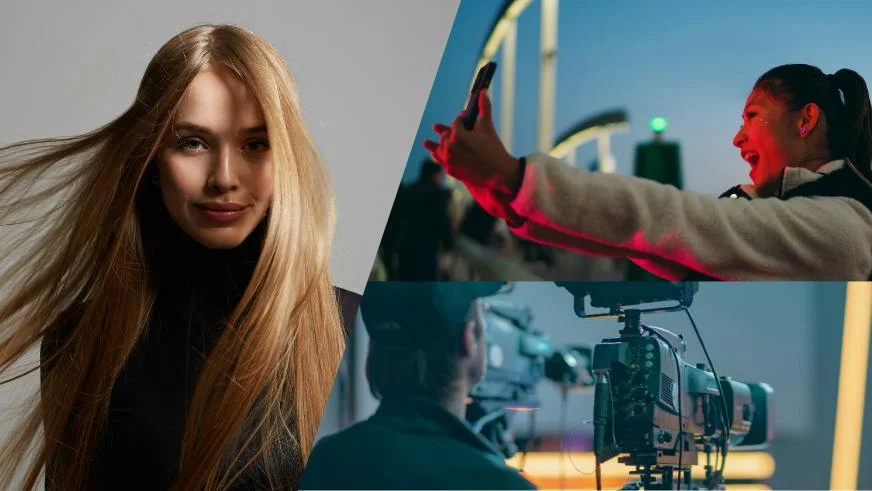
Video has indisputably ascended to become the internet’s primary language. For modern brands, the medium offers an unparalleled capacity to capture fleeting attention, foster deep emotional connections, and demonstrate complex value propositions. As consumer habits shift toward short-form, high-engagement content, video has evolved from a supplementary marketing asset into the backbone of the digital customer journey.
Whether a brand is introducing itself to a cold audience or nurturing a long-term relationship with a loyal customer, video serves as a versatile tool that bridges the gap between digital interaction and real-world conversion. By mapping content strategy to specific stages of the sales funnel—awareness, consideration, conversion, and retention—brands can effectively guide consumers toward desired actions.
This report examines four distinct case studies, spanning FMCG, B2B, technology, and artisanal family enterprises, to illustrate how strategic video implementation can redefine market presence.
The Strategic Anatomy of the Video Funnel
Modern digital marketing is defined by a non-linear path to purchase. Consequently, brands must adopt a "right content, right moment" philosophy.
- Top-of-Funnel (ToFu): Focuses on brand salience and virality. The goal is to capture attention without the immediate pressure of a sale.
- Mid-Funnel (MoFu): Centers on persuasion and product education. Here, the content must bridge the gap between "I’m interested" and "I’m convinced."
- Bottom-of-Funnel (BoFu) and Retention: Focuses on customer success and emotional connection. The objective is to validate the purchase and turn the buyer into a brand advocate.
Pringles: Gamifying UGC for Maximum Visibility
The early stages of the customer journey are rarely about technical specifications; they are about mental availability. Brands must be top-of-mind when the consumer eventually enters the market.
The #Pringling Challenge
Pringles, a heritage snack brand, recognized that the most effective way to cut through the noise of social media was to leverage its most distinctive asset: the hyperbolic paraboloid shape of the chip itself. By launching the #Pringling challenge on TikTok, Pringles moved away from traditional advertising and toward interactive, user-generated content (UGC).
The campaign invited users to share videos of themselves contorting their bodies to mimic the iconic curve of a Pringle. To ensure mass participation, Pringles implemented a custom interactive effect on TikTok that utilized advanced body-tracking technology. This "Pringle-meter" measured how accurately a user could match the shape, turning the ad into a game.
Data and Performance
The campaign’s success was measurable and significant. By incentivizing users to create content, Pringles bypassed the common trap of ad fatigue. Users were not merely watching an ad; they were participating in a cultural moment. The data supports this approach: the campaign generated 50 million boosted impressions in 2024 alone and achieved a 7.2% lift in ad recall. By repurposing the most creative user submissions as paid advertisements, Pringles extended the reach of the campaign while maintaining an authentic, grassroots aesthetic.
Salesforce and Slack: Borrowing from the B2C Playbook
For years, B2B marketing has been criticized for being overly sterile. However, the paradigm is shifting. Salesforce and its subsidiary, Slack, demonstrated that B2B brands can—and should—leverage the high-octane engagement strategies typically reserved for B2C influencers.
The MrBeast Partnership
In a bold move for a software giant, Salesforce partnered with MrBeast, the world’s most-subscribed YouTube creator, for a Super Bowl campaign. The premise was a high-stakes, digital treasure hunt with a $1 million prize. Participants were directed to Slack to solve a puzzle, transforming a traditional advertisement into a massive, interactive product demonstration.
Bridging the Gap
The campaign did not stop at the Super Bowl spot. Salesforce and Slack utilized the "halo effect" of the influencer partnership to create a series of B2B-focused follow-up videos. These videos functioned as detailed case studies, showcasing how MrBeast’s production team utilized Slack’s specific features—such as integrated workflows and channel management—to coordinate a global project in just 27 days.
By showing a world-class team utilizing the product under pressure, Salesforce provided the ultimate "proof of concept." This strategy moved the conversation from abstract software features to tangible, real-world utility, effectively persuading B2B buyers who are often skeptical of traditional marketing messaging.
Dyson: Defending Value through Education
When a brand commands a premium price point, it must provide commensurate value through customer support and product efficacy. Dyson, a leader in the hair technology space, has mastered the use of post-purchase content to justify its pricing.
The "How-To" Ecosystem
Dyson’s content strategy is rooted in "Customer Success." Because their products often feature complex engineering, simply selling the unit is insufficient; the user must also know how to use it to achieve salon-quality results.
By populating their website and YouTube channel with a vast library of high-production tutorials, Dyson ensures that every customer has the potential to become an expert user. These videos serve a dual purpose:
- Retention: By ensuring the user gets the best possible result, the likelihood of a return or negative review drops significantly.
- Advocacy: A customer who consistently achieves great results is more likely to become a vocal brand advocate, providing organic social proof that defends the brand’s premium price point against lower-cost competitors.
Goat Milk Stuff: The Power of Personalization
For smaller, family-run brands, scaling customer intimacy is often the greatest challenge. Goat Milk Stuff, an artisanal skincare brand, opted for a high-touch video strategy to ensure long-term retention.
Scaling Intimacy
Upon the completion of a purchase, the company sends a personalized thank-you video to the customer. This simple, humanizing gesture transforms a transactional digital exchange into a relationship. It acknowledges the customer’s value and fosters a sense of belonging.
The implications for this strategy are twofold:
- Direct Retention: The emotional connection built via a personal message significantly increases the likelihood of repeat purchases.
- Organic Advocacy: These personalized touches frequently prompt customers to share their experience on social media, creating a ripple effect of organic, authentic UGC that attracts new, high-intent customers to the brand.
While the manual nature of this approach is manageable for smaller businesses, larger organizations are now turning to Generative AI to scale similar personalized video experiences, allowing for one-to-one connections on a one-to-many scale.
Implications for Modern Marketing
The common thread across these diverse case studies is the alignment of content with the specific intent of the consumer.
- Context is King: The Pringles campaign worked because it lived in the native environment of TikTok, respecting the platform’s culture of play. Conversely, the Salesforce campaign succeeded because it translated high-level enterprise software into a relatable, human narrative.
- Friction Reduction: Video is the ultimate tool for reducing friction. Whether it is an interactive effect that makes participation easy or a tutorial that makes a complex tool simple, the best videos remove barriers to entry or mastery.
- The Post-Purchase Frontier: Brands often focus 90% of their video budget on acquisition, yet the most profitable customers are those already in the fold. Dyson and Goat Milk Stuff demonstrate that video content designed for existing customers is one of the most effective ways to drive lifetime value (LTV).
Conclusion: Future-Proofing Your Video Strategy
As we look toward the future of digital marketing, the role of video will only continue to expand. However, the goal remains unchanged: to facilitate the movement of a customer through the funnel with minimal friction and maximum emotional resonance.
To succeed, marketers must move beyond the "one-size-fits-all" approach. They must interrogate their funnel, identify where the friction lies, and deploy video not as a decorative element, but as a strategic engine for engagement. By matching content to intent—whether that intent is discovery, consideration, or long-term loyalty—brands can ensure they remain relevant in an increasingly crowded and visual digital landscape.

 Asro
 Raul Delapena Setiawan
 Iffa Jayyana


 Pevita Pearce

 Basiran

 Azzam Bilal Chamdy

 Nila Kartika Wati
