
 Suro Senen
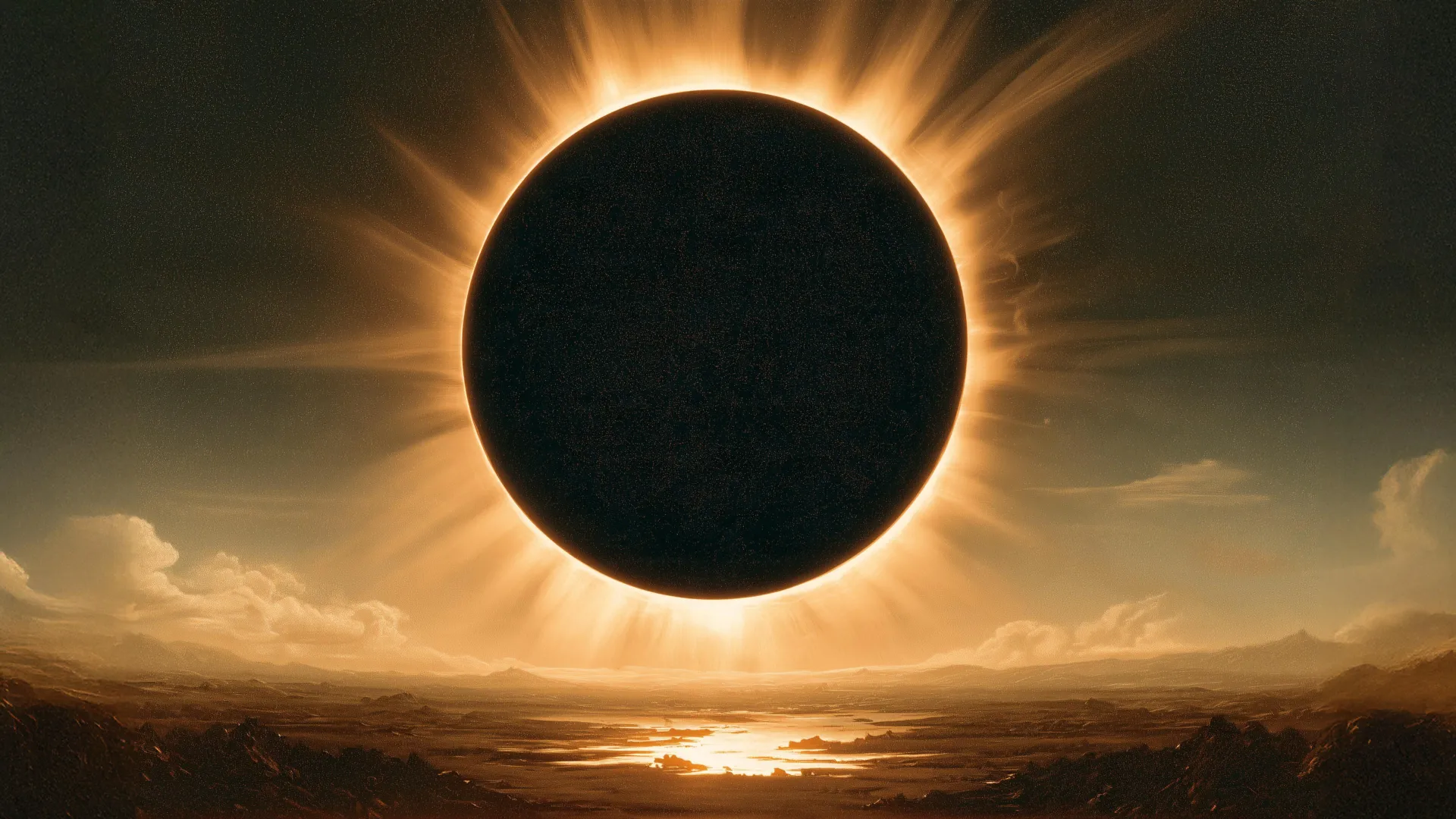
In the quiet halls of ancient Chinese courts, astronomers looked toward the heavens not merely with curiosity, but with a sense of profound political duty. Today, those meticulous observations—etched into bamboo slips and later transcribed into historical chronicles—are providing modern scientists with a unique lens through which to view the evolution of our planet and the behavior of our star. An international research team has recently revisited one of the oldest precisely dated records of a total solar eclipse, an effort that has yielded startling new insights into the shifting mechanics of Earth’s rotation and the enigmatic history of the Sun’s magnetic cycles.
By synthesizing historical geography, archaeological data, and advanced computational astrophysics, researchers have successfully reconstructed the total solar eclipse that darkened the skies over the Lu Duchy in 709 BCE. This interdisciplinary feat has not only corrected long-standing geographical errors but has also provided a vital data point for understanding the long-term variability of the Sun and the gradual deceleration of our planet’s spin.
The 709 BCE Eclipse: A Legacy in the Annals
The primary evidence for this study stems from the Spring and Autumn Annals, a foundational historical text that documents the history of the State of Lu. The annals record that on July 17, 709 BCE, the Sun was "totally eclipsed." While this record has long been cited as a benchmark for ancient chronology, the researchers found that earlier attempts to model the event were hindered by a persistent, if small, geographic discrepancy.
When scientists initially applied standard models of Earth’s historical rotation—known as the ΔT (delta T) parameter—to the eclipse, the predicted path of totality missed the ancient capital of Qufu. The discrepancy was puzzling, as the historical text was explicit about the event’s occurrence in the region. Upon investigating, the team discovered that previous astronomical models had relied on inaccurate coordinates for the ancient city. By cross-referencing modern archaeological excavation reports with historical geography, the team determined that the ancient site of Qufu was actually located approximately eight kilometers away from the coordinates previously used in astronomical software.
This seemingly minor correction proved to be the "missing link." Once the geographic parameters were realigned, the historical record snapped into perfect focus, allowing for a high-precision reconstruction of the eclipse path.
Chronology of a Celestial Event
To fully appreciate the significance of these findings, one must look at the timeline of the records themselves. The initial observation occurred in 709 BCE, during the early stages of the Zhou Dynasty’s decline. As the concept of tianming—the Mandate of Heaven—took root, celestial phenomena were viewed as direct messages from the cosmos regarding the virtue of the emperor. An eclipse was not merely a physical event; it was a cosmic audit.
Centuries later, the Hanshu (Book of Han), compiled around the 1st century CE, provided additional context to the original account. It contained a peculiar description: the eclipsed Sun was described as "completely yellow above and below." Scientists hypothesize that this passage represents one of the earliest written observations of the solar corona—the shimmering, faint outer atmosphere of the Sun that is only visible when the Moon completely obscures the solar disk.
While this later addition requires scholarly caution, as it was written seven centuries after the fact, the team argues that it provides a rare, albeit qualitative, data point. If the description is indeed of the corona, it suggests a specific solar configuration, offering a glimpse into the state of the Sun at a time when instrumental observation was impossible.
The Mechanics of a Decelerating Earth
The core scientific value of the 709 BCE eclipse lies in its ability to calibrate the "clock" of our planet. Earth’s rotation is not a constant; it is subject to the gravitational "braking" effect of the Moon, which creates ocean tides that act as a friction-based drag. Over thousands of years, this drag has caused the length of an Earth day to increase, meaning that 2,700 years ago, our planet was spinning slightly faster than it is today.
By fixing the exact time and location of the 709 BCE eclipse, the researchers were able to derive precise values for ΔT, the measurement of the difference between Terrestrial Time and Universal Time. The study determined that for the 709 BCE event, ΔT stood between 20,264 and 21,204 seconds.
"This new dataset fixes coordinate errors in previous Earth rotation studies," explained co-author Mitsuru Sōma of the National Astronomical Observatory of Japan. "It provides a robust anchor point that improves the accuracy of dating and reconstructing other historical astronomical events across the ancient world."
Supporting Data: Radiocarbon and the Solar Awakening
Perhaps the most provocative aspect of the research is the attempt to link the historical corona description with modern solar activity models. To validate their findings, the team compared the 709 BCE record against radiocarbon data extracted from tree rings.
Radiocarbon, or Carbon-14, is produced in the upper atmosphere by cosmic rays. During periods of low solar activity, the Sun’s magnetic shield weakens, allowing more cosmic rays to enter the atmosphere, which increases the production of radiocarbon. Conversely, during periods of high solar activity, the Sun’s magnetic field deflects these rays, resulting in lower radiocarbon levels.
The researchers noted that the 709 BCE eclipse occurred immediately following the "Homer Grand Minimum," an extended period of solar dormancy that lasted from approximately 808 to 717 BCE. The potential description of the corona in the Hanshu—which implies a vibrant, structured appearance—is consistent with a Sun that had just emerged from this quiet phase and was returning to an active state.
"This unique historical addendum for the possible solar coronal structure is critical," stated co-author Professor Mathew Owens of the University of Reading. "It provides a spot reference on solar activity reconstructions from tree rings and ice cores, effectively offering independent validation of our theoretical models."
Perspectives from the Research Team
The research, published in the Astrophysical Journal Letters, reflects the intersection of diverse disciplines. Lead author Hisashi Hayakawa, who holds dual doctorates in solar physics and oriental history, served as the bridge between these disparate fields.
"What makes this record special isn’t just its age, but also the cultural context of the addendum," Hayakawa noted. "We are effectively using the historical record to ‘observe’ the Sun as it was 27 centuries ago. By combining their [the ancient observers’] careful records with modern computational methods and historical evidence, we can potentially find new information about our planet and our star."
The team emphasizes that while the solar corona description is a fascinating lead, it is the eclipse timing that provides the empirical bedrock for the study. The historical "omenology" practiced by court astronomers—while rooted in superstition—has left behind a rigorous, longitudinal record that scientists are only just beginning to fully exploit.
Implications for Modern Science
The broader implications of this study are twofold. First, it demonstrates the necessity of high-resolution historical data in geophysics. As we look to model the long-term trends of climate and planetary motion, the "noise" of historical uncertainty must be reduced. By correcting the geographic placement of ancient cities, researchers can refine their models of Earth’s rotational history, which in turn improves our ability to predict future changes in the length of the day.
Second, the study highlights the importance of "archaeo-astronomy" as a valid, empirical tool for space physics. The Sun’s long-term behavior—specifically its propensity for "grand minima"—remains a subject of intense research. Understanding how the Sun recovers from these quiet phases is crucial for assessing potential risks to modern technological infrastructure, such as satellite communication and power grids, which are highly sensitive to solar magnetic activity.
In the final assessment, the 709 BCE eclipse serves as more than just a historical curiosity. It is a bridge between the ancient observers who saw an omen in the darkened sky and the modern scientists who see a vital clue about the machinery of the universe. It reminds us that our search for knowledge is an iterative process, where every correction—even one as small as eight kilometers—can ripple through time, changing our understanding of the past and sharpening our view of the future.



 Pevita Pearce

 Azzam Bilal Chamdy

 Asep Darmawan

 Nana Wu

 Nana

 Muslim
