
 Lina Irawan
In the high-stakes world of hyperscale computing, the question is no longer if a disaster will strike, but how the infrastructure will respond when it does. As Meta continues to scale its global data center footprint to support the burgeoning demands of artificial intelligence and social connectivity, the traditional playbook for disaster recovery—relying on early warnings—has become insufficient. The company has officially unveiled its "Instantaneous PowerLoss Storm" program, a sophisticated, high-stress testing paradigm designed to ensure that entire data center regions can survive a complete, zero-notice loss of power without catastrophic consequences.
Main Facts: Redefining the Last Line of Defense
Disaster preparedness in a data center context has historically focused on scenarios where operators have hours, or at least minutes, to prepare. Hurricanes, grid instability, or localized network disruptions often provide a window for automated mitigation. However, Meta’s new paradigm shifts the focus to "zero-notice" disasters—events like instantaneous, regional power failures that occur without a millisecond of warning.
The "Instantaneous PowerLoss Storm" is the final evolution of Meta’s long-standing Disaster Readiness (DR) "Storm" program. It serves as the ultimate safety net, ensuring that when the worst-case scenario occurs, the infrastructure remains resilient. This is not merely a software patch; it is a fundamental engineering philosophy that spans the entire stack, from the mechanical and electrical facilities of the data center to the core of its Twine container orchestrator.
Chronology of Resilience: From Fault Domains to Regional Recovery
The journey toward total regional resilience did not happen overnight. Meta’s infrastructure has historically been built to tolerate power loss at the rack level, using battery backups and a proprietary signaling mechanism known as Power Loss Siren (PLS).
The Evolution of the Strategy:
- Initial Phase (The Fault Domain Era): Meta hardened individual fault domains—the smallest units of infrastructure—to survive power loss. This included building persistent in-memory data storage capable of surviving sudden outages.
- Expansion Phase (Regional Hardening): Recognizing that a single data center region (comprising multiple buildings sharing power and network connectivity) presented a much larger, more complex failure surface, engineers began identifying vulnerabilities in regional bootstrapping.
- Validation Phase (The "Storm" Exercises): Meta moved from theoretical models to "shadow" region testing, where they replicated production conditions. This led to testing in the smallest production regions, followed by full-scale "PowerLoss Storms" on large regions housing critical AI and data warehouse workloads.
The Engineering Challenges: Solving the "Chicken and Egg" Problems
Scaling recovery from a single rack to an entire region introduced two significant, haunting technical hurdles: the "Ouroboros" (circular dependency) risk and the "Boomerang" effect.
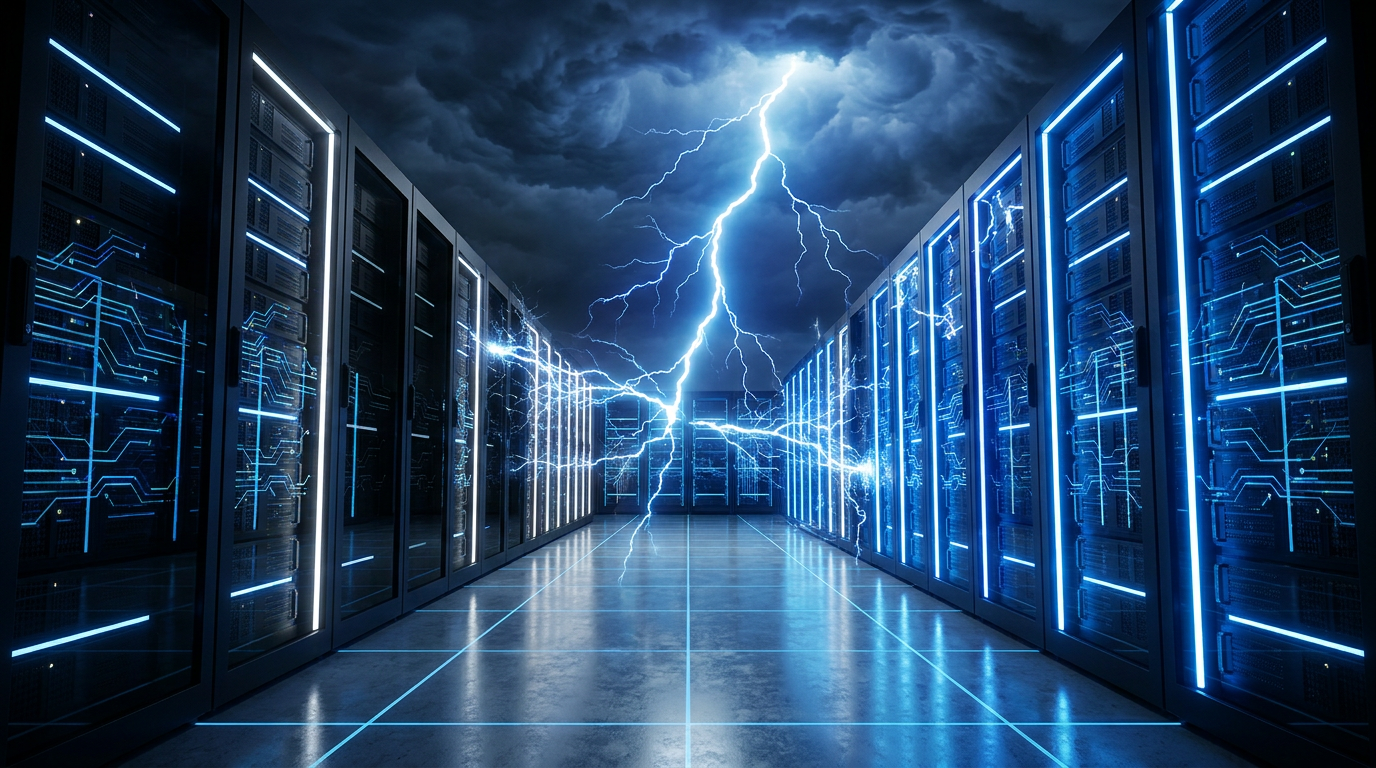
The Ouroboros Risk (Circular Dependencies)
When a region is powered off, it must "bootstrap"—a process where millions of services restart and discover each other simultaneously. The danger lies in circular dependencies: the orchestrator (Twine) needs services to run, but those services need the orchestrator to start. To combat this, Meta implemented:
- Belljar Tests: Continuous integration checks that detect and eliminate dependency risks before they ever reach production.
- Twine Recovery Kit: A "jumpstart" mechanism designed to break circular loops by manually reviving the core control plane services that power the orchestrator itself.
The Boomerang Effect
Meta engineers encountered a scenario where the very signals used to manage a shutdown—Unavailability Events (UEs)—accidentally triggered the shutdown of the orchestrator itself. This created "orphaned" services that could never be cleaned up. The elegant, sustainable solution was to allow control plane services to simply "ignore" power-related shutdown signals, ensuring the "brain" of the system stays active even while the "limbs" are being powered down.
Supporting Data: Tradeoffs and Tolerable Risks
Building a system that is 100% resilient to all failures is an exercise in diminishing returns and potential over-engineering. Meta’s leadership emphasized that they had to strike a balance between extreme reliability and the velocity of infrastructure growth.
The "Table-Stake" Requirements
Meta established non-negotiable boundaries:
- Data Integrity: Storage and database systems must not suffer permanent data loss.
- Mechanical Integrity: No permanent physical damage to electrical or cooling infrastructure.
- Regional Scope: The impact must not cascade beyond the affected region.
The Tolerable Risks
In exchange for speed and efficiency, Meta accepts certain transient issues:
- Transient Service Errors: Temporary blips during the recovery phase are deemed acceptable.
- Bounded Staleness: Minor delays in routing tables or region detection are permitted, provided they fall within a reasonable Mean Time to Respond (MTTR).
Official Perspectives: Reliability as a Catalyst for Innovation
Meta’s engineering team maintains that reliability and velocity are not opposing forces, but two facets of the same coin. "Moving fast is possible only when we have strong foundations," the company stated in a recent engineering report. By perfecting the ability to recover a region from instantaneous failure, Meta has essentially de-risked its future innovation.
This foundation allows Meta to push the envelope in data center design. Because the infrastructure can now survive a "Storm," engineers can experiment with new hardware architectures, denser cooling systems, and more aggressive AI-driven workload distribution without the fear that a single miscalculation will result in a global outage.
Implications: The Future of Cloud Resilience
The implications of Meta’s "PowerLoss Storm" program extend well beyond their own internal infrastructure. It sets a new benchmark for the hyperscale industry. As the world becomes increasingly reliant on AI-driven data centers, the ability to handle massive, instantaneous, and unexpected power failures will become the primary differentiator between reliable cloud services and those prone to persistent, widespread outages.
The next frontier for the "Storm" program is perhaps its most ambitious: validating regions that host live, customer-facing traffic. While the initial tests focused on storage and data backends, Meta is now transitioning to a strategy that evaluates how live traffic can be rerouted and sustained during a regional blackout.
By treating disaster recovery not as a static plan, but as a continuous, high-intensity testing regimen, Meta is shifting the industry from a reactive posture to a proactive, resilient one. The message is clear: in the age of AI, the infrastructure must be as dynamic, robust, and relentless as the data it supports. As the team noted, "Slow is smooth. Smooth is fast." By hardening their foundations today, Meta is ensuring that their growth remains both rapid and remarkably stable.


 Lina Hope
 Nila Kartika Wati

 Ammar Sabilarrohman
 Nana Wu
 Suro Senen
 Jia Lissa