
 Muslim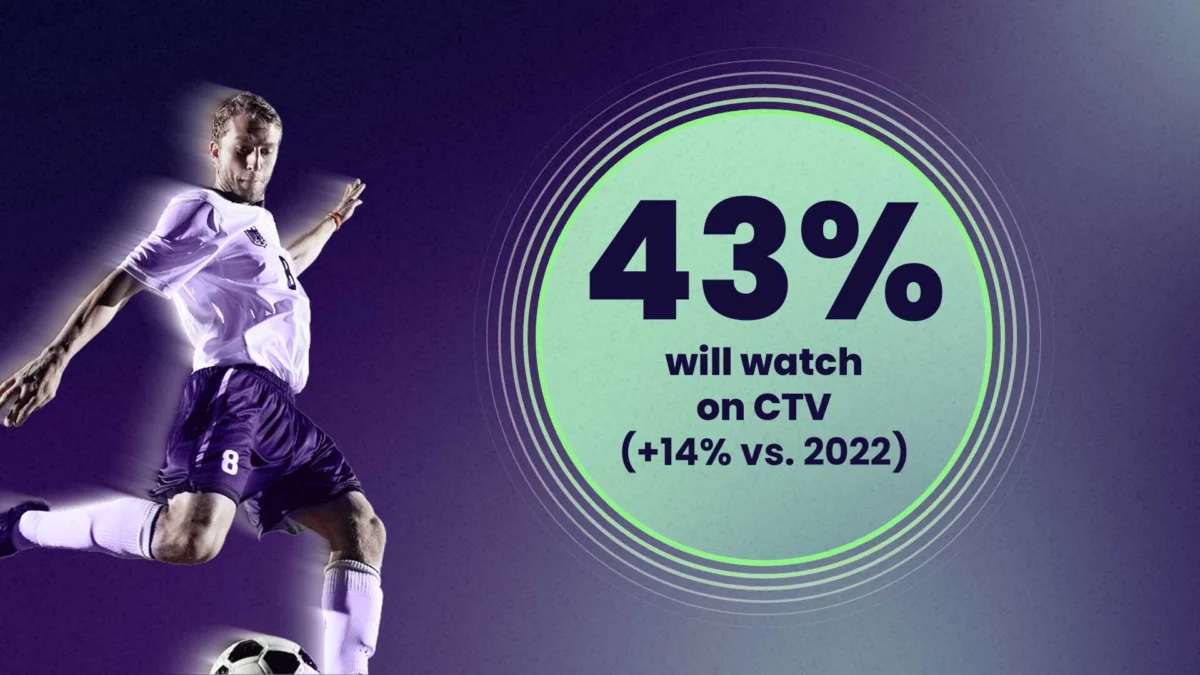
As the global sporting community sets its sights on the 2026 FIFA World Cup, the U.S. English-language media rights holder, Fox Sports, is launching a marketing campaign of unprecedented scale. With 104 matches scheduled across the tournament, the network is not merely broadcasting games; it is attempting to embed itself into the cultural consciousness of the American public through a high-stakes, omnichannel strategy that blends traditional media, surrealist stunts, and partnerships with beloved pop-culture icons.
The Strategy: A Multi-Channel Approach to Global Football
Robert Gottlieb, president of marketing at Fox Sports, describes the network’s mission as a delicate balance between "surgical" logistical guidance and broad, emotional storytelling. With the tournament kicking off on June 11, 2026, the challenge lies in sustaining momentum across a month-long event that features a staggering number of matches.
"I’m definitely seeing enthusiasm and hype for the World Cup in a lot of different ways and in a lot of different places," Gottlieb said in an interview with Adweek. "Our task, from a marketing perspective, is more about being very surgical in being traffic cops and letting people know where and when to go for the matches that they care about."
Fox Sports has structured its approach across three primary pillars: linear television dominance, digital "super-serving" of content, and high-visibility, "unmissable" offline activations. By leveraging the massive reach of NFL broadcasts over the past year to seed interest, the network has built a foundation of anticipation that it is now converting into active viewership.
Chronology of a Campaign: From Teasers to the Glass Cube
The journey to the 2026 World Cup began long before the first whistle. Fox Sports’ marketing timeline demonstrates a sophisticated understanding of audience acquisition:
- Phase 1: The Teaser (Mid-2025): The network initiated its campaign with surrealist imagery, most notably a visual of thousands of soccer balls appearing to wash ashore in front of the Statue of Liberty. This served as a metaphorical "invasion" of football culture, signaling the arrival of the tournament.
- Phase 2: The "Miracle" (May 2026): In early May, Fox debuted its centerpiece linear promo, "Miracle." The star-studded production bridged the gap between American sports heritage and the global game, featuring U.S. soccer icons, Tom Brady, and hockey legend Mike Eruzione. The ad explored the "what if" scenario of the U.S. Men’s National Team (USMNT) winning the tournament, aiming to foster an emotional connection between the American viewer and the concept of a home-soil victory.
- Phase 3: The Grassroots and The Absurd (May–June 2026): As the start date approached, the network pivoted to physical activations. This included the "Lalas Bros"—a group of lookalikes for analyst Alexi Lalas spotted at the Boston Marathon—and 40-foot inflatable figures of stars like Lionel Messi, Lamine Yamal, and Christian Pulisic, which toured the country.
- Phase 4: The Final Countdown (June 2026): The culmination of the pre-game hype is the "Chief World Cup Watcher" initiative. Announced in partnership with Indeed and Fox One, this stunt will see a chosen fan live in a glass cube in New York’s Times Square, watching every single one of the 104 matches for a $50,000 prize.
Data-Driven Engagement: Super-Serving the Modern Fan
The landscape of sports consumption has shifted dramatically since the last World Cup. According to the Nexxen U report, fragmentation is the new reality. Viewers are no longer tethered to a single screen; they are consuming highlights, social media commentary, and real-time statistics simultaneously.

Fox Sports has responded to this by committing to an "enormous" digital presence. "Fans looking for highlights or to engage with the content will be super-served in a way they’ve never been before by our digital offerings," Gottlieb noted. By providing granular content—short-form clips, interactive brackets, and real-time social integration—the network aims to ensure that even the most casual viewer stays within the Fox ecosystem.
The scale of the broadcast is equally daunting: 70 matches will air on network television, with 34 on FS1, and every match available for streaming via Fox One. This massive volume requires the "traffic cop" strategy Gottlieb described, where marketing efforts are specifically calibrated to direct fans toward specific matches that align with their geographic or team loyalties.
Pop-Culture Collaborations: Bringing Sesame Street to the Pitch
One of the most innovative aspects of the Fox Sports campaign is its collaboration with Sesame Street. Recognizing that the World Cup is a family event, the network has integrated Muppets into its programming to demystify the complexities of soccer for younger or novice audiences.
- The Count Down: Count von Count serves as the lead analyst for tournament statistics, turning dry data into engaging, number-heavy segments.
- Trash Talk: Hosted by Oscar the Grouch, this segment provides a satirical, irreverent look at match highlights, offering a "grumpy" perspective on the drama on and off the pitch.
- Broadcaster Bootcamp: Grover joins the network’s professional broadcast team to "learn" how to call a match, effectively explaining the nuances of the game through a lighthearted, educational lens.
This move is a calculated attempt to broaden the tent, ensuring that the World Cup is not just for the hardcore soccer purist, but for the entire American household.
Implications for the Future of Sports Broadcasting
The 2026 World Cup represents a litmus test for the future of linear sports television in a streaming-first world. Fox Sports is betting that high-production value, "event-style" marketing, and massive, stunt-driven activations can bridge the gap between fragmented digital consumption and the cohesive, shared experience of a national tournament.
The "Chief World Cup Watcher" in Times Square is more than just a marketing stunt; it is a symbol of the "glass case of emotion" that defines sports fandom. By placing a fan in the center of the world’s most recognizable intersection, Fox is attempting to turn the act of watching television into a public spectacle.

Furthermore, the integration of non-traditional partners like Sesame Street suggests that sports media companies are increasingly viewing themselves as entertainment platforms rather than just content distributors. The goal is no longer just to sell an ad slot; it is to occupy the viewer’s time and attention across every possible touchpoint.
Conclusion: A Party Everyone Wants to Join
As the final countdown to June 11 begins, the strategy employed by Fox Sports reveals a deep confidence in the product. The network is betting that the combination of home-field advantage for the USMNT and a relentless, creative marketing push will result in the most-watched soccer tournament in U.S. history.
"We love it. We know the fans do, too," Gottlieb said. "This is a party we all want to be a part of." Whether the USMNT lives up to the dream presented in the "Miracle" promo remains to be seen, but the marketing machine behind the tournament has already secured its place as a participant in the narrative.
For industry observers, the 2026 World Cup will serve as a case study in how to maintain relevance in a hyper-competitive media environment. By blending the absurdity of inflatable Messi figures and Muppet-hosted highlight reels with the gravitas of a global sporting event, Fox Sports is not just covering the World Cup—it is attempting to own the experience entirely. As the world turns its attention to the pitch, the real competition may be the one happening in the living rooms and digital feeds of millions, where Fox Sports is working tirelessly to ensure it remains the primary host of the party.

 Reynand Wu
 Iffa Jayyana
 Raul Delapena Setiawan

 Sagoh
Sagoh

 Azzam Bilal Chamdy
 Ali Ikhwan