
 Jia Lissa
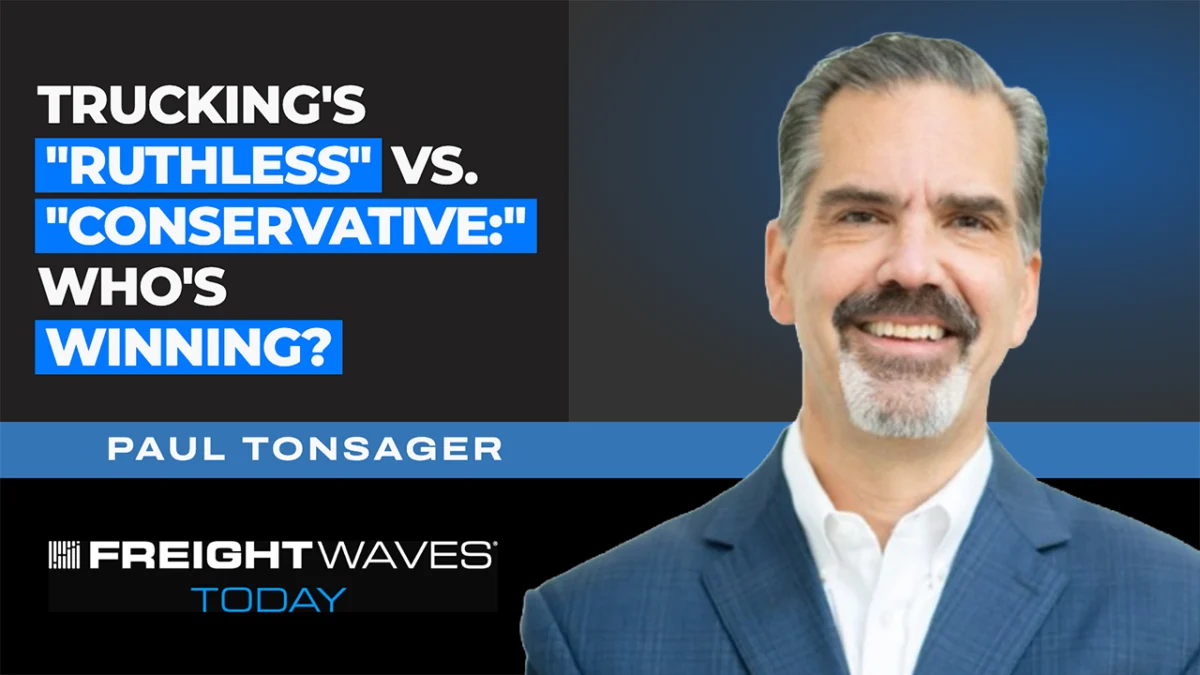
In the high-stakes theater of American logistics, the 2024 earnings season has served as a masterclass in strategic divergence. As the freight market navigates a protracted "lukewarm" period—defined by stagnant demand, overcapacity, and compressed margins—industry titans are revealing vastly different blueprints for survival. The recent performance gap between Knight-Swift Transportation and J.B. Hunt Transport Services has ignited a debate among industry analysts: Is it better to be agile and ruthless in pursuit of spot-market efficiency, or conservative and customer-centric in defense of long-term contract stability?
The Strategic Divide: Knight-Swift vs. J.B. Hunt
During a recent installment of FreightWaves Today, host Craig Fuller and industry veteran Paul Tonsager, CEO and founder of Integrated Multimodal Solutions, dissected the contrasting fortunes of two of the largest carriers in North America.
The core of the issue lies in how these companies approach their freight mix. Knight-Swift has doubled down on a "ruthless" operational philosophy. The carrier has demonstrated a clear willingness to walk away from unprofitable freight, opting instead to prioritize spot and one-way traffic that offers higher margins in the current environment. This agility has yielded impressive financial results, particularly in terms of their operating ratio (OR).
Conversely, J.B. Hunt has maintained a more traditional, conservative stance. With a heavy reliance on dedicated and contract business, the company has prioritized long-term customer relationships over short-term spot market gains. While this strategy offers stability during economic booms, it has left them vulnerable in a period where driver cost inflation continues to outpace the rate adjustments typically locked into long-term contract cycles.
Chronology of the Current Market Strain
To understand the current tension, one must look at the recent timeline of the freight cycle:
- Q1 2024: Early indicators suggested a modest recovery in freight volumes; however, capacity remained stubbornly high, keeping spot rates suppressed.
- Mid-2024: Large carriers began reporting earnings that reflected the "lukewarm" nature of the market. While some managed to maintain efficiency, others struggled to cover rising operating expenses, including insurance and driver compensation.
- Late 2024 Earnings Season: The divergence became stark. Knight-Swift’s ability to pivot quickly to more profitable lanes became a standout performance indicator, while J.B. Hunt’s reliance on fixed contracts left them waiting for the next bid cycle to recoup costs.
- Ongoing Regulatory Hurdles: Simultaneously, the proposed merger between Union Pacific and Norfolk Southern has lingered in the regulatory pipeline, with the Surface Transportation Board (STB) providing no clear timeline for approval, adding a layer of macroeconomic uncertainty for the broader intermodal sector.
Supporting Data: The Efficiency Gap
The most compelling metric in this debate is the operating ratio (OR). Knight-Swift recently reported an OR of 89—a figure that, as Tonsager noted, would be the envy of many major railroads. In the rail industry, carload business is highly prized because intermodal margins are notoriously difficult to defend. For a truckload carrier to achieve an 89 OR in a soft market is a testament to the discipline baked into the Knight-Swift corporate culture.
The pricing tension is further highlighted by the 34% spread currently existing between truckload rates and contract intermodal rates. This gap creates a "capture opportunity" for carriers with the operational flexibility to move quickly.
Tonsager, a former railroad executive with deep insights into multimodal logistics, argues that the current environment favors the "entrepreneur." He observed, "The entrepreneurs will win in this market because they can move quickly to capture whatever gain they can get on price."
The Case for Consistency: Defending the Conservative Approach
Despite the recent criticism of its performance, J.B. Hunt remains a titan of the industry. Analysts caution against judging the carrier solely on a single quarter, noting that Hunt possesses the "best mix, the best balance, and best consistent operations" of any large trucking operator in the United States.
Hunt’s model is predicated on the idea that customer loyalty and dedicated services provide a buffer against market volatility. While they are currently struggling with the "lag" inherent in contract pricing—waiting for cycles to reset to reflect current inflation—they are building a foundation of reliability that is difficult for spot-focused competitors to replicate. When the market eventually turns and capacity tightens, J.B. Hunt’s established relationships will likely provide a swift path to profitability that opportunistic carriers may not be able to match.
The Union Pacific-Norfolk Southern Merger: A Macro-Headwind
The conversation regarding trucking strategy inevitably bleeds into the broader transportation landscape, specifically the massive $80 billion merger proposal between Union Pacific and Norfolk Southern.
According to Tonsager, the market is currently pricing in a high probability of success, with Norfolk Southern shares trading at a premium above the offer price from Union Pacific. He estimates the odds of STB approval at roughly 55-45.
However, the human and operational costs of the delay are mounting. With over 18 months having passed since the merger announcement without a single STB hearing, the distraction for employees at both firms is significant. Furthermore, the political landscape remains treacherous. With only four STB commissioners presiding over such a monumental deal and the potential for shifts in the House of Representatives, the outcome is far from guaranteed.
Tonsager issued a stark warning: if the current administration blocks this merger, it could effectively end the era of rail mega-consolidations for a generation. "Concessions will be required regardless of the outcome," he noted, emphasizing that the $2 billion breakup fee serves as a vital safety net for Norfolk Southern, yet cannot replace the lost time and energy spent in regulatory limbo.
Implications for the Future of Logistics
The divergence between Knight-Swift and J.B. Hunt is more than just a case study in earnings; it is a reflection of a fundamental shift in how large corporations view their role in the supply chain.
The Rise of Operational Discipline
Knight-Swift’s success highlights that in a low-growth environment, internal efficiency is the only lever a carrier can pull. By shedding "undesirable freight"—a practice that requires immense discipline and a culture that prioritizes the bottom line—carriers can insulate themselves from broader market malaise.
The Fragility of Contract Reliance
J.B. Hunt’s struggle serves as a warning about the rigidity of contract-heavy models. While they offer protection against the bottom of the market, they also prevent carriers from participating in the "upside" of localized market spikes. As the industry becomes more digitized and data-driven, the ability to dynamically price freight may become a prerequisite for survival.
The Regulatory Bottleneck
The uncertainty surrounding the Union Pacific-Norfolk Southern merger demonstrates that the logistics sector is increasingly at the mercy of regulatory speed. When the pace of government review lags behind the pace of the market, it creates a vacuum of leadership and investment.
Conclusion: Adapting to the New Normal
As 2024 draws to a close, the lesson for the trucking and intermodal sectors is clear: culture is a strategic asset. The carriers that thrive in the coming years will be those that can successfully blend the operational ruthlessness required for immediate efficiency with the long-term relationship-building required for stability.
Whether the market remains "lukewarm" or begins to heat up, the gap between the agile and the rigid will continue to widen. For investors and industry observers alike, the earnings reports of the next few quarters will be the ultimate barometer of which corporate culture is better suited to navigate the complexities of a modern,, and increasingly unpredictable, global supply chain.
As Paul Tonsager aptly summarized, the market currently favors those who can move quickly. Whether that momentum is enough to sustain long-term dominance—or if the stability of the contract-focused model will eventually prevail—remains the central question of the decade.


 Raul Delapena Setiawan
 Asro

 Iffa Jayyana

 Suro Senen

 Pevita Pearce

 Basiran

 Azzam Bilal Chamdy

 Nila Kartika Wati
