Asep Darmawan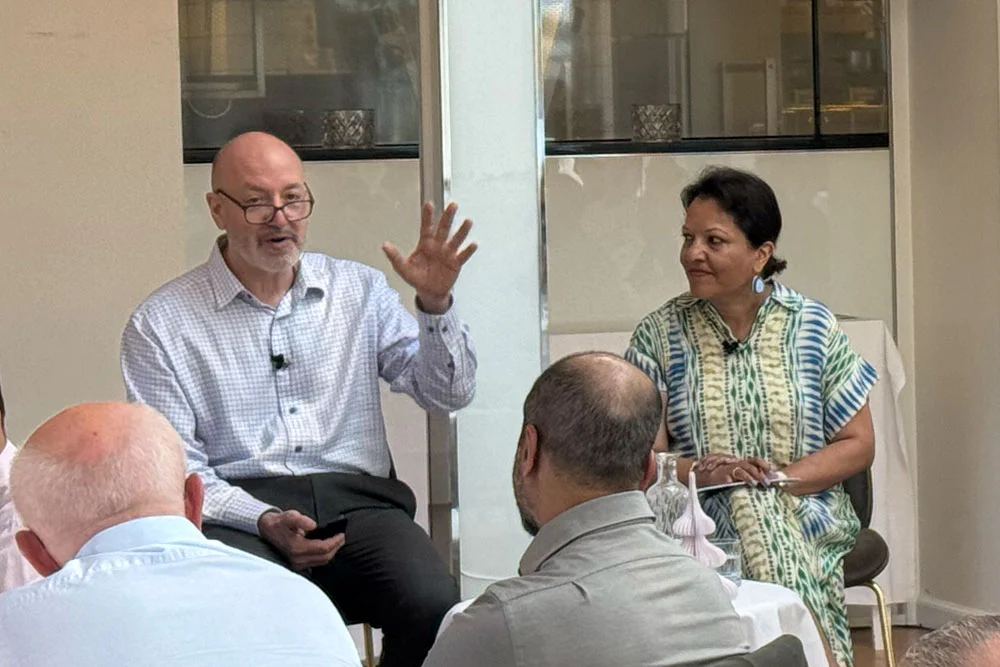
In the high-stakes theater of global supply chain management, the Chief Procurement Officer (CPO) has evolved from a tactical administrator into a strategic architect of corporate resilience. However, a paradox has emerged: as the importance of the CPO role reaches an all-time high, the time allocated for the professional development of these very leaders is reaching an all-time low.
New data from the Procurement Leaders’ Ovation pulse survey suggests that the most senior procurement executives at the world’s largest, most complex organizations are suffering from a "developmental deficit." Caught in the relentless churn of global disruptions, geopolitical instability, and digital transformation, many CPOs are sacrificing their own intellectual growth at the altar of operational urgency.
The Data: A Crisis of Time
The survey findings paint a sobering picture of executive habits. Approximately one-third of group-level CPOs report dedicating less than one hour per week to personal development. Even more concerning, an additional 45% allocate less than two hours. When these figures are aggregated, a staggering 75% of C-level procurement executives are spending less than 20 minutes a day on their own growth.
In an era where the shelf life of a technical skill is shortening and the complexity of global markets is expanding, this trend suggests a potential "stagnation trap." While these leaders are masterfully managing billions in spend and navigating volatile supply routes, they are effectively starving their own mental toolkits.
The Anatomy of Burnout: Why Development Falls Off the Agenda
The rationale behind this neglect is not born of arrogance, but of exhaustion. The modern CPO role is, by its very nature, a fire-fighting exercise. The sheer volume of disruptions—from pandemic-induced lockdowns and raw material shortages to the rapid implementation of generative AI—makes for a working week that is as draining as it is long.
For an executive who has spent 12 hours navigating supplier negotiations, risk mitigation, and board-level reporting, the prospect of engaging in deep-work learning or leadership study often loses out to the immediate need for cognitive rest. It is entirely understandable that a glass of wine or a quiet evening at home might seem more appealing than "firing up the cylinders" to tackle a new academic concept or leadership framework. Yet, this preference for short-term recovery over long-term capability building is a dangerous precedent that can lead to leadership obsolescence.
Learning to Learn: The Strategic Imperative
At the recent Ovation conference, Larry Kramer, president and vice-chancellor of the London School of Economics, addressed this crisis of focus directly. According to Kramer, the single most important habit that any modern leader must cultivate is the ability to "learn to learn."
This concept, often referred to as intellectual elasticity, is the capacity to shed outdated mental models and adopt new methods, technologies, and perspectives with agility. For senior leaders who have already reached the pinnacle of their profession, this is not always a natural inclination. After decades of success, the ego can easily convince the leader that their current knowledge base is sufficient.
"Procurement chiefs must avoid the assumption that they know everything they need to know," experts argue. Instead, they must move toward a model of constant acquisition—identifying, adapting to, and mastering new domains as they emerge.
Chronology of the Shift: From Tactical to Strategic
The role of the CPO has shifted significantly over the last two decades, creating a widening gap between traditional skill sets and modern requirements:
- 1990s–2000s: The era of cost-cutting and lean methodology. The CPO’s primary growth focus was on process optimization and supplier consolidation.
- 2010–2019: The rise of strategic sourcing and sustainability. The CPO began to interface more with the C-suite, requiring a shift toward financial literacy and relationship management.
- 2020–Present: The era of disruption and digital transformation. Today’s CPO must be a master of risk, data analytics, geopolitics, and AI-driven automation.
Each transition required a new "learning phase." The current failure to dedicate time to development is essentially a failure to transition into this new era of tech-augmented leadership.
Supporting Data and Member Insights
The Procurement Leaders survey also provided qualitative insight into how the most forward-thinking CPOs are hacking their schedules to prioritize growth. One respondent shared a strategy that leverages modern technology to combat the time-poverty issue:
"I lean on AI to augment my extracurricular learning," the CPO noted. "My preferred method is short bursts of learning—usually listening to podcasts or reading—and I increasingly lean on AI itself to go deeper, ask follow-up questions, and research new areas quickly."
Other members reported diverse approaches:
- Reverse Mentoring/Coaching: Using the act of coaching others to solidify their own understanding of new concepts.
- Formal Education: Enrolling in specific, high-intensity courses focusing on soft skills like emotional intelligence, negotiation psychology, and ethical leadership.
- Peer Networks: Utilizing executive forums and mentorship circles to share challenges and crowdsource solutions.
The consensus among successful participants is that there is no "right" way to learn; the key is the habit itself. Whether it is 15 minutes of an industry-leading podcast during a commute or a monthly deep-dive seminar, the discipline of setting aside the time is more critical than the format of the learning.
The Implications: Why Inaction is a Risk
What happens when a CPO stops growing? The implications for the enterprise are significant. When leadership stagnates, the organization’s culture often follows suit.
- Technological Obsolescence: If a CPO is not learning about AI, blockchain, or predictive analytics, they will be unable to champion these technologies within their organization. This leads to a loss of competitive advantage.
- Talent Attrition: High-performing younger professionals look to their leaders for mentorship. If the leader is not actively learning, they cannot foster a culture of development, leading to the loss of top talent who crave growth.
- Strategic Blind Spots: The global business environment is changing at an exponential rate. An executive relying on five-year-old knowledge is effectively flying blind in a modern market.
- Boardroom Influence: To maintain a seat at the table, CPOs must speak the language of the future. Failure to master new domains results in a diminished voice when discussing long-term corporate strategy.
Conclusion: Reframing the "Investment"
The term "personal development" is often mislabeled as a luxury or an extracurricular activity. In truth, for the C-suite, it is an essential maintenance task. Just as a factory requires regular maintenance to prevent downtime, the leader’s mind requires regular intellectual input to prevent strategic decay.
The worst thing a CPO can do is to view the pressure of the job as an excuse to stop investing in themselves. The complexity of the role is not a reason to abandon learning; it is the strongest possible justification for accelerating it. By reclaiming small, high-impact pockets of time—utilizing tools like AI, podcasts, and mentorship—CPOs can ensure they remain not just relevant, but indispensable.
As the business world moves into an increasingly uncertain future, the leaders who will thrive are those who recognize that their own education is the most important supply chain they manage.

 Lina Irawan
 Raul Delapena Setiawan
 Laily UPN
 Iffa Jayyana
 Rifan Muazin
 Suro Senen
 Lina Hope