
 Iffa Jayyana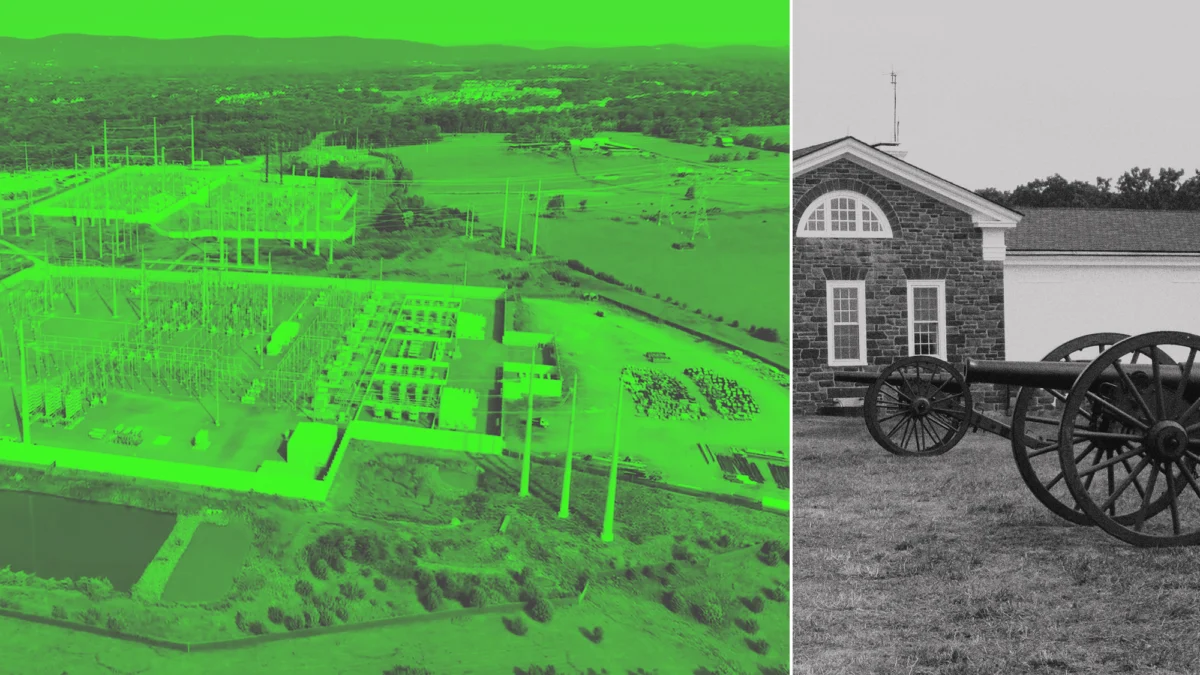
The rapid, unyielding ascent of Artificial Intelligence has birthed an unlikely physical manifestation: the massive, windowless, and humming data center. As tech giants scramble to secure the computing power necessary to fuel the generative AI revolution, a quiet but intense industrial expansion is transforming the American countryside and suburban residential zones. While these facilities are often framed as the "digital backbone" of the future, their physical footprint is raising fundamental questions about environmental sustainability, economic equity, and the preservation of national heritage.
The Physicality of the Cloud
For many, "the cloud" implies an ethereal, invisible space where data lives. In reality, it is a vast network of concrete-and-steel warehouses, often sprawling across hundreds of acres. These facilities are the engine rooms of modern life, housing the servers that process everything from personal emails to the complex large language models that define the current AI boom.
The proliferation of these sites—often referred to as "server farms"—is accelerating at an unprecedented rate. In Northern Virginia, arguably the data center capital of the world, these structures have become a permanent fixture of the landscape. However, the appetite of these facilities for resources is staggering. They require immense amounts of electricity, putting unprecedented strain on regional power grids, and consume millions of gallons of water annually for cooling systems, often in regions already grappling with climate-induced drought.
Chronology of a Conflict: The Prince William Digital Gateway
The tension between digital progress and community preservation reached a flashpoint in Prince William County, Virginia. The proposed "Prince William Digital Gateway" serves as a case study for the friction caused by this industrial expansion.
- 2021-2022: Initial proposals for the Digital Gateway surfaced, suggesting a massive development spanning over 2,100 acres. The sheer scale—roughly equivalent to the combined footprint of 61 Pentagon buildings—immediately alarmed local residents and preservationists.
- 2023: As the proposal moved through local zoning boards, a diverse coalition of opposition formed. The primary point of contention was the location: the project site directly abuts the Manassas National Battlefield Park, a site of profound historical significance to the American Civil War.
- Late 2023 – 2024: Public hearings became spectacles of civic engagement. Opponents ranged from multi-generational farming families concerned about property values and noise pollution to Civil War historians and reenactors fearing the desecration of hallowed ground.
- 2025-2026: The discourse shifted from local zoning to a national debate regarding the "little durable economic upside" of data centers. Critics began to highlight how developers often secure massive tax breaks, effectively neutralizing the municipal tax revenue promised to local school districts and infrastructure projects.
Supporting Data: The Illusion of Prosperity
The promise of "jobs and revenue" is the primary justification used by developers to secure local government support. However, research from the Brookings Institution and other economic think tanks suggests that this narrative is largely illusory.
The Tax Break Conundrum
While developers tout millions in projected tax revenue, these figures often ignore the generous, multi-decade tax abatements granted to lure these companies. When the cost of utility upgrades—often paid for by the taxpayer—is factored into the equation, many municipalities find themselves with a net negative fiscal impact.
The Employment Reality
Data centers are remarkably automated. Once the initial construction phase—which provides temporary, albeit high-paying, labor—is complete, the operational staffing requirements are minimal. A facility covering hundreds of acres may employ only a few dozen full-time technicians. Consequently, the claim that data centers serve as engines of local job creation is increasingly viewed as a rhetorical device rather than an economic reality.
Environmental Degradation
The environmental impact is equally sobering. Beyond the "water hogging" nature of cooling systems, the land clearing required for these projects destroys natural habitats, disrupts local watersheds, and exacerbates urban heat island effects. In areas like Northern Virginia and parts of Oregon, the encroachment of these sites into residential and rural areas has led to an uptick in light and noise pollution, significantly degrading the quality of life for long-term residents.
Official Responses and the "Faustian Bargain"
The response from local government officials has been deeply divided. Some argue that refusing the investment will merely push developers toward more tax-friendly jurisdictions, resulting in lost opportunity for the local government. This "race to the bottom" has forced communities to consider the so-called "Faustian bargain": accept the industrialization of their neighborhood in exchange for developer-funded infrastructure improvements that may or may not benefit the community at large.
Prominent cultural voices have also weighed in. Documentarian Ken Burns, whose work has often chronicled the struggle for the American soul, famously intervened in the Manassas controversy. His public condemnation of the project underscored a growing sentiment: that some things—history, quiet, and community cohesion—are not for sale. His letter to the Board of Supervisors served as a rallying cry, framing the battle not just as a local zoning dispute, but as a fight to prevent the commercial exploitation of national memory.
Broader Implications: A Digital Future at What Cost?
The situation in Northern Virginia is a microcosm of a national crisis. As AI technology demands ever-more computing power, the pressure on land, power, and water will only intensify. The central question for the coming decade is whether the American public is willing to sacrifice the integrity of their landscapes to sustain the hunger of the digital economy.
The Erosion of Local Autonomy
The power dynamic between multinational tech corporations and local municipal governments is heavily skewed. Tech firms possess the legal and financial resources to outlast local opposition, often using "community benefit agreements" that, while well-intentioned, fail to address the fundamental structural problems of having a massive industrial facility in a residential backyard.
A Call for Federal Oversight
Given that energy grids are interconnected and environmental impacts cross state lines, many experts are now calling for federal oversight of data center development. Relying on local zoning boards to manage the global infrastructure needs of multi-trillion-dollar companies has proven to be an ineffective strategy. Without a cohesive national strategy, the "digital gold rush" will continue to result in fragmented, piecemeal development that leaves both the environment and the local taxpayer at a disadvantage.
Conclusion: The Path Forward
The story of the Prince William Digital Gateway is far from over. It serves as a reminder that technological advancement does not happen in a vacuum; it has a physical address, a noise profile, and a cost to the earth. As we race toward an AI-integrated future, the "moaning monoliths" of our data infrastructure should serve as a prompt to re-evaluate our priorities.
Are we prepared to trade the tranquility of our neighborhoods and the integrity of our historical sites for the convenience of faster data processing? The protests in Virginia suggest that for many, the answer is a resounding "no." The challenge for the next decade will be finding a way to balance the undeniable need for digital infrastructure with the equally important need for a sustainable, human-centric living environment. The "David vs. Goliath" struggle between local communities and the tech giants is not merely a NIMBY (Not In My Backyard) dispute; it is a fundamental debate about the kind of world we wish to inhabit as we transition into the age of the machine.


 Raul Delapena Setiawan
 Laily UPN
 Reynand Wu
 Sagoh
Sagoh

 Azzam Bilal Chamdy
 Ali Ikhwan