
 Rifan Muazin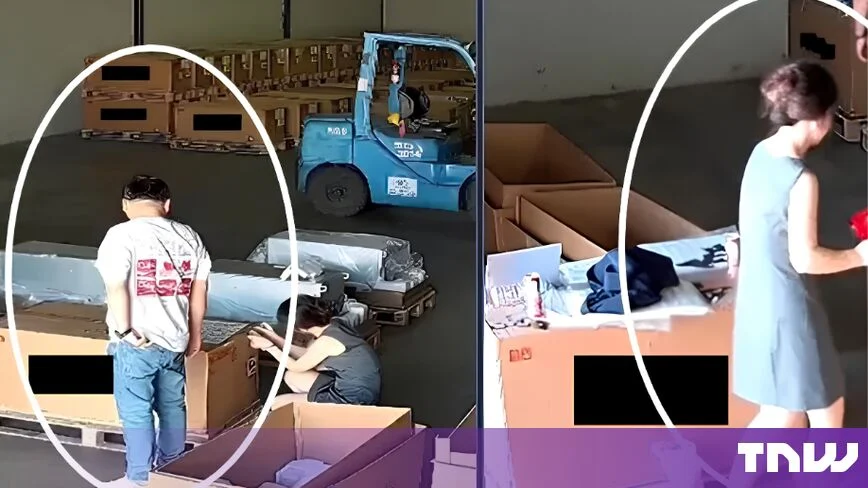
In a development that underscores the high-stakes geopolitical battle over artificial intelligence, a central figure in a sprawling illicit technology trafficking ring has admitted to his role in a massive, multi-billion-dollar operation. Ting-Wei “Willy” Sun, a former contractor for Silicon Valley-based hardware giant Super Micro Computer, entered a guilty plea in a Manhattan federal court this past Thursday, signaling a major breakthrough for US authorities in their crusade against the unauthorized transfer of advanced computing power to China.
The case, which centers on the covert diversion of AI-capable servers equipped with prohibited Nvidia hardware, highlights the extreme lengths to which illicit networks will go to bypass Washington’s stringent export controls. As the global race for AI supremacy intensifies, this $2.5 billion scheme provides a stark look at the vulnerabilities inherent in the global hardware supply chain.
The Architect of the Deception: A "Fixer’s" Confession
Ting-Wei Sun, described by federal prosecutors as the “fixer” of the operation, stood before the court to acknowledge his role in orchestrating a sophisticated shell game. Sun pleaded guilty to four criminal counts, including conspiracy to violate US export control laws. His admission of guilt is not merely a personal legal turning point; it is a validation of the government’s investigative efforts into the high-tech shadow market.
The scheme, as outlined in federal indictments, was remarkably audacious. Sun and his co-conspirators allegedly utilized a network of front companies and intermediaries throughout Southeast Asia to mask the final destination of high-end servers. By routing shipments through nations that do not share the same restrictive trade policies as the United States, the group successfully laundered the movement of hardware containing cutting-edge AI chips—chips explicitly barred from the Chinese market due to national security concerns regarding military modernization.
Chronology of the Shadow Supply Chain
The investigation into the activities of Sun and his associates has exposed a years-long pattern of calculated evasion.
- Initial Procurement (2021–2022): The group began by leveraging their connections within the industry to acquire substantial quantities of high-performance servers, ostensibly for legitimate enterprise customers in Southeast Asia.
- The Diversion Phase (2023): Once the hardware reached regional warehouses, the conspirators initiated the rerouting process. Documents were falsified to reflect sales to fictitious entities, while the actual cargo was palletized for transit to Chinese end-users.
- The Federal Probe (March 2026): After mounting evidence of missing inventory and suspicious export filings caught the attention of federal investigators, a formal indictment was unsealed. Prosecutors charged Sun, Yih-Shyan “Wally” Liaw, and Ruei-Tsang “Steven” Chang with conspiring to divert $2.5 billion worth of sensitive technology.
- The Guilty Plea (October 2026): Sun’s cooperation with the Department of Justice marks the end of his legal contestation. He is currently awaiting sentencing, scheduled for September 2027.
The Art of the "Dummy" Server: Falsification Tactics
Perhaps the most damning aspect of the indictment is the evidence detailing how the group attempted to deceive auditors and regulators. To maintain the illusion of legitimacy, the conspirators did not simply move the equipment; they actively doctored the physical assets.
Prosecutors presented photographic evidence, including surveillance stills, showing Sun and his associates in a warehouse environment meticulously altering hardware. In one instance, the group allegedly employed a common household hair dryer to soften adhesives, allowing them to strip serial numbers from legitimate servers and replace them with forged identifiers. These “dummy” servers were used to replace the high-performance units in inventories, creating a paper trail that would suggest the restricted chips had never left their intended, legal jurisdictions. This level of physical tampering suggests that the operation was not a haphazard smuggling attempt, but a highly disciplined, long-term enterprise designed to withstand internal and external audits.
Official Responses and Corporate Accountability
The involvement of a former contractor for Super Micro Computer—a pillar of the server manufacturing industry—has raised significant questions about corporate oversight. However, Super Micro has been quick to distance itself from the illicit activities.
In a statement released this past August, the company maintained that its current senior leadership was entirely unaware of the scheme. Super Micro emphasized that it has been cooperating fully with the Department of Justice and other regulatory bodies, characterizing the actions of the charged individuals as a rogue operation that exploited gaps in the company’s external contracting framework.
While the company remains a non-defendant in the criminal proceedings, the reputational fallout has been significant. Yih-Shyan “Wally” Liaw, a co-founder of Super Micro, remains a central figure in the investigation. Unlike Sun, Liaw has entered a plea of not guilty and has since vacated his position on the company’s board. Meanwhile, the third defendant, former sales manager Ruei-Tsang “Steven” Chang, remains at large, having yet to make an appearance in a US court.
The Broader Implications: A Growing Tech Smuggling Crisis
The Sun case is not an isolated incident; rather, it is a symptom of a broader, systemic issue facing US export controls. As the Department of Commerce’s Bureau of Industry and Security (BIS) tightens restrictions on the sale of AI chips—most notably the Nvidia H100 and its successors—the profit margins for smuggling these units into China have skyrocketed.
Just last week, federal prosecutors charged a California man in a separate, but conceptually similar, case involving the attempted smuggling of $300 million worth of AI servers. These cases demonstrate that the incentive structure for illicit trade is currently at an all-time high.
Geopolitical Consequences
The diversion of these servers has direct implications for US national security. The advanced AI hardware that was the target of this smuggling operation is the foundational layer for training Large Language Models (LLMs) and advanced autonomous systems. By preventing these chips from reaching Chinese military and state-affiliated research entities, the US hopes to maintain a qualitative edge in AI development. Each successful diversion, therefore, is viewed by Washington as a setback to its strategic containment policy.
Regulatory Tightening
Industry experts anticipate that the fallout from these high-profile smuggling cases will lead to even stricter “Know Your Customer” (KYC) requirements for tech exporters. Companies may soon be required to implement blockchain-based tracking for hardware components, from the point of manufacture to the point of end-user deployment. The era of trusting secondary distributors is coming to a definitive close.
Looking Forward: The Sentencing and Beyond
As Ting-Wei Sun awaits his sentencing in September 2027, the legal community is watching closely to see what kind of precedent the judge will set. With $2.5 billion in technology on the line, the gravity of the offense is immense. Prosecutors are likely to push for a significant custodial sentence to act as a deterrent to others currently operating within the lucrative, but dangerous, gray market of global technology distribution.
For Super Micro and the wider semiconductor industry, the road ahead involves a massive re-evaluation of their supply chain security. The "fixer" may have been caught, but the demand for prohibited AI technology in China remains insatiable. As long as that demand exists, the battle between those looking to secure the hardware and those looking to smuggle it will continue to be one of the most critical, and covert, fronts in the modern technological landscape.


 Evan Lee Salim
 Suro Senen
 Basiran
 Neng Nana
 Iffa Jayyana
 Raul Delapena Setiawan

 Asro
Asro