
 Ali Ikhwan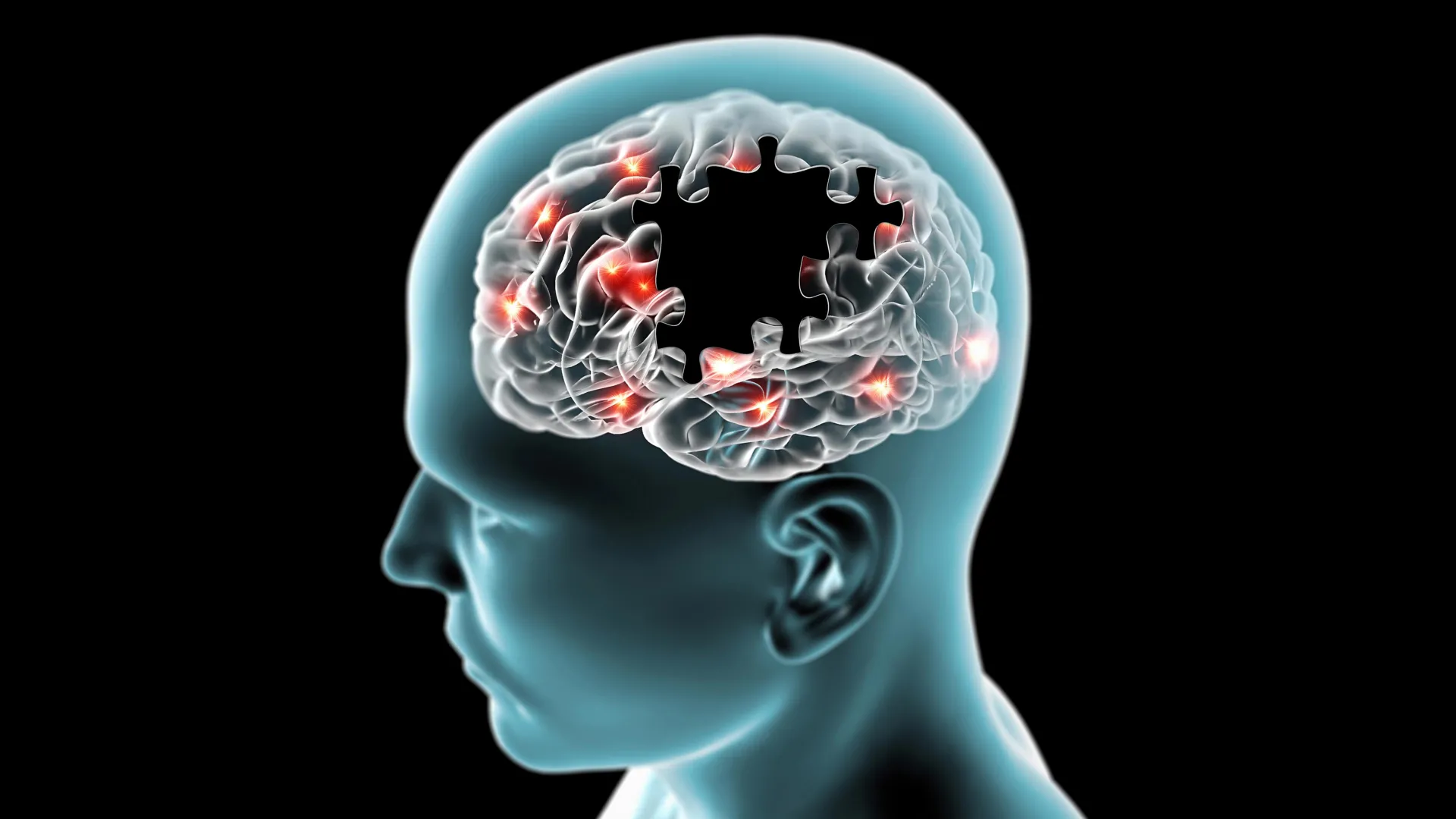
In the quiet cadence of a casual conversation—the slight hesitation before a word, the brief pause to gather a thought, or the instinctive use of a filler like “um” or “uh”—lies a treasure trove of neurological data. For decades, clinicians have relied on structured, often rigid cognitive assessments to measure the sharpness of the human mind. However, a groundbreaking new study conducted by researchers at Baycrest, the University of Toronto, and York University suggests that the keys to understanding our brain health may have been hidden in plain sight all along: in the way we speak.
The study, titled "Natural Speech Analysis Can Reveal Individual Differences in Executive Function Across the Adult Lifespan," represents a significant leap forward in neurology. It posits that the nuances of spontaneous speech are not merely stylistic choices or quirks of personality, but are, in fact, highly sensitive barometers for executive function—the complex mental toolkit responsible for memory, planning, focus, and cognitive flexibility.
The Science of Spontaneity: Main Facts and Methodology
To bridge the gap between abstract cognitive health and tangible speech patterns, researchers recruited a diverse cohort of participants across the adult lifespan. The methodology was intentionally designed to capture the richness of natural discourse. Participants were presented with complex, detailed images and asked to describe them in their own words. This task, while simple in appearance, requires a sophisticated interplay of memory, vocabulary retrieval, and logical sequencing.
Simultaneously, participants underwent a battery of standardized, clinically validated tests designed to quantify executive function. The innovation, however, lay in what followed: the application of advanced artificial intelligence to the speech recordings.
By deploying machine learning algorithms, the research team identified hundreds of minute features within the speech samples. These included:
- Pause Dynamics: The duration and frequency of silences between phrases.
- Disfluency Markers: The rate and placement of filler words (“uh,” “um”).
- Retrieval Latency: The temporal gap between identifying a visual cue and articulating the corresponding term.
The results were startling. The AI system was able to predict the participants’ performance on formal cognitive tests with high accuracy, even after adjusting for variables such as age, biological sex, and educational background. This suggests that the biological "engine" of executive function is directly wired into the mechanics of how we structure our sentences in real-time.
A Chronology of Discovery: From Observation to AI Integration
The journey to this discovery is rooted in a growing body of longitudinal research. The current study builds upon earlier work, most notably a 2024 study (Wei et al.) which observed that older adults who maintain a faster, more fluid rate of speech often exhibit more robust cognitive longevity.
Historically, the study of language and cognition was limited by manual analysis. Linguists would laboriously transcribe and count pauses by hand, a process that was both time-consuming and prone to human error. With the advent of large-scale computational linguistics and AI, the research community finally possessed the "magnifying glass" required to observe the micro-rhythms of speech.
- Phase I (Conceptualization): Researchers hypothesized that the effort required to retrieve information and maintain focus during speech mirrors the effort required during executive function tests.
- Phase II (Data Collection): Participants provided unstructured speech data, creating a realistic "real-world" dataset rather than relying on artificial laboratory responses.
- Phase III (AI Training): Machine learning models were trained to recognize patterns that correlate with high or low performance on executive function metrics.
- Phase IV (Validation): The researchers cross-referenced AI-derived speech scores with established clinical data, confirming a statistically significant correlation.
Supporting Data: Why Speech Timing Matters
The correlation between speech timing and cognitive health is not coincidental; it is structural. Executive function acts as the "manager" of the brain, overseeing the coordination of information. When this manager begins to experience strain—whether through normal aging or early-stage neurodegeneration—the "delegated" tasks, such as selecting the right word or organizing a narrative flow, become increasingly taxing.
This "cognitive load" manifests as hesitation. The brain, struggling to retrieve a specific term or plan the next clause of a sentence, experiences a momentary delay. While these delays may be invisible to a casual listener, they are easily detectable by AI algorithms.
Furthermore, the research highlights that these speech markers are more than just indicators of current status; they are indicators of potential trajectory. By identifying these subtle changes, researchers believe they can detect the "pre-symptomatic" phase of cognitive decline, providing a window of opportunity for medical intervention years before a formal diagnosis of dementia would typically occur.
Official Responses: The Expert Perspective
Dr. Jed Meltzer, a Senior Scientist at Baycrest’s Rotman Research Institute and the senior author of the study, views these findings as a paradigm shift in how we monitor brain health.
"The message is clear: speech timing is more than just a matter of style; it’s a sensitive indicator of brain health," Dr. Meltzer stated. He emphasizes that the beauty of this approach lies in its simplicity and accessibility. Unlike traditional neurological exams, which can be intimidating, expensive, and subject to "practice effects"—where patients improve simply because they have taken the test before—speech analysis is unobtrusive.
"This research sets the stage for exciting opportunities to develop tools that could help track cognitive changes in clinics or even at home," Dr. Meltzer explained. "Early detection is critical for any cure or intervention, as dementia involves progressive degeneration of the brain that may be slowed if addressed early enough."
The study has been met with enthusiasm within the scientific community, as it provides a non-invasive, cost-effective tool that could eventually be integrated into wearable technology or routine health screenings.
Implications for the Future of Healthcare
The implications of this research are profound, particularly as global populations continue to age. As the prevalence of dementia and other neurodegenerative conditions rises, the healthcare system faces an urgent need for scalable, reliable screening methods.
1. Remote and Longitudinal Monitoring
Because natural speech is something we engage in every day, it can be measured continuously. A person’s daily phone calls or voice-activated smart home interactions could, with proper consent and privacy protections, serve as a passive monitor for their cognitive health. This would allow clinicians to detect gradual, subtle trends over months or years, rather than relying on a "snapshot" taken during a single annual check-up.
2. Eliminating Socioeconomic Barriers
Traditional cognitive assessments often require specialized training to administer and interpret. AI-driven speech analysis could democratize access to brain health screening. If a smartphone app could perform an initial screening based on a user’s speech, individuals in remote or underserved areas could receive early warnings, prompting them to seek specialist care.
3. A New Standard for Clinical Trials
In the quest to develop drugs to slow the progression of Alzheimer’s and other dementias, researchers need reliable ways to measure whether a treatment is working. Speech patterns could serve as a "digital biomarker," providing a highly granular way to assess the efficacy of new therapies in real-time.
The Road Ahead: Challenges and Future Research
While the findings are promising, the researchers remain cautious. They emphasize that this is not a diagnostic tool in itself, but rather a screening mechanism. More long-term, large-scale studies are required to distinguish between the natural, benign changes in speech that occur with healthy aging and the pathological changes that signal the onset of disease.
Future research will likely focus on three key areas:
- Multimodal Integration: Combining speech analysis with other digital biomarkers, such as physical activity tracking or sleep patterns, to create a holistic "cognitive health score."
- Cross-Cultural Validation: Ensuring that the AI models are trained on diverse linguistic and cultural populations, as speech patterns and cultural norms surrounding filler words and silence vary widely across the globe.
- Privacy and Ethics: As with any technology that analyzes personal data, there is a critical need to develop robust frameworks that protect patient privacy while allowing for the necessary data processing.
The research was made possible through the support of the Mitacs Accelerate program and the Natural Sciences and Engineering Research Council of Canada (NSERC), underscoring the collaborative effort required to merge advanced technology with clinical neurology.
Conclusion: A New Language of Health
The research from Baycrest and its partners represents more than just a technological success; it represents a fundamental change in how we perceive the act of communication. We have long viewed speech as the external output of our thoughts, but we are now beginning to see it as a mirror of our internal biological status.
As artificial intelligence continues to refine its "ear" for the nuances of human speech, we are moving closer to a future where brain health is not a mystery that reveals itself only when it is too late. Instead, it may become a readable, trackable aspect of our daily lives, allowing us to intervene earlier, live longer, and preserve the most vital part of our humanity: our ability to think, plan, and connect through the power of language.
By paying attention to the pauses, the filler words, and the rhythm of our voices, science is finally learning to listen to what our brains have been trying to tell us all along.

 Neng Nana
 Evan Lee Salim
 Raul Delapena Setiawan
 Reynand Wu
 Sagoh
Sagoh

 Azzam Bilal Chamdy
