
 Nila Kartika Wati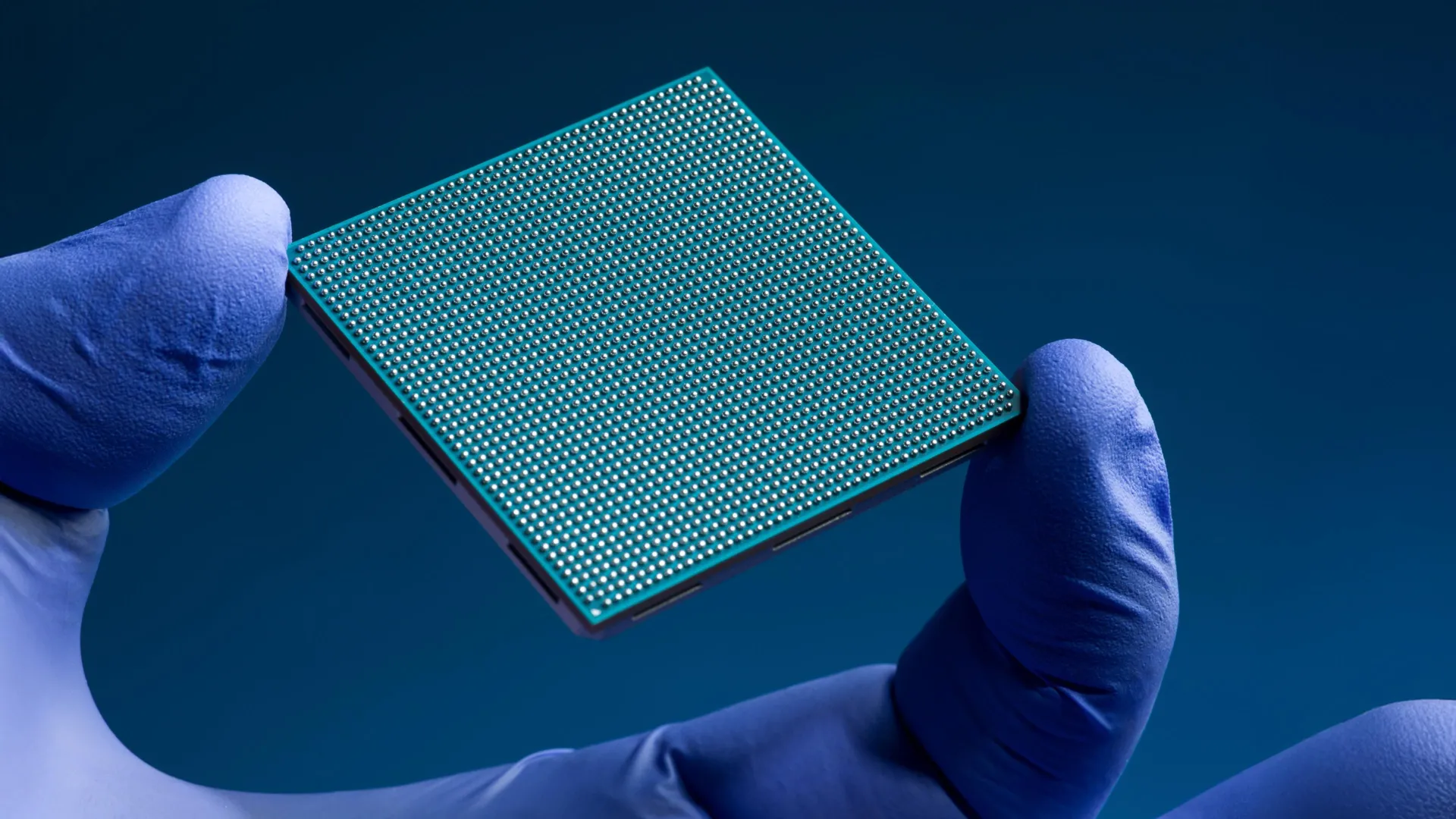
For decades, the backbone of human exploration in space has been a paradox: while NASA has pushed the boundaries of physics and propulsion, the onboard computers governing these missions have remained rooted in the past. To ensure survival in the unforgiving, radiation-soaked vacuum of space, spacecraft have long relied on aging, hardened processors that prioritize durability over raw computational speed. However, as the agency sets its sights on sustained lunar presence and ambitious human missions to Mars, the status quo is no longer sufficient.
NASA is currently spearheading a transformative initiative: the High Performance Spaceflight Computing (HPSC) project. This endeavor is not merely an incremental update; it represents a quantum leap in aerospace engineering. By developing a new, ultra-high-performance, radiation-hardened system-on-a-chip (SoC), NASA is preparing to equip future explorers with the computational intelligence necessary to navigate the solar system with unprecedented autonomy.
The Core Objective: Bridging the Gap Between Durability and Power
Current space missions are often hampered by the "reliability gap." Because high-energy particles from the Sun and deep space can corrupt data, flip bits in memory, and cause critical system failures, flight computers must be built to withstand intense bombardment. Historically, this has meant utilizing older, slower, and less complex processor architectures that are resistant to such interference. While these chips are remarkably dependable, they struggle to process the high-bandwidth sensor data required for real-time autonomous navigation or sophisticated onboard scientific analysis.
The HPSC project seeks to dismantle this trade-off. By utilizing modern fabrication techniques, the new processor is designed to deliver up to 100 times the computing power of current space-grade hardware, all while maintaining the "radiation-hardened" status required to survive the harsh environments of deep space.
Chronology of Development: From Concept to "Hello Universe"
The path to this technological breakthrough began in earnest in 2022, when NASA’s Jet Propulsion Laboratory (JPL) entered into a strategic commercial partnership with Microchip Technology Inc., based in Chandler, Arizona. This partnership was structured to leverage the best of both worlds: NASA’s deep understanding of space-environment constraints and Microchip’s expertise in high-volume, high-efficiency silicon production.
- 2022: NASA formalizes the partnership with Microchip Technology Inc. to develop the next generation of spaceflight processors. Microchip commits to funding a significant portion of the research and development.
- February 2024: Following the delivery of initial samples, the testing phase officially commences at JPL.
- The "Hello Universe" Milestone: To mark the operational status of the first test boards, the engineering team sent a symbolic email titled "Hello Universe"—a nod to the traditional "Hello World" introductory code used by programmers for decades.
- Current Status: As of mid-2024, the chip is undergoing an exhaustive, months-long "wringer" of environmental simulations. Early performance benchmarks have exceeded initial expectations, with some tests showing processing capabilities nearly 500 times greater than current radiation-hardened alternatives.
Supporting Data: Testing in the Crucible of Space
The certification of space hardware is a brutal, unforgiving process. To ensure the HPSC can survive the vacuum of space, NASA engineers at JPL are subjecting the chips to a rigorous battery of tests designed to simulate the most hostile conditions imaginable.
Thermal and Radiation Stress
The processor must remain stable despite extreme temperature fluctuations that would cause standard commercial electronics to expand, contract, or fail. Furthermore, the chip is bombarded with simulated high-energy particles to ensure its "fault-tolerant" architecture can detect and correct errors in real-time. This is critical, as a single bit-flip caused by cosmic radiation could otherwise force a spacecraft into "safe mode," effectively grounding a mission millions of miles from Earth.
High-Fidelity Landing Simulations
One of the most exciting aspects of the testing regimen involves replicating the chaotic environment of planetary landings. Landing a rover or a human habitat on Mars requires processing massive volumes of data from LiDAR, radar, and optical sensors in a fraction of a second. Jim Butler, the High Performance Space Computing project manager at JPL, noted that the team is using high-fidelity landing scenarios from actual NASA missions to stress-test the chip. By successfully processing these data-intensive scenarios, the HPSC proves it can replace power-hungry, bulky legacy hardware with a compact, efficient, and intelligent unit.
The Architecture of a New Era: The System-on-a-Chip (SoC)
The HPSC is a classic "System-on-a-Chip." In modern electronics, this refers to a single semiconductor that integrates multiple components—central processing units (CPUs), memory controllers, networking interfaces, and specialized computational offloads—into one compact unit.
While this architecture is the standard for consumer electronics like smartphones, applying it to spaceflight is revolutionary. The HPSC is designed to operate for years without human intervention, maintenance, or repair. Its energy-efficient design is equally crucial; every watt of power consumed by a processor is a watt that cannot be used for life support, propulsion, or scientific instrumentation. By miniaturizing the computational brain of a spacecraft, NASA is essentially freeing up resources that can be redirected toward expanding the scope and duration of long-term missions.
Official Perspectives: A Triumph of Collaboration
The success of the HPSC project is being hailed as a milestone for the Space Technology Mission Directorate’s Game Changing Development (GCD) program. Eugene Schwanbeck, program element manager at NASA’s Langley Research Center, emphasized the collaborative nature of this achievement.
"Building on the legacy of previous space processors, this new multicore system is fault-tolerant, flexible, and extremely high-performing," Schwanbeck stated. "NASA’s commitment to advancing spaceflight computing is a triumph of technical achievement and collaboration."
The partnership with Microchip Technology represents a shift in how NASA approaches development. By engaging commercial partners who invest their own resources, NASA accelerates the innovation cycle while ensuring that the resulting technology has a viable pathway to both government and private-sector adoption.
Implications for the Future: Toward Mars and Beyond
The implications of this chip go far beyond simply making computers faster. The HPSC is the key to enabling true autonomy. Currently, most spacecraft must wait for "instructions from home" when they encounter an unexpected obstacle or system anomaly. Because of the vast distances in space, the time delay for radio signals—the light-speed lag—can be minutes or even hours, making real-time control impossible.
Autonomous Decision-Making
With the HPSC, spacecraft will be able to host artificial intelligence and machine learning algorithms directly onboard. This will allow probes to identify interesting geological formations, navigate around craters without human input, and troubleshoot hardware issues independently.
Crewed Missions
For human missions to the Moon and eventually Mars, the HPSC will act as a silent partner to the crew. It will manage the life-support systems, monitor the health of the spacecraft, and assist with complex scientific data analysis, allowing astronauts to focus on the mission objectives rather than the mechanics of the vehicle.
Terrestrial Spinoffs
The benefits are not restricted to the stars. Microchip Technology intends to adapt the core architecture of this processor for industries on Earth that require extreme reliability, such as aviation and automotive manufacturing. The ability to create a chip that can survive in a vacuum while processing massive amounts of data is a game-changer for autonomous vehicles and commercial aircraft that require high levels of safety and fail-safe redundancy.
Conclusion: The Giant Leap in Miniature Form
NASA’s High Performance Spaceflight Computing project is a reminder that the most significant advancements in exploration are often those that occur in the invisible architecture of a machine. As the agency moves toward a future where human beings reside on the Moon and set foot on the Red Planet, the HPSC will be there, silently processing the data that guides our species into the next great frontier.
By successfully merging the durability of the past with the computational brilliance of the future, NASA is ensuring that when humanity finally makes its next "giant leap," the intelligence behind the mission will be as robust and capable as the spirit of the explorers themselves.


 Neng Nana
 Evan Lee Salim
 Raul Delapena Setiawan
 Reynand Wu
 Sagoh
Sagoh

 Azzam Bilal Chamdy
 Ali Ikhwan