
 Rifan Muazin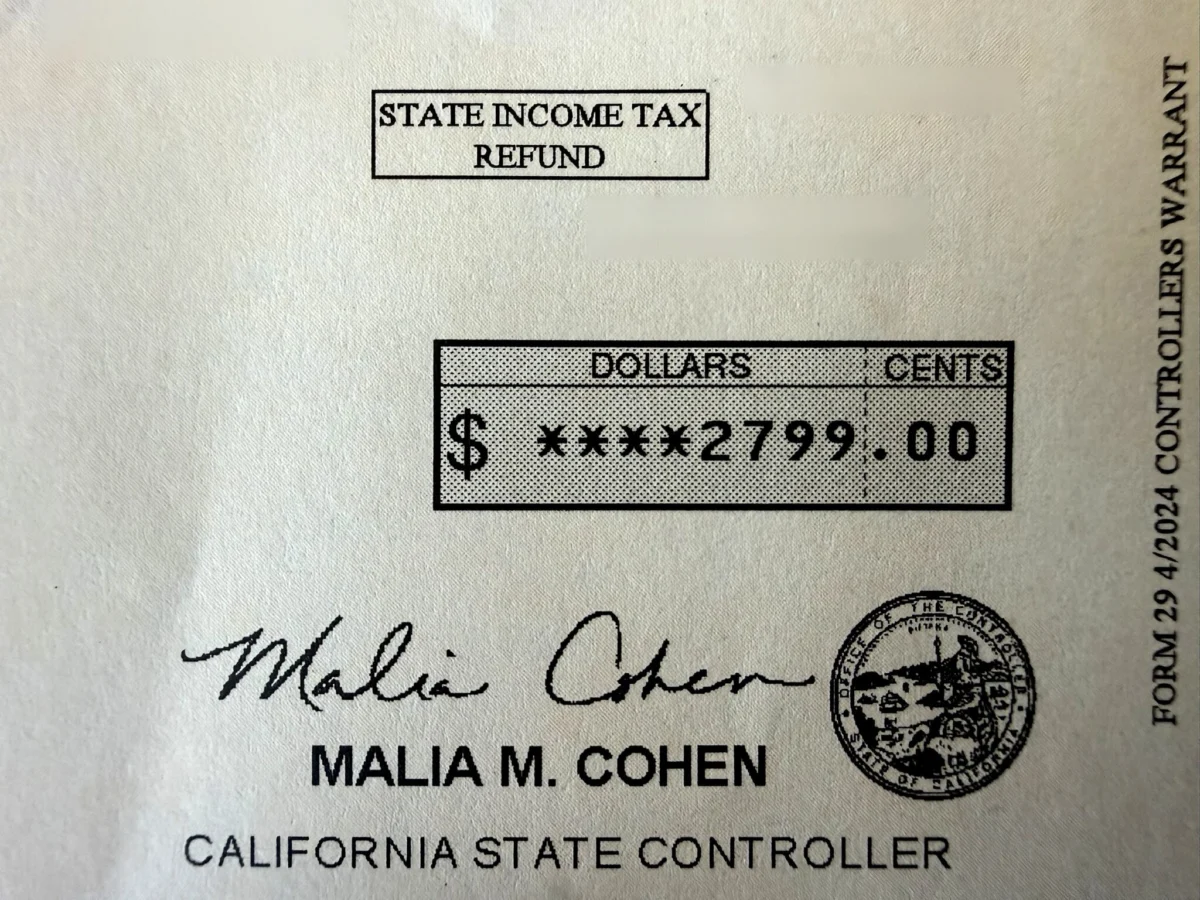
In the realm of personal finance, the prevailing wisdom usually dictates a rigid adherence to spreadsheets, rigorous budgeting, and cold, hard data. However, there exists a subset of high-achievers who credit their financial trajectory not just to arithmetic, but to the psychological power of "manifestation"—the act of vocalizing desires to align one’s focus with potential opportunities.
For many, the term "manifesting" evokes images of crystals and wishful thinking. Yet, stripped of its mysticism, the practice functions as a powerful cognitive filter. By explicitly stating a financial goal, an individual can shift their subconscious from a state of passive acceptance to active scanning. This article explores whether such a practice is a legitimate tool for financial management or merely a retrospective narrative constructed after the fact.
The Liquidity Crunch: A Case Study in Pressure
To understand the efficacy of this mindset, one must examine a recent real-world scenario. A significant liquidity crunch often serves as the catalyst for such unconventional approaches. In this instance, an investor faced a severe imbalance: a $1 million venture capital commitment that had seen $460,000 in capital calls within just six months—drastically outpacing the budgeted $300,000 for the first year.
This $160,000 shortfall created an immediate, tangible threat to the investor’s financial equilibrium. While passive income streams remained sufficient to cover day-to-day living expenses, the threat of subsequent capital calls posed a genuine risk of insolvency. With his back against the wall, the investor turned to a simple, intentional mantra: "Let the money come in unexpected ways."

Chronology of a Financial Turnaround
What followed the adoption of this mindset was a series of events that, while appearing serendipitous, highlight the importance of "looking" for what is already there.
- Week 1 (The Tax Refund): After ignoring a pile of mail for three weeks, the investor finally retrieved his correspondence. Among the stack was a check for $2,799 from the California Franchise Tax Board. This was a direct result of an administrative error—a failure to report estimated tax payments on an extension, followed by an overpayment on a final return. The money was his all along, but the act of "manifesting" provided the psychological nudge to open the mailbox.
- Week 2 (The Consulting Surge): Simultaneously, the investor experienced an inexplicable spike in demand for his professional consulting services. Without active marketing, four new clients reached out within days. By staggering these sessions, he effectively generated an additional 1% liquidity buffer.
- Week 3 (The Forgotten Distribution): A dormant private real estate fund, which had been off the investor’s radar for nearly a decade, issued a surprise distribution of $1,758.65. While minor in the context of the total deficit, it reinforced the principle of auditing long-forgotten assets.
- Week 4 (The Strategic Divestment): A deep dive into corporate accounts—often overlooked due to administrative complexity—revealed a long-term, underperforming asset. Recognizing it would not meet its investment thesis within the next 12 months, the investor sold the position. This singular action provided a cash infusion capable of covering a 13.7% capital call ($137,000).
Supporting Data: Why "Looking" Matters
The data suggests that the "manifestation" success stories often rely on the recovery of "trapped" capital rather than the creation of new wealth out of thin air.
Financial professionals often note that as portfolios grow in complexity—spanning corporate accounts, private equity, real estate, and diversified tax jurisdictions—it becomes mathematically impossible for an individual to maintain a granular, real-time view of every dollar.
In this case, the total recovery efforts yielded approximately $155,000 in liquid capital. This did not come from the "universe" in a metaphysical sense, but from:

- Administrative Recovery: Reclaiming overpaid taxes.
- Operational Efficiency: Utilizing unused consulting capacity.
- Portfolio Auditing: Identifying and liquidating underperforming "dead weight" assets.
- Professional Networking: Re-engaging dormant business relationships.
Professional Implications: The "Manifestation" Filter
The implications for personal finance are profound. When an individual claims they are "manifesting money," they are effectively forcing their brain to prioritize financial scanning over mundane distractions.
The Role of Cognitive Bias
Psychologists refer to this as the "Baader-Meinhof phenomenon" or the frequency illusion. When you decide you want to "find money," you begin to notice opportunities that were previously filtered out as background noise. The unread tax letter, the underperforming stock, the potential consulting lead—these were all present before the manifestation began. The manifestation did not create the opportunity; it removed the cognitive blinders preventing the individual from seeing it.
The Strategic Exit
This is not the first time this framework has been applied to high-stakes finance. In 1999, a young finance professional recognized that his career path was unsustainable. He "manifested" his departure by setting a hard deadline of age 40 to leave the industry.
This goal became the filter for every decision he made for the next 13 years. By saving 50% to 80% of his after-tax income, he did not just "wish" for freedom; he engineered it. When the time came, he did not simply resign—he leveraged his position to negotiate a lucrative severance package, effectively leaving the industry six years ahead of schedule with a significant financial parachute.

Engineering Your Own Outcome
The lesson for the modern reader is clear: if you are facing a financial wall, you must move from passive worry to active, goal-oriented search.
- Define the Need: Quantify exactly how much capital you require and by when. Ambiguity is the enemy of action.
- Audit the "Hidden" Ledger: Review accounts you rarely check. Look for dormant investments, unclaimed tax refunds, or forgotten subscriptions.
- Re-engage Dormant Networks: The most valuable opportunities often come from relationships built years ago. A simple "hello" can lead to unexpected partnership or consulting inquiries.
- Filter Decisions through the Goal: Every purchase, investment, or career move should be evaluated against the "manifested" outcome. If it doesn’t serve the goal, it is discarded.
Conclusion: Beyond the Vibe
While the term "manifesting" may seem like a trend, its underlying mechanism is a core tenet of effective wealth management: intentionality.
The investor in this scenario ended up with enough liquidity to cover months of expenses not because of magic, but because he stopped ignoring his mailbox, started auditing his corporate accounts, and recognized that his past efforts (tax payments, past investments) were still working for him.
Ultimately, the goal of any financial strategy is to provide security and freedom. Whether you call it "manifesting" or "proactive financial management," the result remains the same: you stop waiting for your ship to come in and start swimming out to meet it. As the investor noted, "Manifesting isn’t magic. It’s direction." If you can define the direction, the path—and the resources required to navigate it—often reveal themselves in the most mundane of places.


 Ali Ikhwan
 Layla Zulfa
 Laily UPN
 Iffa Jayyana

 Suro Senen
 Lina Hope
 Lina Irawan