
 Raul Delapena Setiawan
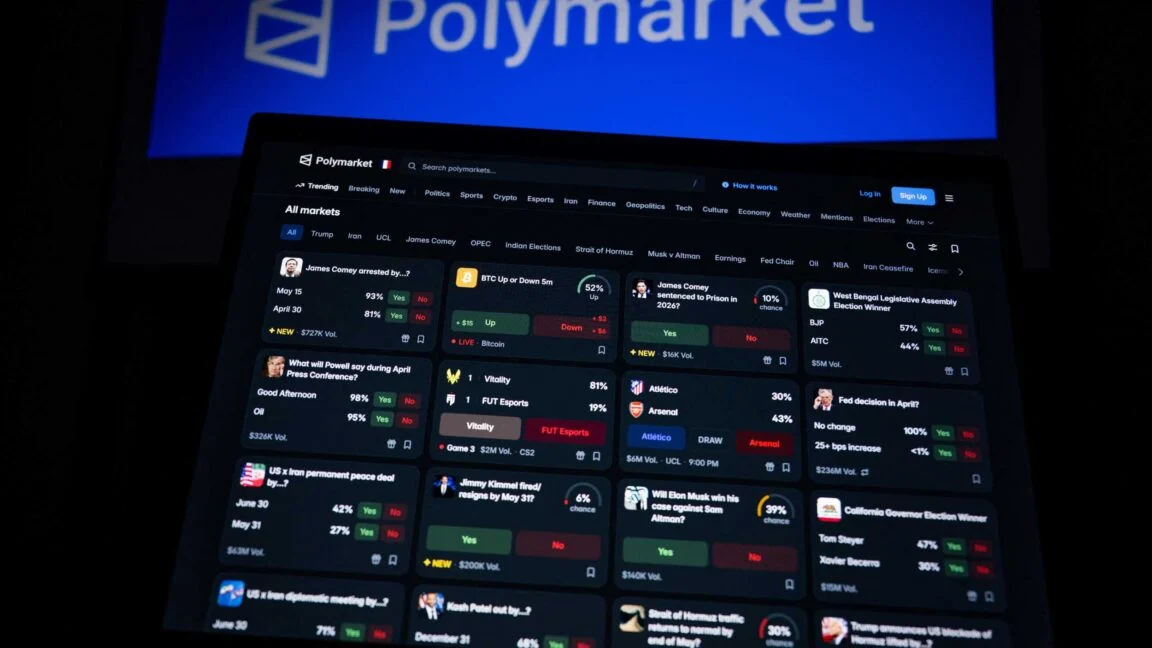
In a decisive move to protect the integrity of national security, Secretary of Defense Pete Hegseth has issued a sweeping directive prohibiting Department of War personnel from utilizing nonpublic information to engage in financial transactions—specifically targeting the burgeoning sector of prediction markets. This mandate, which carries the weight of potential criminal prosecution, signals a significant escalation in the federal government’s effort to prevent the commodification of sensitive intelligence.
The New Directive: A Line in the Sand
The memorandum, signed by Hegseth, leaves little room for ambiguity. It explicitly forbids all Department of War personnel from participating in financial bets related to their official duties, whether acting directly or through third-party intermediaries.
“All Department of War personnel are prohibited from engaging in financial transactions using nonpublic information, either directly or indirectly through a third party,” Hegseth wrote. The memo serves as both a warning and a threat of severe consequences, noting that violations could trigger administrative or disciplinary action, and in more egregious cases, criminal prosecution under the Uniform Code of Military Justice (UCMJ) and broader federal statutes.
The core concern, according to the Pentagon, is not merely the breach of security protocols but the fundamental corruption of professional judgment. Hegseth articulated this risk with stark examples: “Beyond operational security, financial stakes can warp judgment. A logistician with money riding on a strike date has an interest in that date. An analyst with a position on an outcome has an interest in that outcome.”
By tying personal wealth to military outcomes, the Department argues that personnel are incentivized to influence—or at the very least, hope for—specific operational results that may not align with national security objectives or the safety of deployed forces.
Chronology of a Growing Scandal
The Pentagon’s directive is the latest chapter in a series of alarming reports concerning the intersection of political power, sensitive information, and prediction platforms like Kalshi and Polymarket.
The Iran Ceasefire Bets (April)
The controversy gained national attention when a series of highly specific, well-timed bets surfaced on Polymarket regarding a potential U.S.-Iran ceasefire. Just before President Donald Trump’s formal announcement in April, a cluster of newly created accounts placed massive, high-confidence wagers on the outcome. These accounts walked away with hundreds of thousands of dollars in profit, fueling intense speculation that the traders had advance knowledge of the diplomatic breakthrough.
The Teleprompter Incident (July)
By mid-summer, the issue moved from international diplomacy to the domestic political sphere. Reports emerged that a Trump teleprompter aide had leveraged their proximity to the President to secure $100,000 in profits on Kalshi. By betting on the specific phrasing and content of the President’s prepared remarks, the aide effectively turned the administration’s public communications strategy into a personal investment vehicle.
The White House and Pentagon Pivot (October)
Following the backlash from these incidents, the White House issued a blanket warning to all staff regarding the use of private information for prediction market gambling. This culminated in the recent Pentagon memorandum, marking a transition from soft guidance to hard, punitive-focused regulation.
The Regulatory Tug-of-War
The rise of these platforms has occurred against the backdrop of the Trump administration’s signature "light-touch" regulatory philosophy. Prediction markets have flourished under a policy environment that largely views these platforms as innovative financial tools rather than traditional gambling dens.
However, this approach has created a friction point between federal and state jurisdictions. The Trump administration has actively sought to block state governments from imposing their own regulations on these markets, arguing that such oversight is preempted by the exclusive jurisdiction of the Commodity Futures Trading Commission (CFTC).
This legal theory has met resistance. Courts have reached conflicting conclusions, and several state governments have petitioned the Supreme Court to uphold their right to impose local restrictions. They argue that the proliferation of these markets creates a public nuisance and invites financial crime that federal regulators are either unwilling or unable to adequately police.
The Deterrence Gap: Platforms vs. Federal Law
While platforms like Kalshi and Polymarket maintain internal policies that prohibit insider trading, the enforcement mechanisms available to private companies are inherently limited. They can ban an account or seize funds, but they lack the investigative authority of federal agencies and the punitive power of the U.S. government.
The Pentagon’s new stance changes the calculus. The threat of being banned from a website pales in comparison to the risk of a court-martial or a federal prison sentence. By codifying these restrictions under the UCMJ, Hegseth is shifting the burden of policing from the platforms—which have a financial incentive to encourage volume—to the individual personnel, who now face the prospect of losing their careers and their liberty.
Implications for National Security
The ethical implications of prediction markets in a government context are profound. If a military analyst, intelligence officer, or political aide stands to gain financially from an event they have helped shape or predicted, the objectivity of the entire intelligence apparatus is called into question.
Erosion of Trust
Trust is the currency of the intelligence community. If the public or foreign allies begin to suspect that U.S. policy decisions are being "hedged" by officials in the betting markets, the credibility of American decision-making will suffer. If a decision to delay a strike or leak a diplomatic detail is motivated by a desire to close out a winning position on a prediction platform, the moral and tactical authority of the U.S. military is compromised.
The "Analyst’s Dilemma"
The memo highlights a subtle but dangerous phenomenon: the bias of the participant. If an analyst is tasked with forecasting a geopolitical outcome but has a financial position that benefits from a specific result, their cognitive biases are heightened. This "warping of judgment" is a classic conflict of interest, but one that is amplified to a dangerous degree when the "stake" involves real-world kinetic action or high-stakes diplomacy.
The Future of Oversight
The current administration finds itself in a precarious position. Having championed the deregulation of these markets, it now faces the reality that such freedom invites corruption. The Pentagon’s move may be a blueprint for broader government-wide policy. If the Department of War can successfully implement and enforce these rules, other agencies—including the State Department and the intelligence community—may face pressure to adopt identical protocols.
Conclusion: A Necessary Reckoning
The intersection of decentralized finance and centralized government power was always destined to create friction. While prediction markets offer a novel way to aggregate public opinion and data, they are fundamentally incompatible with the confidential nature of government service.
Secretary Hegseth’s directive is a tacit admission that the "light-touch" approach has failed to account for the predatory nature of human greed. By drawing a bright red line, the Pentagon is attempting to reclaim the professional standards that must govern those entrusted with the nation’s security. Whether this is enough to deter the next generation of digital-era insider traders remains to be seen, but the message from the Pentagon is clear: the era of betting on the job is officially over.
As the legal battles continue in the Supreme Court and the regulatory landscape remains fluid, the Pentagon’s move serves as a stark reminder that in the realm of national security, there is no place for a wager. The consequences of these bets are too high, and for those who choose to ignore the warning, the cost will be far greater than any potential profit.


 Evan Lee Salim

 Reynand Wu

 Muslim

 Basiran

 Layla Zulfa

 Nana
