
 Basiran
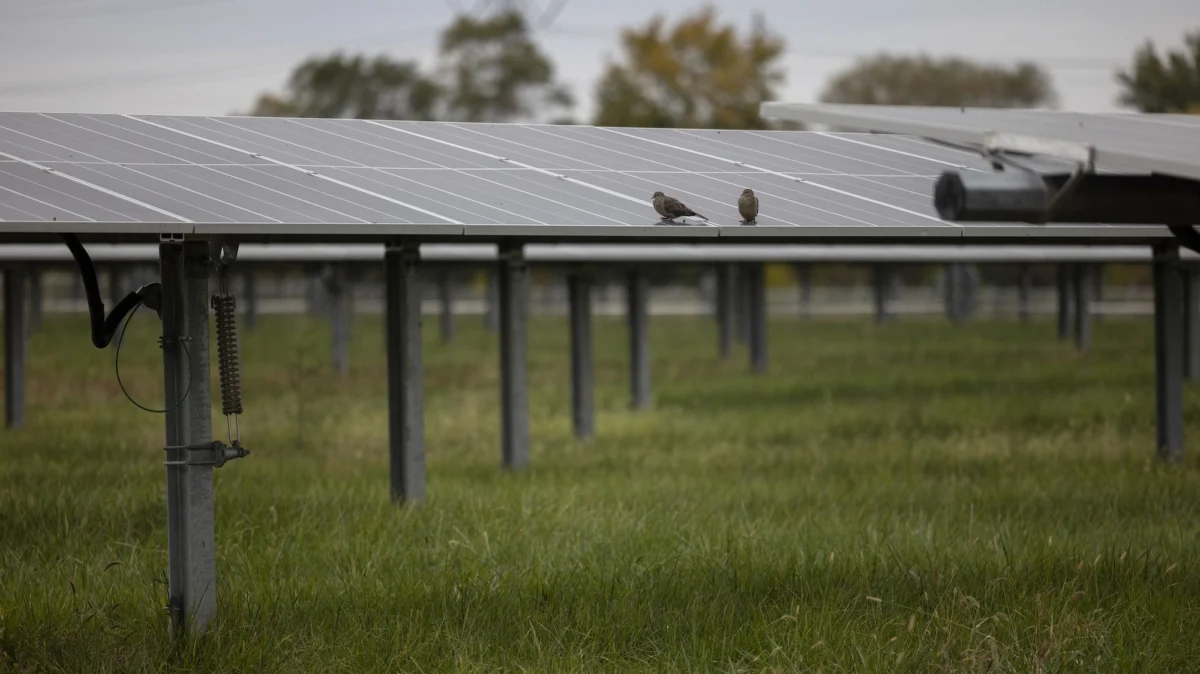
Across the United States, a quiet revolution in climate finance is unfolding, often far from the headlines of partisan gridlock. From a solar array powering low-income households on land owned by a historic order of nuns in New Orleans to an all-electric affordable housing development in the shadow of the Wasatch Mountains in Salt Lake City, green banks are proving that clean energy infrastructure can be built even when federal support faces existential threats.
These financial institutions—entities that utilize public or philanthropic capital to catalyze private lending for renewable energy and climate-adaptation projects—are currently operating in a period of profound uncertainty. Despite the Trump administration’s aggressive efforts to claw back billions of dollars in federal climate funding, the "Green Bank 50," a coalition of 56 such organizations, has remained remarkably resilient. By pivoting to alternative partnerships and refining their risk-mitigation strategies, these banks are keeping the momentum of the green transition alive.
The Mandate of Green Banks: Bridging the Capital Gap
At their core, green banks exist to solve a fundamental market failure: the perceived risk associated with clean energy projects in underserved or unconventional sectors. While large-scale wind farms and utility-scale solar projects often attract traditional Wall Street financing, smaller projects—or those serving low-income communities and affordable housing providers—are frequently overlooked.
"The goal is to find projects that private-sector lenders consider too risky," explains Dan Adler, executive director of the U.S. Green Bank 50. "But if you do it with green banks a few times, then private capital can take over. We’re making a virtue out of a necessity."
These banks operate by taking on the "first-loss" or "credit risk" that commercial lenders avoid. By providing predevelopment loans, credit enhancements, or loan-loss reserves, they allow projects to reach the point of "bankability." Once a technology or a business model has a track record of success, traditional commercial banks and credit unions are much more willing to step in, allowing the green bank to recycle its capital into the next wave of innovative projects.
A Chronology of Conflict: The Rise and Freeze of Federal Support
To understand the current state of these institutions, one must look back at the legislative landscape of the early 2020s.
- 2022: The passage of the Inflation Reduction Act (IRA) represented the largest climate investment in U.S. history. Included in this legislation was the Greenhouse Gas Reduction Fund (GGRF), which earmarked $20 billion for green banks and an additional $7 billion specifically for "Solar for All" initiatives. This funding was intended to act as a massive force multiplier for local and regional clean energy efforts.
- 2024–2025: As the new administration took office, the executive branch initiated a series of clawbacks, freezing the disbursement of these funds. This move forced dozens of green banks to abruptly halt or scale back programs that had already begun recruiting staff and soliciting project proposals.
- August 2026: A federal judge ruled that the administration’s freeze of the $20 billion GGRF was unlawful, providing a glimmer of hope for the sector.
- October 2026: Subsequent rulings by two additional federal judges declared the cancellation of the "Solar for All" program illegal. Despite these judicial victories, the funds remain in legal limbo, with the administration signaling its intent to appeal these decisions to the Supreme Court.
Impact Metrics: Data in the Face of Adversity
The "Green Bank 50" released its inaugural impact report in September 2026, offering a rare glimpse into the efficacy of these organizations over the preceding two-year period. Data collected from 48 member banks revealed a sector that, despite facing a hostile fiscal environment, has punched well above its weight.
Between 2024 and 2025, these organizations mobilized approximately $1.4 billion of their own capital, which in turn attracted $11 billion in private capital. This $12.4 billion total investment supported more than 40,000 individual projects across the United States.
These projects range from residential solar installations to complex energy-efficiency retrofits in aging commercial buildings. The data underscores a key economic reality: for every dollar of green bank capital deployed, the market was able to generate roughly eight dollars in private investment. This leverage ratio is the primary indicator of the movement’s success, proving that public intervention can successfully prime the pump for private-sector climate action.
Official Responses and Strategic Pivots
The loss of access to federal grants has forced executive leaders to adopt a posture of "tight discipline." Kerry O’Neill, CEO of Inclusive Prosperity Capital, expressed the frustration felt across the industry. Her organization, which had been awarded $249 million through the GGRF, was forced to pause essential training courses for developers and predevelopment mentorship programs.
"We had projects with financial commitments, training courses for developers and lenders, a predevelopment mentorship program, staff hired and trained, and more," O’Neill said. "We hope recent court decisions will result in our return to this important work."
For the time being, the strategy has shifted from expansion to optimization. Many green banks are now prioritizing "addressable" projects—those that can be financed without the zero-interest or low-interest federal subsidies that were previously expected.
Dan Adler notes that while the absence of federal capital makes certain high-risk, high-reward projects impossible for now, it has necessitated a higher degree of cooperation between banks. "We’re focusing on what’s addressable," he says. "We are working on tighter integration with commercial banks and philanthropic partners to ensure that even without that federal tailwind, the pipeline doesn’t collapse."
Implications for the Future of Energy Justice
The implications of this funding freeze are not merely financial; they are deeply social. Many of the projects targeted by green banks are located in "redlined" communities—neighborhoods that have historically been denied access to traditional credit. By focusing on these areas, green banks are effectively acting as a mechanism for environmental justice, ensuring that the benefits of the clean energy transition, such as lower utility bills and improved air quality, reach those who need them most.
The Role of Technology and Standardization
One of the most promising developments is the rise of shared platforms. The Solar and Energy Loan Fund (SELF) in Florida, for instance, has developed a "climate equity plug-and-play" platform. This system allows 13 other green banks to share standardized underwriting and loan-processing tools. By digitizing and streamlining these back-office operations, green banks are drastically reducing their administrative costs, allowing them to remain viable on operating budgets that, for many, remain under $2 million per year.
The Sustainability of the Model
The long-term viability of the green bank movement depends on its ability to prove that it is not a charity, but a robust financial engine. By layering financing—such as the $4 million initiative launched by the Montgomery County Green Bank in Maryland—these institutions are proving that they can offer competitive, accessible interest rates for heat pumps and solar panels even without federal subsidies.
As the legal battles continue to play out in the courts, the green banking sector is signaling a clear message: it has evolved beyond a reliance on a single source of funding. While federal support remains the "gold standard" for enabling rapid, large-scale deployment, the institutional knowledge, regional partnerships, and standardized lending frameworks established by the Green Bank 50 have created a durable infrastructure.
The transition to a clean energy economy is no longer a theoretical exercise; it is a series of tangible, financed projects. As these banks continue to navigate the volatile landscape of the coming years, their ability to marry public mission with private discipline will likely serve as the primary blueprint for climate finance in the United States. Whether or not the federal funds are eventually released, the green banks have already demonstrated that they are capable of doing the heavy lifting required to keep the lights on—and the planet cooler—for the next generation.


 Muslim


 Evan Lee Salim

 Reynand Wu
 Layla Zulfa

 Nana
