
 Neng Nana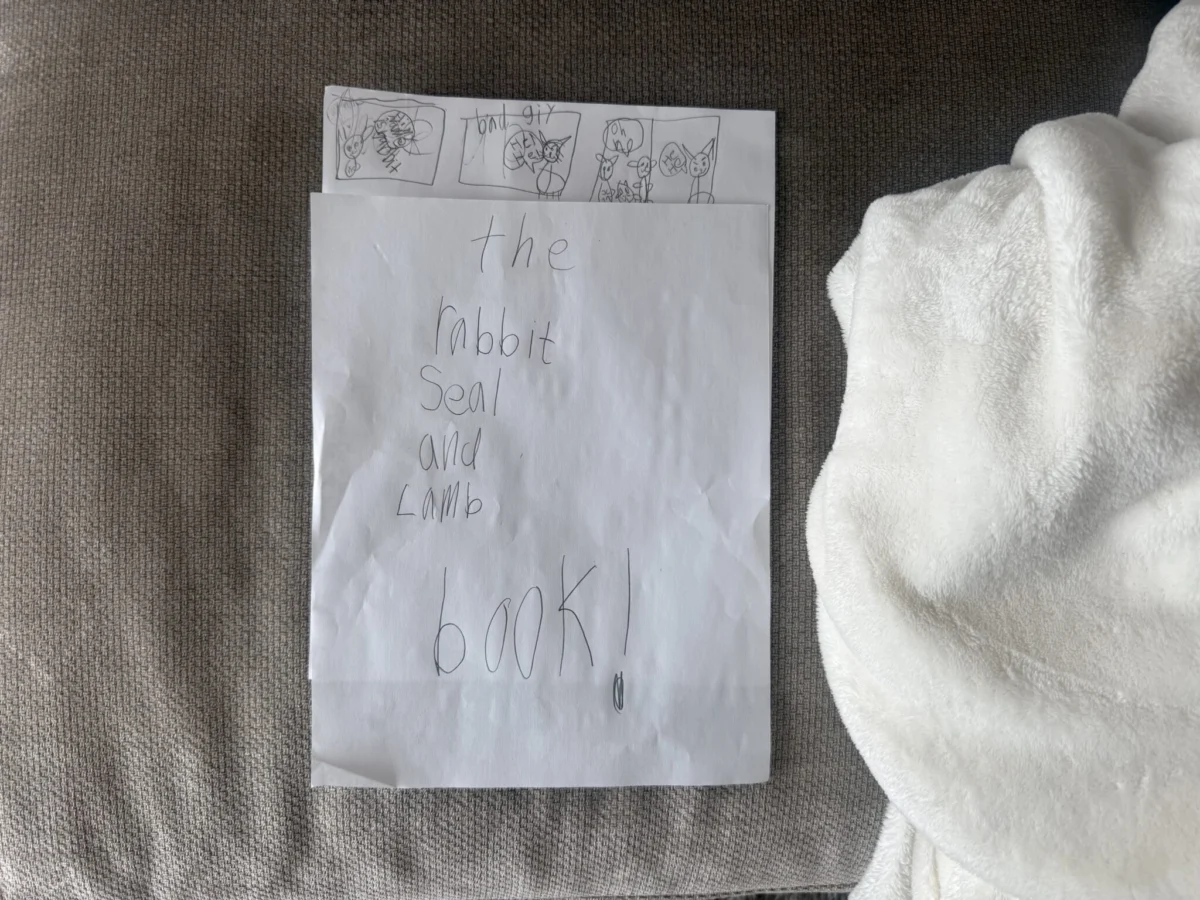
In an era defined by rapid technological shifts and a volatile economy, the age-old question of what we hope our children will become has taken on a sharper, more urgent edge. For parents who have achieved financial independence—often through non-traditional paths—the dilemma is personal: How do you encourage your child’s creative spark while simultaneously shielding them from the harsh economic realities of "passion poverty" careers?
This is the central conflict currently facing many high-achieving parents, including those who have successfully navigated the world of professional writing and content creation. While modeling hard work is a cornerstone of effective parenting, the realization that one’s own career might be a precarious path for a child to follow is a sobering, often bittersweet, epiphany.
The Reality of the "Passion Poverty" Career
In 2019, when the author accepted a book deal with Portfolio Penguin, the primary motivation was pedagogical. The goal was to provide a tangible, physical manifestation of discipline, research, and effort—a finished book that the author’s children could hold, read, and understand. The objective was to show that labor results in concrete outcomes.
However, the experience of writing two national bestsellers—Millionaire Milestones and Buy This Not That—revealed a stark truth about the publishing industry. Despite the prestige of bestseller status, the income generated from writing alone is often insufficient to sustain a middle-class lifestyle in major metropolitan hubs like San Francisco.
By professional income standards, an author relying solely on book royalties would often be classified as low-income. The median income for authors is notoriously low, hovering around $10,000 annually. Even for the top 0.3% of authors, earning a consistent, six-figure income is the exception, not the rule. When one considers the rising cost of living, tuition inflation, and the time-intensive nature of book production, writing can become a "passion poverty career" (PPC).
A Chronology of Discovery: From Books to Blueprints
The journey from professional writer to concerned parent crystallized on a quiet morning at home. While tidying the sofa, a small, hand-stapled stack of papers appeared: a homemade book titled The Rabbit Seal and Lamb.
The discovery was initially a moment of pure parental pride. The handwriting was neat, the spelling was accurate, and the enthusiasm was palpable. It was a mirror reflecting the author’s own professional life back at them. However, that pride quickly transitioned into a knot of anxiety.

History is replete with examples of professional "inheritance." From the Manning family in the NFL to the artistic legacies of Goldie Hawn and Kate Hudson, or the business dynasties of the Pritzkers and the Waltons, children often gravitate toward the professional spheres of their parents. Research in behavioral psychology confirms this: children are significantly more likely to enter the same professions as their parents, not merely due to nepotism, but because of early, repeated exposure. What a parent discusses at the dinner table becomes the "normal" aspirational baseline for the child.
Supporting Data: The Economic Map
To provide children with a "map of the territory," parents must be willing to present an honest assessment of the labor market. While passion is a powerful motivator, it does not pay for rent, health insurance, or college tuition.
Data from the Bureau of Labor Statistics and various compensation surveys highlights a clear divergence between creative pursuits and high-compensation professional tracks.
Comparative Salary Benchmarks (Median Estimates)
| Career | Median Starting | Median Mid-Career |
|---|---|---|
| Physician/Surgeon | $60,000 (Residency) | $240,000 – $400,000+ |
| Software Engineer | $130,000 – $180,000 | $200,000 – $400,000+ |
| Investment Banker | $110,000 – $150,000 | $250,000 – $500,000+ |
| Corporate Lawyer | $95,000 – $215,000 | $200,000 – $500,000+ |
| Pilot (Commercial) | $80,000 | $180,000 – $350,000 |
Note: Data reflects typical industry standards; actual compensation varies by firm, location, and specialization.
The observation is stark: society often places a high value on roles that sustain the economy, technology, and health, while frequently under-compensating roles in journalism, teaching, and the arts. Teaching a child that their interests have economic consequences is not "crushing dreams"—it is providing the full information required to make informed life decisions.
Official Perspectives: The Role of the Parent-as-Investor
Expert perspectives on wealth management and parenting emphasize that the most effective way to influence a child’s future is to lead by example. If a parent is not a physician, banker, or engineer, they can still model a high-value skill set: the skill of being an investor.
In a world where artificial intelligence is commoditizing entry-level creative and coding work, financial literacy is becoming the ultimate "future-proof" skill. By shifting dinner table conversations from generalities to the specifics of market movements, P/E ratios, and economic cycles, parents can normalize financial success.

The author’s own path was fundamentally altered by a single breakfast table conversation regarding stock ticker symbols. That brief moment of curiosity, sparked by a parent’s casual interest, led to a career in investment banking, the birth of the FIRE (Financial Independence, Retire Early) movement, and long-term economic autonomy.
Implications for Future Generations
The implication for parents is clear: the objective is not to dictate a career path, but to expand the menu of possibilities. When a child demonstrates a love for writing or art, it should be nurtured, but it should not exist in a vacuum.
- The Risk of Over-Specialization: In an age of AI, the next generation must understand both the creative process and the financial mechanics that underpin it.
- The Power of Proximity: Children absorb their parents’ struggles and triumphs through osmosis. If a parent is a passionate, engaged investor, the child is far more likely to view wealth creation as an accessible, natural activity.
- The Necessity of "Full Information": Providing children with the data on compensation, industry trends, and the realities of various careers empowers them to choose paths that align with their strengths and their desired quality of life.
Conclusion: Guidance vs. Pressure
The boundary between guidance and pressure is thin, but it is defined by the quality of information provided. If a child chooses a lower-paying creative path, they should do so with eyes wide open, fully aware of the trade-offs. Conversely, if they are nudged toward more lucrative fields, it should be framed as an opportunity for freedom—the freedom to pursue their passions later in life, without the constant stress of financial survival.
As the author looks at the hand-drawn book tucked away in the sofa, the path forward is clear. It is time to diversify the dinner table discourse. By introducing economics, market mechanics, and the art of investing, parents can ensure that their children don’t just follow in their footsteps, but walk a path that is both intellectually fulfilling and economically sound.
In the end, perhaps the most valuable inheritance isn’t a trust fund, but a mindset. Teaching a child to think like an investor—to calculate the cost of their choices and the long-term potential of their labor—is a gift that will outlast any career path, no matter how volatile the future may be.


 Ali Ikhwan
 Layla Zulfa
 Laily UPN
 Iffa Jayyana
 Rifan Muazin
 Suro Senen
 Lina Hope
 Lina Irawan