 Muslim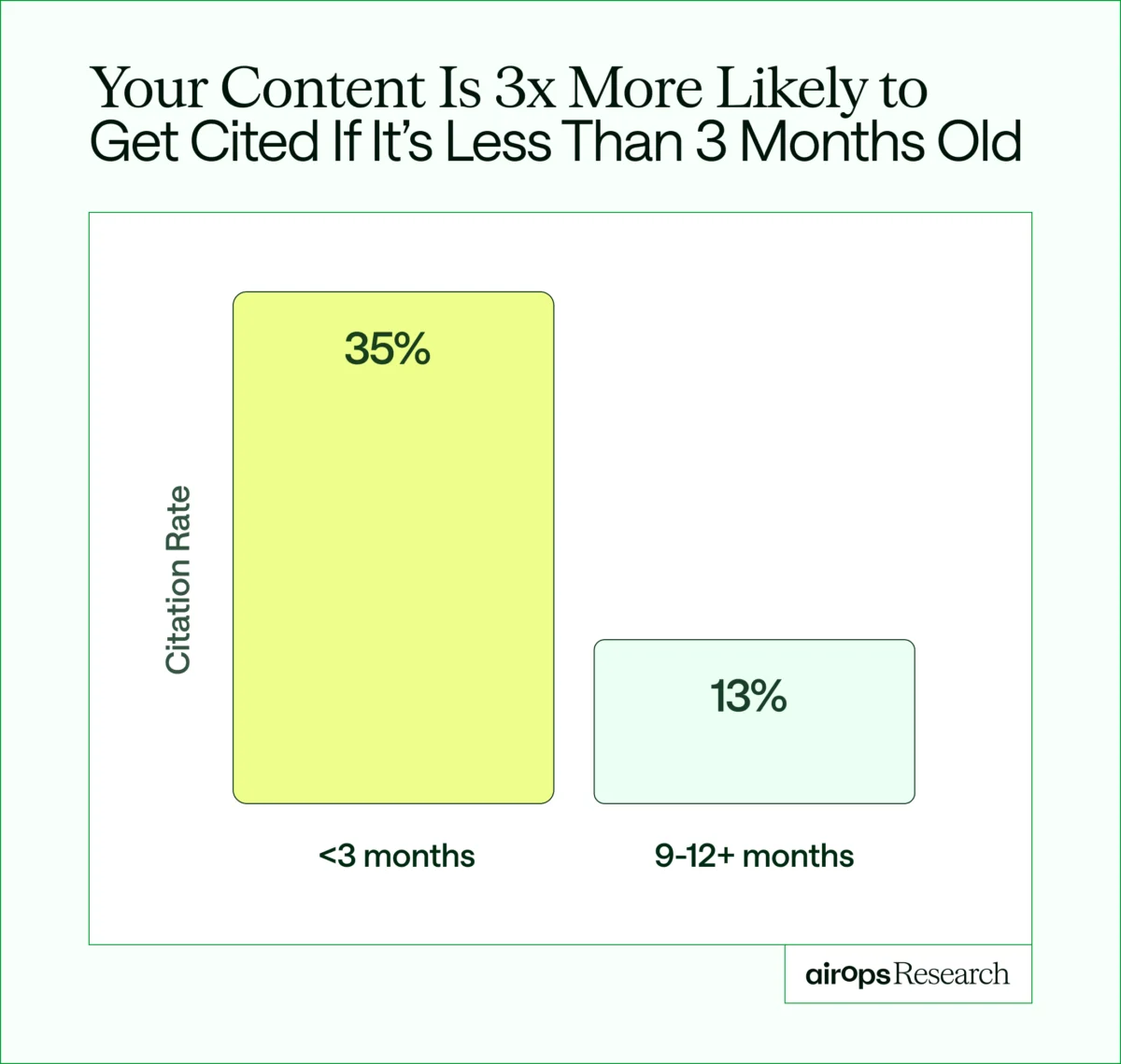
In the rapidly evolving landscape of digital search, the traditional metrics of success—stable rankings and predictable organic traffic—are becoming relics of the past. As generative AI models like SearchGPT, Gemini, and Perplexity redefine how information is discovered and synthesized, content creators and SEO professionals are facing a new reality: AI visibility is not a fixed destination, but a fluid, statistical target.

New research from the industry, including a recent preprint paper from IQRush, underscores a fundamental shift in how we must perceive "rankings." The data reveals that AI visibility is subject to significant statistical noise, meaning a single snapshot of your brand’s presence in an AI-generated answer is often misleading. As the industry grapples with these findings, a clearer picture of what drives sustained AI visibility—freshness, structure, and community authority—is beginning to emerge.

The Myth of Stable Rankings: Statistical Noise vs. Reality
For decades, the "blue link" era of SEO allowed webmasters to track their performance with relative certainty. If you ranked #3 for a keyword, you generally stayed there until a significant algorithm update or a change in your optimization strategy occurred. In the era of AI, this stability has evaporated.

The Problem of Repeated Measurement
Generative AI models are designed to introduce randomness—or "temperature"—into their responses to ensure variety. Consequently, querying the same model with the same prompt twice can yield entirely different citations. A new study by Ron Sielinski of IQRush highlights that when companies look at a single dashboard reading, they are essentially looking at a single roll of the dice.

The research suggests that the difference between a brand and its competitor in an AI search result is frequently indistinguishable from random fluctuation. The paper proposes a "stopping rule" for data collection, arguing that only after a significant number of repeated queries can a brand determine whether its visibility is statistically significant or merely a result of the model’s inherent variability.

The "Wait and See" Strategy
The study, which analyzed 30 platform-topic tests, found that for a ranking to be considered reliable, it must satisfy two conditions: the order of results must stabilize, and the gap between the top competitors must exceed the margin of error. In some instances, even after 125 queries, the data remained too volatile to declare a clear leader. This implies that for many marketers, the most professional action is to hold off on reporting rankings until a sufficiently large sample size has been collected.

Chronology of the Shift: From Search Engines to Answer Engines
The transition from traditional search to AI-driven discovery has not been instantaneous, but rather a series of tremors that have cumulatively reshaped the landscape.

- December 2025 – Early 2026: Initial volatility in search rankings begins to correlate with the increased adoption of AI-generated answer summaries.
- March 2026: Major core updates, coupled with spam prevention measures, begin to shift visibility away from traditional aggregators, forcing a reassessment of how brands earn trust.
- April 2026: Academic and industry researchers publish findings confirming that AI citation patterns are fundamentally unstable, debunking the idea of a fixed "ranking" for LLMs.
- May 2026: A major Google core update signals a massive pivot toward user-generated content (UGC), with platforms like Reddit seeing unprecedented gains in "Top 3" visibility across diverse niches.
- July 2026: New comprehensive research from AirOps provides the "State of AI Search" report, mapping the specific signals—such as structured data and community validation—that brands must cultivate to maintain presence in this new environment.
Data-Driven Insights: What Actually Works?
While the rankings themselves are unstable, the underlying signals that influence AI model selection have become more transparent. The 2026 data indicates that brands can no longer rely on keywords alone; they must optimize for the "Answer-First Web."

The Power of Freshness
AirOps research highlights that stale content is a major liability. Pages that are not updated on a quarterly basis are three times as likely to lose their AI citations. In commercial sectors, this expectation is even higher; models treat recency as a proxy for accuracy. Brands that maintain "evergreen" pages by regularly updating pricing, features, and claims are far more likely to be prioritized by models when users perform comparison queries.

Structure as a Retrieval Signal
If a model cannot parse your content, it cannot cite it. The data shows that pages with a clear, sequential heading structure (H1 followed by H2s and H3s) are 2.8 times more likely to be cited. Furthermore, the integration of schema markup and organized lists allows LLMs to extract information more efficiently, reinforcing the page’s relevance in the context of a direct question.

The Trust Layer: UGC and Community Validation
Perhaps the most significant finding is the rise of Reddit and other community platforms as the "trust layer" of AI search. In many categories, AI models are now citing user discussions—where real people compare products and share firsthand experiences—over branded marketing copy. Brands that engage authentically in these spaces, rather than simply promoting their own pages, are seeing a "halo effect" where their off-site presence directly correlates with increased AI citations.

Official Perspectives and Industry Implications
The consensus among industry leaders is that SEO is evolving from "rank tracking" to "visibility engineering."

Corey Morris, a prominent voice in the SEO community, argues that traditional audits are no longer sufficient. In a recent analysis, he advocated for "Purpose-Driven Audits," which prioritize business outcomes (conversions, form submissions) over vanity metrics like organic rankings. This approach aligns with the findings from the broader industry: since the "ranking" is a moving target, the goal should be to ensure that when a brand is cited, it leads to a meaningful business interaction.

Google, meanwhile, continues to balance its AI Overviews (AIOs) with the need to maintain a healthy ecosystem for publishers. While zero-click searches have risen—meaning more users get their answers without visiting a site—the data suggests that brands that secure visibility in both the AI-generated answer and the traditional organic results are the ones capturing the highest-intent traffic.

Implications for Future Strategy
What does this mean for the marketing teams of 2026 and beyond?

- Abandon the Single-Number Dashboard: If your reporting tool provides a single, clean "rank" for an AI query, it is likely providing a false sense of security. Demand reports that show a range of visibility or the margin of error.
- Invest in Off-Site Authority: Your website is no longer the only domain that matters. Because models rely on third-party consensus, your presence on LinkedIn, YouTube, and niche forums is a critical component of your SEO strategy.
- Prioritize "Interpretability": Audit your content not just for keywords, but for clarity. Use structured headers, clear lists, and schema markup to ensure that a machine reading your page can understand the core value proposition within seconds.
- Accept the "Not Enough Data" Result: There will be times when the volatility of an AI query makes it impossible to determine a winner. A professional strategy acknowledges this uncertainty rather than trying to force a conclusion where the data does not support one.
Conclusion: The Path Forward
The "State of AI Search" in 2026 is defined by a shift from the pursuit of artificial stability to the embrace of dynamic relevance. Brands that win in this environment are those that stop viewing AI as a competitor and start viewing it as a mirror of human trust. By focusing on deep, specific content that provides value to both human readers and the LLMs that aggregate their knowledge, brands can navigate the statistical noise.

The era of the "page one" monopoly is fading. In its place is an ecosystem where visibility is earned through consistent, structured, and community-validated excellence. As the industry moves forward, the teams that succeed will be those that prioritize business impact and actionable, data-backed insights over the outdated pursuit of a fixed, static rank.


 Ali Ikhwan
 Layla Zulfa
 Ammar Sabilarrohman
 Suro Senen
 Jia Lissa
 Evan Lee Salim