
 Jia Lissa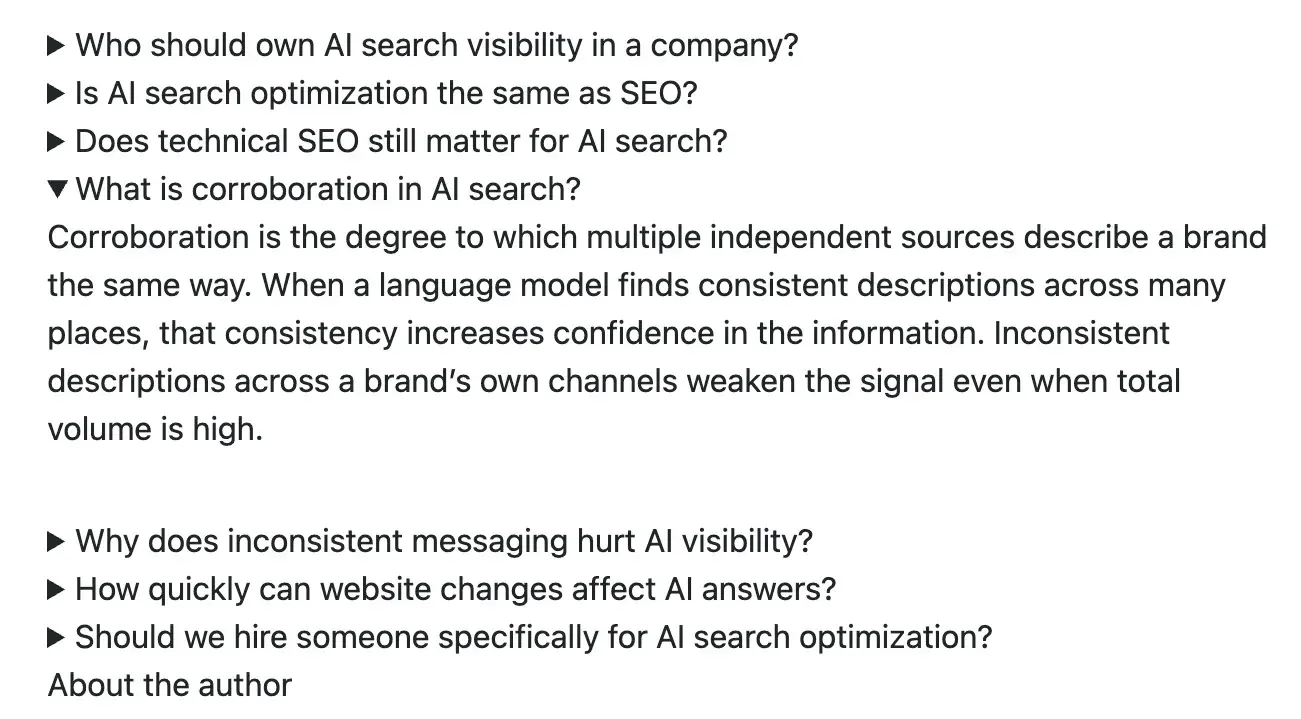
In the digital landscape of 2026, the traditional search engine results page (SERP) is rapidly becoming a relic. When a buyer today turns to ChatGPT, Perplexity, or Google’s AI-powered search features, they are no longer met with a cluttered list of ten blue links. Instead, they receive a single, synthesized answer—a concise, conversational response that cites a handful of authoritative sources.
For brands, this shift is existential. If your company is one of those citations, you secure immediate attention, qualified traffic, and instant trust. If you are not, you are effectively invisible—even if you rank on page one of a traditional search engine. The audience hasn’t vanished; they have simply moved into the answer.
The Shift: From Referral Links to AI-Synthesized Trust
The data confirms that this is not a passing trend but a fundamental change in consumer behavior. Over the past year, referral traffic from generative AI tools has tripled. According to industry research, 44% of marketers report having made a business purchase based on a brand they first discovered through an AI-generated answer. Even more telling, nearly one-third of these decision-makers have done so more than once.
This phenomenon has given rise to a new discipline: AI Search Optimization (AEO). Unlike traditional SEO, which prioritizes keyword density and backlink volume to earn a clickable rank, AEO focuses on "extractability." The goal is to make your content so clean, contextually relevant, and logically structured that an AI model can retrieve it, trust it, and serve it as the definitive answer to a user’s prompt.

Under the Hood: How AI Retrieval Works
To optimize for the age of AI, marketers must understand the mechanics of the "answer engine." As Pat Reinhart, VP of Professional Services at Conductor, notes, "An LLM doesn’t operate like a traditional search engine. They aren’t just scanning an index for keywords; they are semantically linking queries to content. If the model feels its internal knowledge is insufficient, it reaches out to the live web to find the answer in real-time."
The Mechanics of RAG and Query Fan-Out
Two primary technical mechanisms drive this process:
- Retrieval-Augmented Generation (RAG): This is the "connective tissue" of modern search. Since LLMs can hallucinate or rely on stale data, RAG allows the system to pull in live, verified web pages to ground its response. When you see a clickable citation next to an AI answer, you are seeing RAG in action. To be that citation, your content must be crawlable, indexable, and structured for clarity.
- Query Fan-Out: Modern prompts are far more conversational than the three-word queries of the past. A user might ask a 23-word question that requires the engine to "fan out" into dozens of sub-queries. Systems now break down complex prompts into themes, pricing, timelines, and comparisons. A page that addresses an entire cluster of related questions has a much higher probability of being retrieved than a page optimized for a single keyword.
The Anatomy of an AI-Optimized Page
If you want to be the brand that the AI cites, your content needs to be "extractable." AI models perform best when they can "lift" a passage from your site rather than attempting to summarize a disorganized long-form article.
Claim Statements and Evidence
The most effective structure is the "Claim-then-Evidence" pattern. Start a section with a direct, self-contained statement that answers a specific user question. Immediately follow that claim with data, a source, or a clear example. By mirroring how a grounded answer is built, you make it frictionless for the model to pluck your paragraph and display it to the user.

Question-Based Subheadings
Move away from "keyword-stuffed" headers. Instead, write your H2 and H3 subheadings as the actual questions your target audience is asking. When a page is organized as a map of an intent cluster, it provides the AI with multiple surfaces to match against. Romana Kuts, founder of SaaStorm, emphasizes that the most successful traffic often comes from "short and sweet" FAQ blocks that provide direct, no-nonsense answers.
Entity Authority: Building Trust in the Age of Machines
In the world of AI, domain authority scores are secondary to Entity Authority. AI models need to know who you are, what you represent, and whether you are a trusted source on a specific topic.
- Standardizing Entities: You must be consistent. Pick one canonical description for your brand, your leadership team, and your products. Use this same description across your website, social media profiles, and third-party mentions. If you describe your company differently on LinkedIn than you do on your own "About" page, you create ambiguity that lowers the model’s confidence in your entity.
- Off-Site Signals: Credibility is earned through mentions on third-party sites, podcasts, and industry communities. Reddit, in particular, remains a massive influence on AI models due to its vast repository of human-to-human discussion. However, these mentions must be authentic. Engaging in "spammy" link building is a losing game; AI systems are increasingly adept at identifying and discounting inauthentic, manufactured content.
Technical Requirements: Crawlability is King
Even the best content will fail if the AI cannot read it. Technical AI optimization is largely about ensuring that your content is accessible to modern crawlers.
- JavaScript and Rendering: Many websites rely on client-side JavaScript to load content. If a crawler cannot see your text until the page is fully rendered by a browser, there is a high probability that the AI will miss your key arguments. A simple test: turn off JavaScript in your browser and reload your page. If your core answers disappear, you are likely missing out on valuable AI citations.
- Structured Data: While schema markup (like FAQPage or Organization schema) is not a magic bullet for visibility, it is a crucial labeling system. It removes ambiguity, helping the machine understand the relationship between a question and its answer.
Debunking AI Search Myths
The industry is currently rife with misinformation. Here are three common misconceptions to ignore:

- The "llms.txt" Myth: There is a common belief that you need a specific file to be "read" by AI. Major search engines, including Google, have clarified that they do not require new machine-readable files for their AI features. Focus on your content structure instead.
- "Chop Everything Up": You do not need to turn your website into a collection of one-sentence fragments. Models are sophisticated enough to understand context; clear headings and logical flow are far more important than artificial brevity.
- "Rewrite Everything for AI": If you rewrite your content solely for machines, you will lose your human audience—and paradoxically, you will likely lose the AI as well. Write for people first, then ensure that your structure is clean enough for a machine to parse.
Measuring Success: Moving Beyond Rankings
Traditional SEO metrics like "Average Position" are becoming obsolete. To manage AI search, you need a new scoreboard.
- Citation Frequency: How often does your brand appear in the cited source lists for your core topics?
- AI-Referred Conversions: Segment your analytics to identify traffic coming from AI tools. You will likely find that this traffic, while smaller in volume than traditional organic search, is often higher in intent and conversion rate.
- Entity Consistency: Monitor how your brand is represented in AI responses. Are the descriptors accurate? Is your brand being associated with the correct industry entities?
Implications for the Future
The move toward AI-driven search is the most significant shift in digital marketing since the inception of the search engine. For revenue teams, the implication is clear: the "content game" is no longer about winning a volume war; it is about winning a clarity war.
As the data shows, those who adapt to this model—focusing on extraction-ready content, building entity authority, and providing genuine, expert-backed answers—are seeing massive returns. By treating AI visibility as a core component of your marketing strategy, you can turn a potentially disruptive technological shift into your greatest competitive advantage. The future of search belongs to those who provide the best answers, not just the best-optimized pages.


 Suro Senen
 Raul Delapena Setiawan
 Laily UPN
 Iffa Jayyana
 Rifan Muazin
 Lina Hope
 Lina Irawan