
 Azzam Bilal Chamdy
The year 2007 remains etched in the professional psyche of veteran supply chain analysts as a watershed moment of abrupt systemic failure. For those on the ground—such as those witnessing the immediate evaporation of demand at premium urban hotels—the sudden transition from "sold out" to "ghost town" served as a visceral warning of how quickly economic tides can turn.
Yet, as we survey the current industrial landscape, there is a growing, uncomfortable realization: the lessons of 2007, and even the 2001 e-commerce bubble burst before it, have largely been discarded. Despite two decades of technological "advancement," the modern supply chain is not more resilient; in many ways, it is more fragile, more insular, and significantly slower to react to market shifts than its predecessors.
The Chronology of Institutional Forgetting
To understand our current state of vulnerability, one must look back at the historical markers that should have served as inoculation against future volatility.
2001: The Cisco Wake-Up Call
In the early 2000s, the collapse of the e-commerce bubble triggered a catastrophic inventory crisis. The most prominent example was Cisco Systems’ $2.25 billion write-off of unusable equipment. The market was stunned, but the lesson was clear: supply chains that were built solely for growth, without mechanisms for rapid contraction, were fundamentally flawed. It exposed deep fissures in information sharing, inventory management, and planning.
2007: The Great Contraction
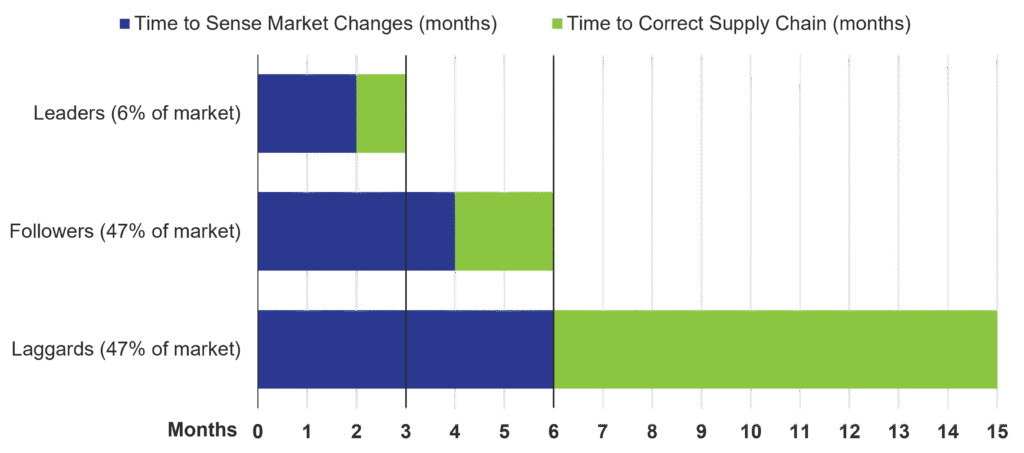
By 2007, the financial crisis had effectively erased the memory of 2001. During this period, the average enterprise required approximately six months to sense a market shift and adjust its supply chain operations accordingly. Qualitative interviews conducted in 2008 revealed a sector paralyzed by indecision.

2026: The Illusion of Progress
Fast forward to today, and the situation has worsened. Current projections indicate that the average company would take 20–30% longer to adjust its supply chain to a downturn than it did in 2007. We have replaced the "short memory" of the early 2000s with a reliance on brittle, siloed, and hyper-functionalized systems that struggle to see the forest for the trees.
Supporting Data: Why Modernity is Failing
The paradox of modern supply chain management (SCM) lies in the nature of its technological investment. Over the past twenty years, spending has focused on deep, insular integration into transaction systems. While this has streamlined individual departmental tasks, it has simultaneously widened the gaps between functions.
The Myth of Integration
Modern architectures are increasingly "reactive" because they rely on agents placed on top of legacy structures. Rather than building for agility, firms have built for optimization of known inputs—a strategy that works well in a steady state but collapses when the market shifts.
Transportation Data as a Leading Indicator
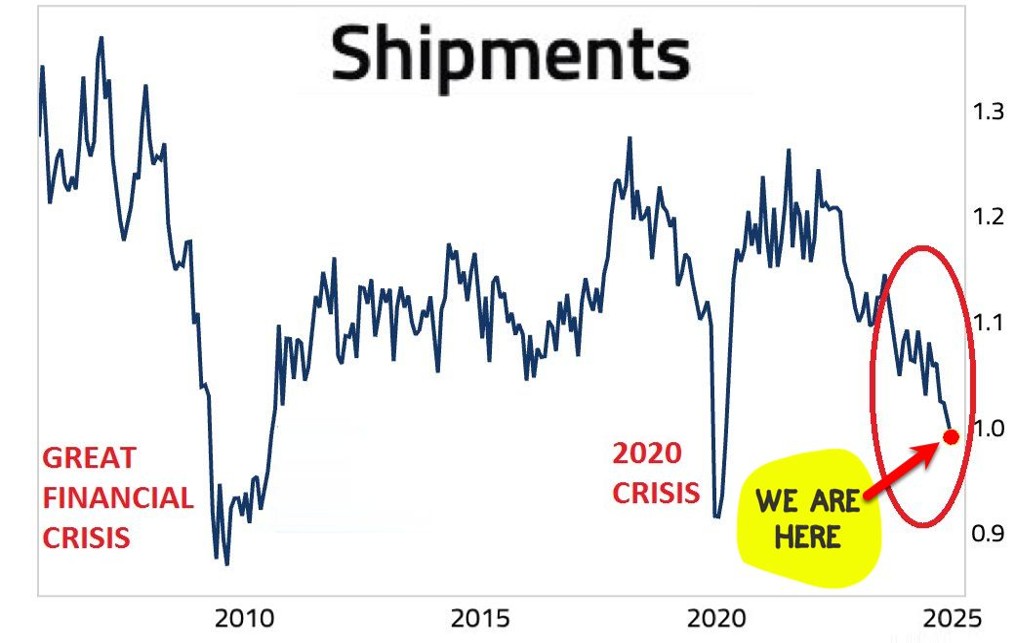
Transportation visibility, while a sector of legitimate innovation, remains a missed opportunity. While companies now have access to granular freight data, they fail to integrate this into their broader planning cycles. Transportation reporting, such as the Cass Freight Index, provides a real-time pulse of economic health. When shipments stall, demand is cooling. Yet, most organizations treat this data as an operational metric rather than a strategic early-warning system.
The Implications: A System Built for Chaos
The primary risk facing today’s global firms is a fundamental misalignment between the speed of the market and the speed of internal decision-making.
The Latency Trap
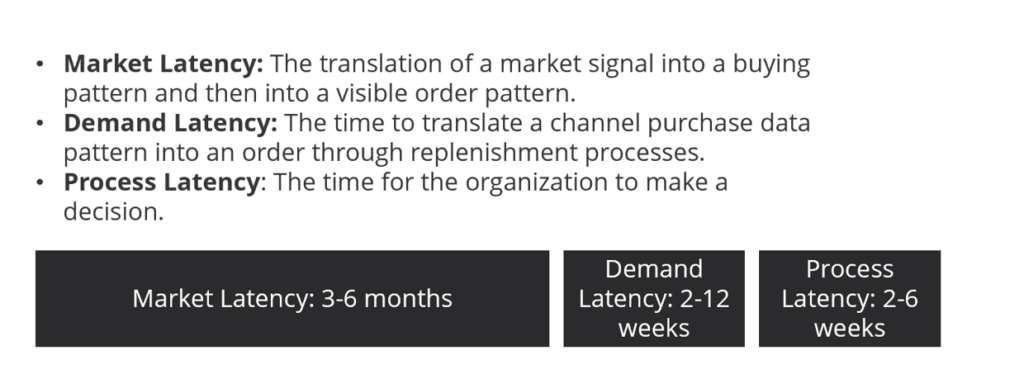
"Latency" is the defining enemy of the modern supply chain. This is categorized by:
- Market Latency: The time it takes for a consumer trend to impact the broader market.
- Demand Latency: The time it takes for a company to detect that shift.
- Process Latency: The time taken for human beings to agree on a course of action.
- Supply Latency: The time required to physically change production or procurement.
In one documented case, a firm was making supply chain decisions twenty-eight weeks after a shift in consumer behavior. By the time the adjustment reached the factory floor, the "problem" being solved had already evolved into a different crisis.
The Illusion of "Real-Time"
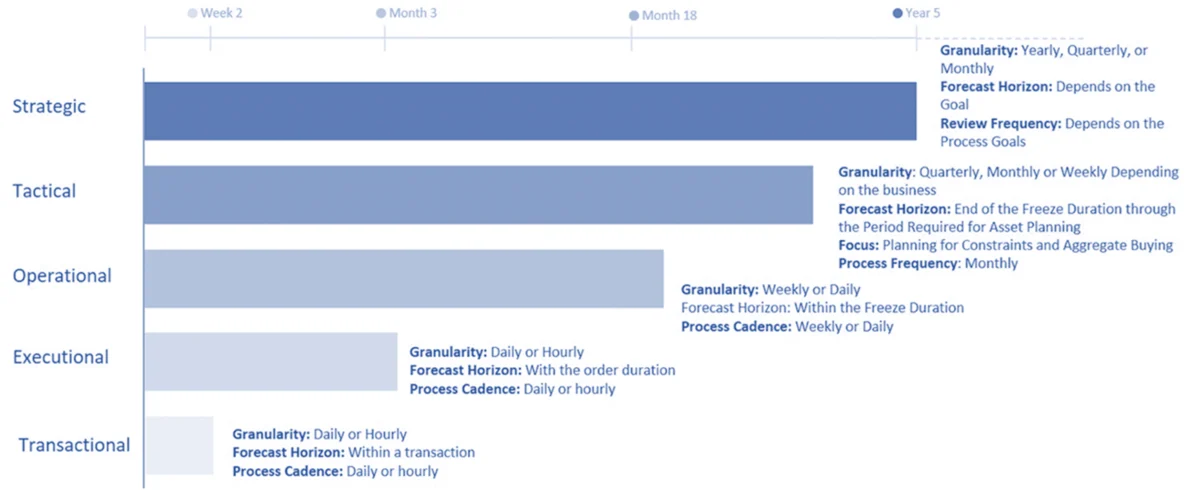
There is a dangerous misconception that "real-time data" equals "real-time decision making." Organizations are drowning in streaming data, yet they lack the "Time Horizon Discipline" required to act on it. A decision regarding a quarterly forecast requires different granularity and frequency than a decision regarding daily replenishment. By attempting to treat all data as "now," organizations introduce noise, slowing down the critical decisions that actually impact the balance sheet.
Strategic Imperatives: A Path to Resilience
To survive the next market correction, leadership must pivot from a mindset of "functional optimization" to "systemic orchestration."
1. Radical Reduction of Latency
Companies must chart their supply chain latency with the same rigor they apply to financial audits. This involves identifying exactly where the "decision friction" lives. Is the planning process too slow? Are there too many, often conflicting, demand-shaping programs (promotions and rebates) muddying the data? Simplification is not just a cost-saving measure; it is a survival strategy.
2. Shifting from Integration to Interoperability
The obsession with "integration"—forcing all data into a single, massive, rigid ERP—has failed. Instead, organizations should prioritize interoperability and orchestration. The goal is to allow disparate systems to communicate effectively, enabling a more modular, flexible response to unexpected market signals.
3. Aligning Demand and Supply Cycles
Mature organizations do not just match volumes; they match cycles. If your demand-shaping programs operate on a monthly cadence but your supply lead times are quarterly, you are operating in a permanent state of misalignment. The focus must be on matching the frequency of decision-making to the specific planning horizon of the item or product category.
4. Defining "Good" Decisions
In many large, decentralized organizations, the time required to answer a minor query is a symptom of a larger, systemic inability to empower decision-makers. The cost of a "wrong" decision is often lower than the cost of a "late" decision. Leaders must clarify who holds the authority to act, reducing the bureaucratic layering that currently stifles agility.
Conclusion: The Reality of the "New Normal"
The industry’s potential—measured by the intersection of operating margins and inventory turns—is currently lower in 80% of manufacturing sectors than it was pre-pandemic. This is not a result of a lack of technology; it is a result of a lack of strategic memory and architectural design.
As the markets continue to be buoyed by specific sectors like AI infrastructure and defense spending, the temptation is to ignore the historical warning signs of an overheated economy. However, as the history of 2001 and 2007 proves, the market does not care about your quarterly earnings report. When the contraction comes, it will punish those who are still waiting on reports from three months ago.
The question for leadership is simple: Will you continue to optimize for a world that no longer exists, or will you redesign your architecture to thrive in a world of constant, unpredictable flux? The tools are available, but the willingness to dismantle the status quo is the only variable that remains in your control.

 Reynand Wu

 Nila Kartika Wati

 Ammar Sabilarrohman

 Asep Darmawan

 Asro

 Layla Zulfa


 Muslim
