
 Suro Senen
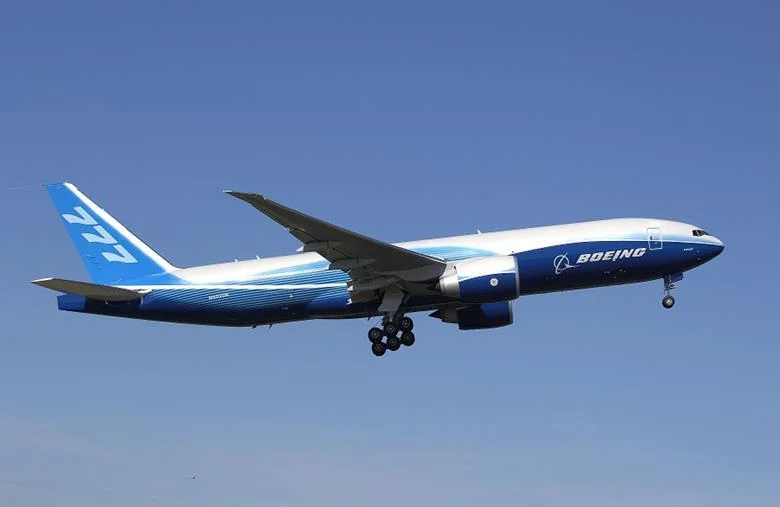
In the high-stakes world of global logistics, where speed and capacity dictate the flow of international trade, a significant shift in the skies has been confirmed. Boeing’s 777 Freighter (777F) has officially claimed the title of the most widely operated freighter in the world, eclipsing the legendary 747 fleet. This milestone marks not just a shift in fleet numbers, but a transformation in the operational philosophy of global air cargo, underscoring the 777F’s role as the backbone of modern supply chains.
The Milestone: A Fleet Redefining Capacity
According to the latest data from Boeing, the in-service fleet of 777 Freighters has officially surpassed 330 units. This numerical milestone is backed by a staggering operational footprint: the 777F now facilitates roughly 40% of global freighter capacity.
The dominance of the 777F is a testament to its design as a purpose-built cargo aircraft. By focusing on high-utilization, long-haul routes, the platform has become the preferred choice for operators who require a balance of range, fuel efficiency, and payload capacity. In 2025 alone, the global 777F fleet logged approximately 6,250 flight hours, maintaining an impressive average of more than 17 flight hours per day per aircraft—a utilization rate that highlights the extreme reliability of the model.
Chronology: The Evolution of the 777 Freighter
The rise of the 777F did not happen overnight. To understand its current market supremacy, one must look at the evolution of air cargo demand over the last two decades.
- Early Development: As the aviation industry sought to move away from the four-engine configurations of the 747 in favor of more efficient twin-engine widebodies, Boeing introduced the 777F to offer trans-oceanic capability with significantly lower trip costs.
- Market Penetration: Over the last 15 years, the aircraft slowly replaced older, less efficient freighters, finding a niche in the e-commerce and express logistics boom.
- The 2025 Surge: In the previous calendar year, the 777F solidified its status, with 80% of all freighter flights exceeding 6,000 nautical miles being operated by this specific airframe.
- The Emissions Exemption (Late 2025–2026): A critical moment in the timeline occurred in late 2025, when Boeing faced a regulatory deadline regarding emissions standards that threatened to curtail production. By filing for an exemption in December 2025 and receiving approval in September 2026, Boeing successfully cleared the path for the continued production of the aircraft, ensuring its longevity well beyond 2027.
Supporting Data: By the Numbers
The sheer scale of the 777F’s impact on the global economy is difficult to overstate. Boeing estimates that in the last year alone, the value of global trade carried by the 777F fleet reached approximately $4 trillion.
The order books further validate this success:

- Active Fleet: Over 330 units in service.
- 2026 Performance: 20 deliveries completed so far this year.
- Market Interest: Six firm orders were placed in 2026 alone, with a total of 38 unfilled orders currently on the books.
- Combined Success: Total firm orders for the 777F and the upcoming 777-8F variant now exceed 450 units, cementing the program’s legacy for decades to come.
The efficiency metrics are equally telling. By specializing in long-haul, high-density routes, the 777F has optimized the "ton-mile" cost for carriers, making it the most cost-effective solution for moving high-value goods, perishables, and time-sensitive e-commerce shipments across the Pacific and Atlantic corridors.
Official Responses and Regulatory Context
The recent FAA ruling allowing Boeing to continue selling 35 additional 777Fs that meet the requirements for a Certificate of Airworthiness was a watershed moment for the manufacturer. The exemption granted in September 2026 effectively removed the "production cliff" that Boeing faced due to changing environmental regulations.
"The Boeing 777 Freighter fleet has overtaken the in-service fleet of 747 freighters of all types to become the most widely operated freighter in the world today," the company stated in a recent briefing. The transition from the iconic "Queen of the Skies" (the 747) to the twin-engine 777F reflects a broader trend in aviation: the move toward twin-engine efficiency. While the 747 remains a beloved and highly capable aircraft, the 777F offers a more sustainable operational profile, which is critical for airlines facing mounting pressure to reduce their carbon footprints.
Implications for the Global Supply Chain
The transition to a 777F-dominated fleet has several profound implications for the logistics industry:
1. Standardization and Interchangeability
With the 777F serving as the common denominator among major global carriers, the industry benefits from a high level of parts availability, pilot training synergy, and maintenance standardization. When a single aircraft type accounts for 40% of capacity, global logistics networks become more resilient to localized disruptions.
2. The E-commerce Factor
The 777F’s ability to operate extreme long-haul routes—such as those connecting manufacturing hubs in Asia directly to consumer markets in North America—has been a primary driver of the rapid-delivery expectations of modern e-commerce. Its range allows for fewer stops, which reduces ground handling time and transit risks.

3. Sustainability and Regulatory Compliance
The FAA exemption is not merely a reprieve for Boeing; it is a signal of how the industry will navigate the transition to greener technologies. By allowing the 777F to continue production, regulators have acknowledged that while the industry is committed to net-zero goals, there remains a critical need for proven, efficient heavy-lift aircraft to support the global economy during the multi-decade transition to next-generation propulsion systems.
4. Competitive Dynamics
As Boeing continues to push the 777-8F variant, the 777F program is effectively bridging the gap between current operations and the future of freighter technology. Competitors, particularly Airbus with its A350F, now face a high benchmark. The sheer volume of 777Fs already in service creates a "network effect" that makes the aircraft the default choice for major cargo carriers seeking to expand their reach.
Conclusion: Looking Ahead
The displacement of the 747 by the 777F is more than just a passing of the torch; it is a reflection of the pragmatic evolution of global trade. The 777F has proven that it is the right aircraft for the current era—a period defined by extreme demand for rapid, long-distance logistics and a tightening regulatory environment.
As Boeing moves forward with its backlog of over 450 orders, the 777F is poised to remain the undisputed workhorse of the sky. For shippers, airlines, and the global economy, the dominance of this platform provides a reliable foundation upon which the future of air cargo will be built. With the FAA’s blessing to continue production and an unmatched record of daily flight utilization, the 777F’s reign as the king of the cargo skies appears secure for the foreseeable future.

 Reynand Wu

 Nila Kartika Wati

 Ammar Sabilarrohman

 Asep Darmawan

 Asro

 Layla Zulfa


 Muslim
