
 Dwi Wanna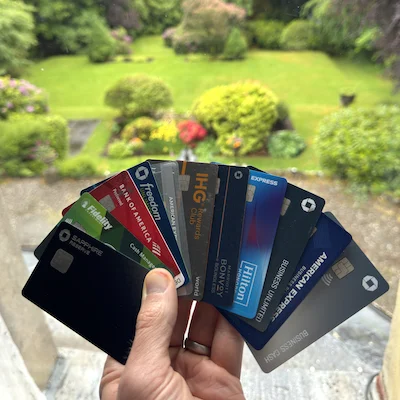
In the world of Financial Independence (FI), the focus is almost exclusively on the "Big Three": earning more, spending less, and investing the difference. However, there is a "fourth pillar" often overlooked by those solely focused on traditional index fund portfolios: the strategic utilization of travel miles, credit card points, and banking perks.
For many, credit cards are viewed as a path to debt. For the financially savvy, however, they represent a sophisticated, supplementary asset class—a "shadow portfolio" that, when managed correctly, can provide thousands of dollars in annual tax-free value.
The Chronology of Value: Tracking the Gains
To understand the efficacy of this strategy, one must treat points with the same rigor as an investment portfolio. Over the past eight years, tracking the tangible value extracted from travel rewards reveals a consistent, significant stream of supplemental income.
| Year | Annual Value (USD) |
|---|---|
| 2019 | $2,614 |
| 2020 | $4,401 |
| 2021 | $6,080 |
| 2022 | $6,192 |
| 2023 | $648 |
| 2024 | $10,593 |
| 2025 | $4,253 |
| 2026 | $5,917 |
The data demonstrates an average annual value exceeding $5,000. When analyzed through the lens of the "4% Rule"—the foundational math used to determine how much capital is required to sustain retirement—this $5,000 annual subsidy is equivalent to having an additional $127,175 invested in a traditional portfolio. By capturing this value, the individual essentially reduces the burden on their core investments, extending the longevity of their retirement nest egg.
The Strategy: Simplification Over Optimization
While many enthusiasts spend hours "churning" cards for marginal gains, the most sustainable approach relies on a curated wallet. The goal is to move from a mindset of constant "optimization"—which is time-consuming and prone to burnout—to "simplification," where the card ecosystem works passively in the background.
The Foundation: Chase Sapphire Reserve
At the core of this strategy sits the Chase Sapphire Reserve. Since its inception in 2016, this card has remained the primary vehicle for over 95% of transactions.
The rationale is rooted in return-on-spend efficiency. With a point valuation of approximately 2.05 cents per point (as estimated by industry analysts like The Points Guy), the card’s 4x earning rate on travel and 3x on dining translates to an effective 8.2% and 6.15% return, respectively. Furthermore, the inclusion of airport lounge access adds a non-monetary value that transforms travel from a logistical hurdle into a luxury experience, saving approximately $100 per transit event.
Essential Utility: Fidelity Cash Management
A sophisticated wallet is not just about points; it is about liquidity. The Fidelity Cash Management Debit Card is a non-negotiable tool for the frequent traveler. By offering worldwide ATM fee reimbursements, it eliminates the need to carry significant amounts of foreign currency or navigate predatory exchange bureaus at airports. This provides a twofold benefit: the best available currency exchange rates and the psychological comfort of knowing that cash is accessible anywhere, regardless of the bank machine’s ownership.
The Ecosystem: A Tiered Card Structure
Beyond the primary card, the wallet is rounded out by specialized instruments designed to capture value in specific merchant categories:
- General Spending: The Chase Freedom Unlimited serves as the catch-all card for non-category spending, offering a 1.5x return that effectively functions as 3% cash back.
- Groceries: The Amex Everyday is dedicated to supermarket spend, ensuring that essential household costs are never "wasted" on lower-earning cards.
- Brand Loyalty: A collection of legacy and specific cards—including the IHG Select, Marriott Bonvoy Boundless, and Amex Hilton Honors—are maintained strictly for their annual "free night" certificates. These cards often carry a small annual fee ($49–$95), which is consistently offset by the high-value hotel stays they provide, effectively turning a cost into a gain.
- Business Operations: The Chase Ink Business Unlimited and Amex Business Blue provide high-earning potential for professional expenses without the burden of annual fees, ensuring that business-related overhead contributes to the travel portfolio.
Implications of the "Perks-Driven" Economy
A significant development in recent years is the transition of premium credit cards from simple "point-earners" to "lifestyle credit providers." When the annual fee for the Chase Sapphire Reserve was adjusted, the issuer introduced a variety of statement credits.
While some critics argue that these credits encourage unnecessary spending, this is a matter of perspective. For those who have reached a level of financial security where they are actively "learning to spend money," these credits act as a catalyst for experiences—such as fine dining or event tickets—that might otherwise be deferred.
Case Study: High-Spend Perks
For high-volume users, the benefits extend beyond standard categories. Upon reaching specific spending thresholds (e.g., $75,000 annually), users unlock significant bonuses. In one documented instance, a user accrued over $2,200 in value through:
- Luxury Hotel Credits: Utilizing statement credits for high-end hotel stays, coupled with property-specific dining vouchers.
- Lifestyle Credits: Utilizing credits for ticket marketplaces like StubHub to attend major sporting and musical events.
- Airline Benefits: Leveraging airline-specific credits and status-related savings on baggage and priority services.
When combined with standard point accrual, these "perks" can push the total annual value of a single card to well over $3,000, effectively negating the annual fee several times over.
Conclusion: The Professional Outlook
The integration of credit card rewards into a financial independence plan is no longer a fringe strategy; it is a calculated financial maneuver. By treating one’s wallet as a professional portfolio—composed of high-yield primary cards, fee-offsetting hotel cards, and liquidity-focused banking tools—individuals can generate significant "passive" value.
The key to long-term success, however, is discipline. The "shadow portfolio" only works if the individual pays their balances in full, avoids interest charges, and maintains a clear, automated structure that minimizes the administrative burden. For those who can master the art of simple, strategic usage, the rewards are not merely points—they are the freedom to travel, the ability to upgrade one’s lifestyle, and the peace of mind that comes with a robust, diversified financial foundation.
Reader Engagement
The landscape of credit cards is as diverse as the spending habits of those who use them. What sits in your wallet? Have you found a card that provides consistent, outsized value, or do you prefer the simplicity of a single, non-fee cash-back card? The dialogue on personal finance is always evolving, and the best strategies are often the ones shared by the community. Share your experiences in the comments below.


 Ali Ikhwan
 Layla Zulfa
 Laily UPN
 Iffa Jayyana
 Rifan Muazin
 Suro Senen
 Lina Hope
 Lina Irawan