
 Raul Delapena Setiawan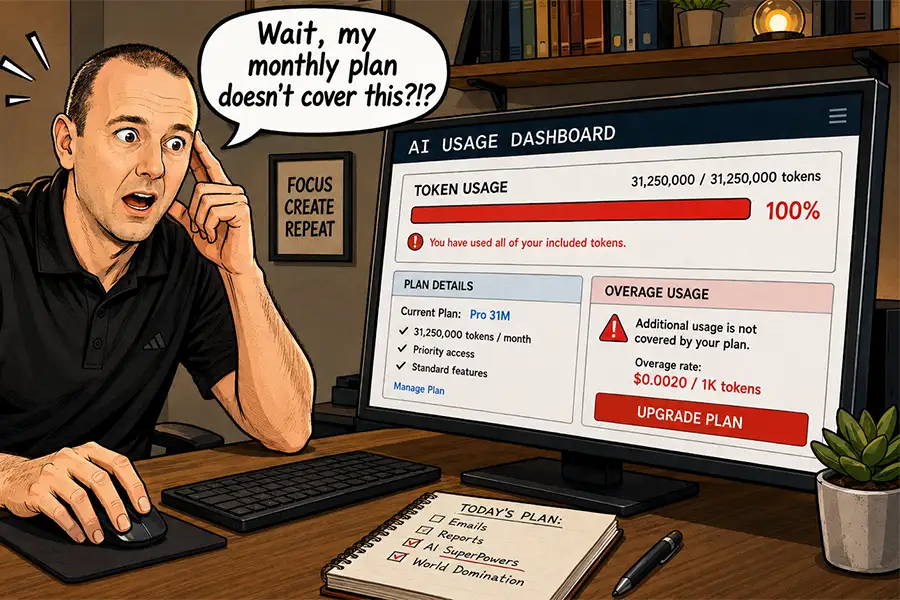
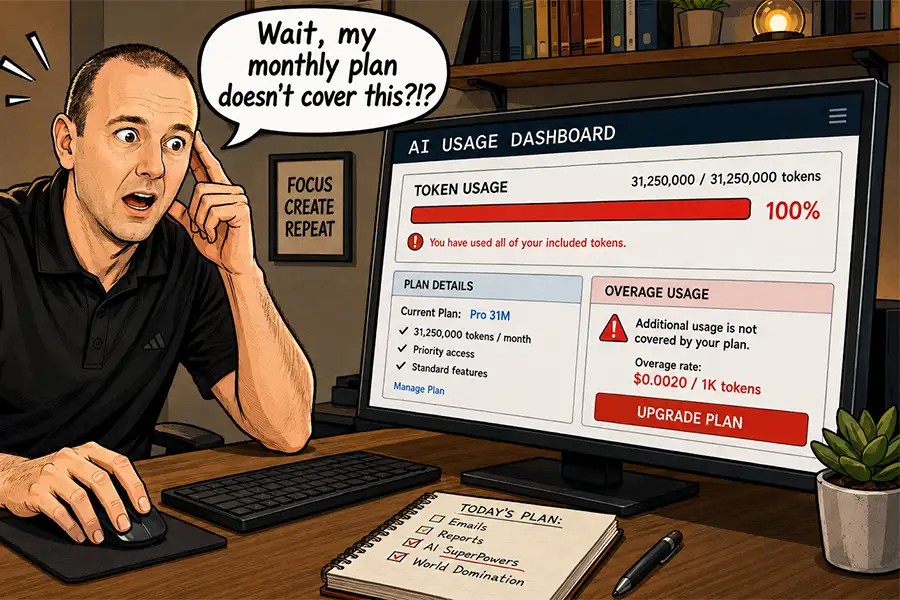
The "AI gold rush" has transformed from a productivity revolution into a complex financial trap for web professionals, developers, and businesses alike. What began as a modest monthly subscription for tools like ChatGPT or Claude has, for many, spiraled into a significant line item—sometimes rivaling luxury car payments. As the novelty of AI-assisted workflows gives way to deep integration into SaaS platforms and automated ecosystems, the "all-you-can-eat" model of AI is disappearing, replaced by the opaque, high-stakes world of token-based consumption.
The Evolution of the AI Financial Landscape
In the early stages of the generative AI boom (circa 2022–2023), the value proposition was simple: a $20 monthly fee provided access to a revolutionary tool that could debug code, draft emails, and brainstorm concepts. For a professional, this was a bargain—the equivalent of a few cups of coffee for a virtual assistant that never slept.
However, the landscape shifted rapidly. As developers and businesses moved from manual browser-based interactions to API-driven automations, the pricing model changed. Users were no longer paying for "access"; they were paying for compute.
The Chronology of Consumption
- The "Playground" Phase (2022): Early adopters used web-based interfaces. Costs were flat, predictable, and low.
- The Integration Phase (2023): Developers began embedding AI directly into WordPress, CRM systems, and custom internal tools via APIs. This introduced the "token" economy.
- The Scale-Up Phase (2024–Present): Companies like OpenAI, Anthropic, and Google refined their pricing for high-volume API use. Simultaneously, third-party middleware (like OpenClaw) began abstracting these services, making it easier to trigger massive usage without real-time cost awareness.
Today, we find ourselves in a period of "AI consumerism." The friction of spending has been removed, but the reality of the invoice remains. When an automation runs in the background of a web application, it consumes tokens silently. A single errant loop or a poorly optimized prompt in a production environment can lead to astronomical bills, as evidenced by recent high-profile reports of businesses burning through thousands of dollars due to runaway API calls.
Supporting Data: The Anatomy of a Token Bill
To understand the financial risk, one must understand the difference between a "Subscription" and an "API Usage Plan." A subscription is a flat fee for personal, browser-based interaction. An API plan is a utility-style billing model based on the number of tokens processed.
How Costs Escalate
The cost of an AI task is determined by the model’s complexity, the length of the input (prompt), and the length of the output.

- Light-Duty Tasks: Summarizing a short text or generating a meta description for a blog post is inexpensive.
- Heavy-Duty Tasks: Generating high-resolution images, analyzing large datasets, or processing multi-page documentation can consume tokens at a rate that is orders of magnitude higher than simple text generation.
A critical issue facing professionals is the lack of a standardized "Good/Better/Best" pricing structure across the industry. While some providers allow for hard spending caps, many enterprise-level accounts are set to "auto-replenish," meaning the virtual cash register never stops ringing. Without granular monitoring, a user might wake up to a five-figure bill generated by a recursive automation that went unchecked over a weekend.
The Mirage of "Free" Integrations
A major contributor to the current financial strain is the ease with which AI can be integrated into existing SaaS platforms. A developer might install an AI plugin on a WordPress site to handle customer support tickets. Because the plugin handles the prompts, the developer often loses sight of the actual token count being consumed.
When the cost is abstracted away by third-party tools, the professional loses their "financial intuition." They no longer perceive the "cost per task." This detachment is precisely what leads to the "kid in a candy store" syndrome, where businesses automate mundane tasks that offer little ROI, essentially paying a premium for convenience that could have been achieved with traditional, deterministic code.
Implications: The Human and Environmental Cost
Beyond the immediate fiscal danger, there are broader implications to this unchecked AI dependency.
The Environmental Toll
Every token processed requires massive amounts of electricity and water for data center cooling. As we automate increasingly trivial tasks, we are contributing to an environmental footprint that is rarely factored into the cost of doing business. If a task can be done just as effectively with a simple script or human logic, the energy cost of using an LLM becomes an ethical consideration.
The Erosion of Human Skill
There is a legitimate fear that by outsourcing every decision—from coding to creative writing—to machines, we are losing our "intellectual muscle." If we stop troubleshooting our own code because the AI does it for us, we become incapable of fixing the system when the AI eventually hallucinates or fails. The dependency creates a fragile workflow.
The "Token-Worthy" Framework
To combat these risks, web professionals must adopt a new mindset. We must ask, “Is this task token-worthy?” Before implementing an AI-driven automation, ask the following:
- Is the cost of the API call lower than the cost of human time saved?
- Is there a non-AI alternative? (Often, a well-written script is faster, cheaper, and more reliable.)
- What is the worst-case scenario for this automation? (Can it run indefinitely? Does it have a kill switch?)
Towards Rational AI Governance
Official responses from the AI industry have been mixed. While companies are providing better dashboards for monitoring usage, the burden of governance remains on the user. The "Grumpy Designer" perspective—one of rational, tempered skepticism—is becoming a necessity for survival in the modern web development industry.
We are seeing a trend where companies are beginning to pull back. Some organizations are moving away from "black-box" proprietary models and toward local, open-source models (such as Llama or Mistral). By hosting these models on local hardware or private cloud servers, businesses can eliminate the recurring token costs and regain control over their data and their bottom line.
Conclusion: Reclaiming the Steering Wheel
The rapid adoption of AI has been a net positive for innovation, but it has outpaced our ability to manage it effectively. We are currently in a transition period where the novelty is wearing off and the fiscal reality is setting in.
The path forward is not to abandon AI, but to mature our usage of it. This means moving away from "experimental consumerism" and toward "strategic implementation." By implementing strict spending caps, auditing our automated processes, and prioritizing human-led tasks, we can stop the hemorrhaging of resources.
The AI bandwagon is not a free ride. It is a high-performance vehicle that requires a driver who is aware of the fuel consumption, the speed, and the destination. If we fail to take the wheel, we risk not only our financial stability but the very skills that define us as professionals. It is time to treat every token as a conscious investment, not an afterthought.


 Lina Irawan
 Pevita Pearce
 Ammar Sabilarrohman
 Suro Senen
 Jia Lissa
 Evan Lee Salim

 Ali Ikhwan