
 Ali Ikhwan
By Tim Peterson | October 7, 2026
The tectonic plates of the American media landscape are shifting, and nowhere is this more evident than in the viewing habits of Hispanic households. As the industry grapples with the transition from traditional linear television to the fragmented world of streaming, data from 2026 suggests that Hispanic audiences are not just participating in this shift—they are actively tailoring it to fit their specific cultural and economic priorities.
This week’s Future of TV briefing examines the intersection of culture, cost-consciousness, and content discovery, drawing on fresh research from Nielsen and Horowitz Research to paint a picture of a demographic that is as pragmatic as it is influential.
The Balancing Act: Traditional TV vs. Digital Frontiers
For many, the memory of Spanish-language television is inextricably linked to communal viewing experiences. Whether it was the iconic variety of Sábado Gigante or the serialized drama of telenovelas, these programs were once the heartbeat of the Hispanic living room. However, the 2026 media environment is vastly different.
Recent studies indicate that while streaming adoption among Hispanic viewers has reached parity with their share of the U.S. population, this does not spell the end of traditional television. Instead, we are witnessing a hybrid consumption model. Hispanic audiences continue to value the reliability and communal nature of linear broadcast, particularly for culturally significant live events, while simultaneously embracing the "on-demand" nature of digital platforms.
The return of legendary host Don Francisco to Univision this October serves as a powerful reminder: linear television still holds a unique "event" status that remains difficult for algorithm-driven streaming feeds to replicate.
Chronology of the Shift: From Cable Bundles to Streaming Curators
To understand where the market is headed, we must look at the trajectory of the last few years:
- 2023–2024: The industry saw a massive surge in SVOD (Subscription Video on Demand) adoption across all demographics. During this period, Hispanic households were early adopters of niche services that offered Spanish-language content.
- 2025: As inflation and economic pressures mounted, the "subscription fatigue" phenomenon hit hard. Data began to show a shift away from high-priced, multi-service bundling toward more targeted, value-driven packages.
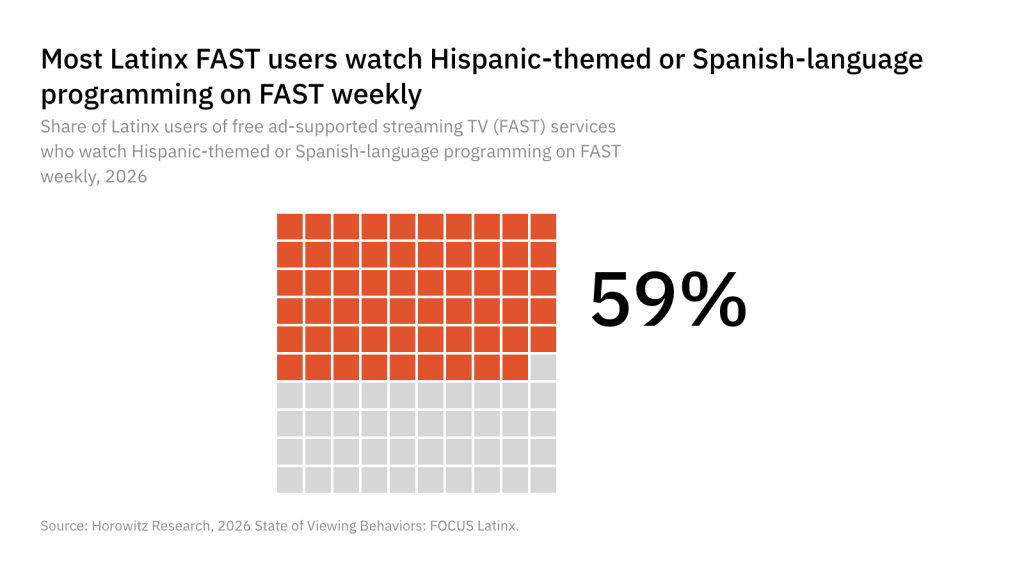
- Early 2026: The emergence of robust Free Ad-Supported Streaming TV (FAST) channels changed the calculus. Suddenly, the vast libraries of classic television—the shows that anchored previous generations—became available without the burden of a monthly subscription fee.
- Late 2026: The current landscape is defined by "Value-Based Streaming." Viewers are now curating a diet that mixes one or two essential paid services (often centered around sports or specific prestige dramas) with a rotating array of free, ad-supported platforms.
Supporting Data: What the Numbers Tell Us
The data provided by Nielsen and Horowitz Research reveals three critical trends:
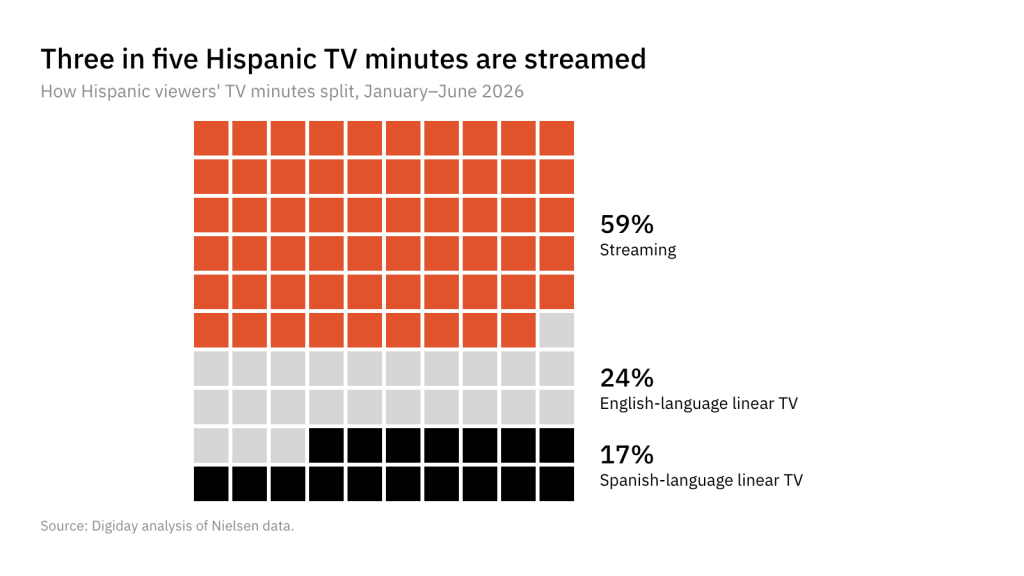
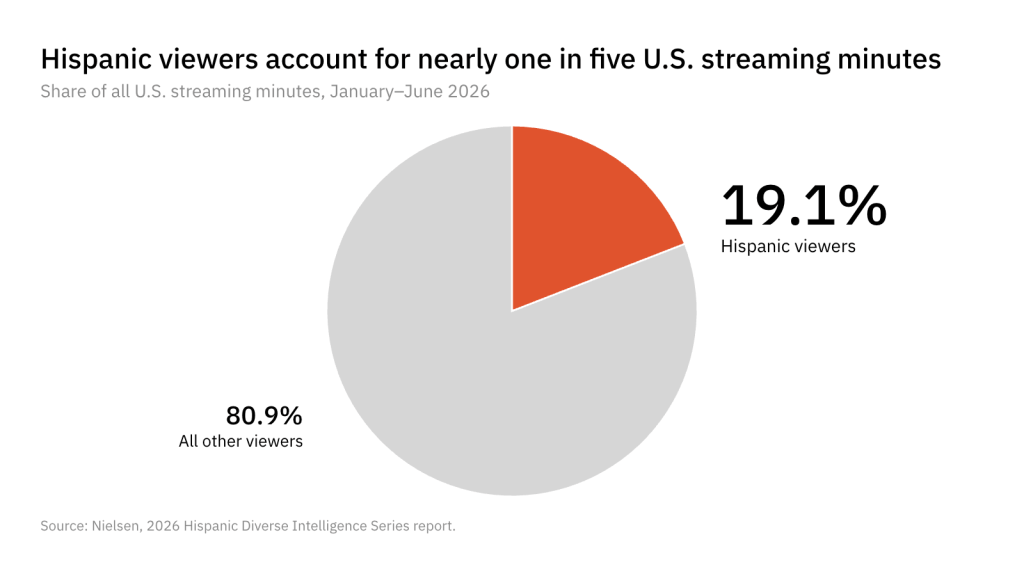
- Parity in Streaming Time: Hispanic viewers now command a share of total streaming minutes that is directly proportional to their share of the U.S. population. This confirms that the digital divide is largely a thing of the past.
- The Rise of FAST: There is a pronounced preference for ad-supported services. For many Hispanic families, the cost-to-value ratio of a paid subscription is often compared against the sheer volume of free, high-quality content available on FAST channels.
- Strategic Subscription Management: Households are increasingly adopting a "churn-and-return" strategy. They subscribe to a service like ViX to watch specific sports seasons (such as the Argentine Primera División) and cancel once the season concludes, filling the gap with free content.
Official Perspectives and Industry Implications
The implications for advertisers and media conglomerates are profound. Marketers can no longer rely on a "one-size-fits-all" strategy for the Hispanic market.
"A creator fee can be different because it can be buying creative, talent, distribution, IP audience access and usage rights at the same time," says Alex Tait of Entropy Consulting. This sentiment reflects the broader struggle for transparency in how budgets are allocated in the modern creator and streaming economy. As brands look to reach Hispanic audiences, they must account for the fact that these viewers are increasingly savvy about where their subscription dollars go.
Furthermore, the recent layoffs at major media giants—including NBCUniversal’s reduction of its global streaming technology group and Disney’s continued personnel restructuring—signal a move toward "leaner" operations. These companies are betting that efficiency in content delivery will be the primary driver of profitability in 2027 and beyond.
The Future of TV: Implications for the Market
As we look toward the remainder of the year and into 2027, several key implications emerge for the industry:
1. The Death of the "Standard" Bundle
The traditional cable bundle is effectively dead for the younger Hispanic demographic, but the replacement is not a single "mega-streamer." It is a fragmented ecosystem where content owners must compete for the consumer’s limited attention and budget every single month.
2. The "Originality" Push
Platforms like YouTube are already shifting their algorithms to prioritize original content over re-uploads. For creators and media companies, this means the era of easy, recycled traffic is over. Success will be defined by the ability to produce authentic, high-quality content that resonates on a personal level.
3. AI as a Double-Edged Sword
The rise of AI-generated advertising and content production—as seen with Runway’s new agentic tools—offers a way to lower costs. However, there is a clear tension between using AI to optimize for reach and the need to maintain brand safety and cultural nuance. As Google’s recent "charm offensive" in Hollywood shows, the industry is desperate to find a middle ground where AI assists human creativity rather than replacing it.
4. Sports as the Final Frontier
Live sports remain the primary "stickiness" factor. Whether it is YouTube’s pursuit of entire tournament packages or the continued investment in soccer-centric streaming services, sports rights will continue to be the primary battleground for subscriber retention.
Conclusion: A New Era of Media Consumption
The story of Hispanic viewership in 2026 is a story of empowerment. By balancing the nostalgia of linear TV with the efficiency of the FAST landscape and the targeted excitement of live sports streaming, Hispanic households are dictating the terms of the new media age.
For the industry, the message is clear: the audience is no longer waiting for the network to tell them what to watch. They are building their own libraries, choosing their own price points, and demanding value at every turn. In this hyper-competitive environment, the winners will be those who recognize that content is only as valuable as the audience’s willingness to invite it into their homes—and their budgets.
Industry Briefing: Quick Hits
- NBCUniversal: Reported layoffs of over 100 employees in the global streaming tech group.
- Disney: Executed a third round of layoffs this year, affecting approximately 300 staff members.
- Super Bowl 2027: Ad spots for the upcoming game are commanding an eye-watering $12 million for 30 seconds, signaling that while the medium of TV is changing, the power of the live event remains unmatched.
- Skydance: Following the acquisition of Warner Bros. Discovery, the new executive team is officially in place, marking a new chapter for the media conglomerate.
- Google’s AI Strategy: Enlisting talent firms to produce microdramas, Google is attempting to use narrative content to soften the public perception of AI—a bold strategy that will be watched closely by critics and creators alike.


 Rifan Muazin
 Azzam Bilal Chamdy
 Laily UPN
 Iffa Jayyana
 Suro Senen
 Lina Hope
 Lina Irawan