
 Neng Nana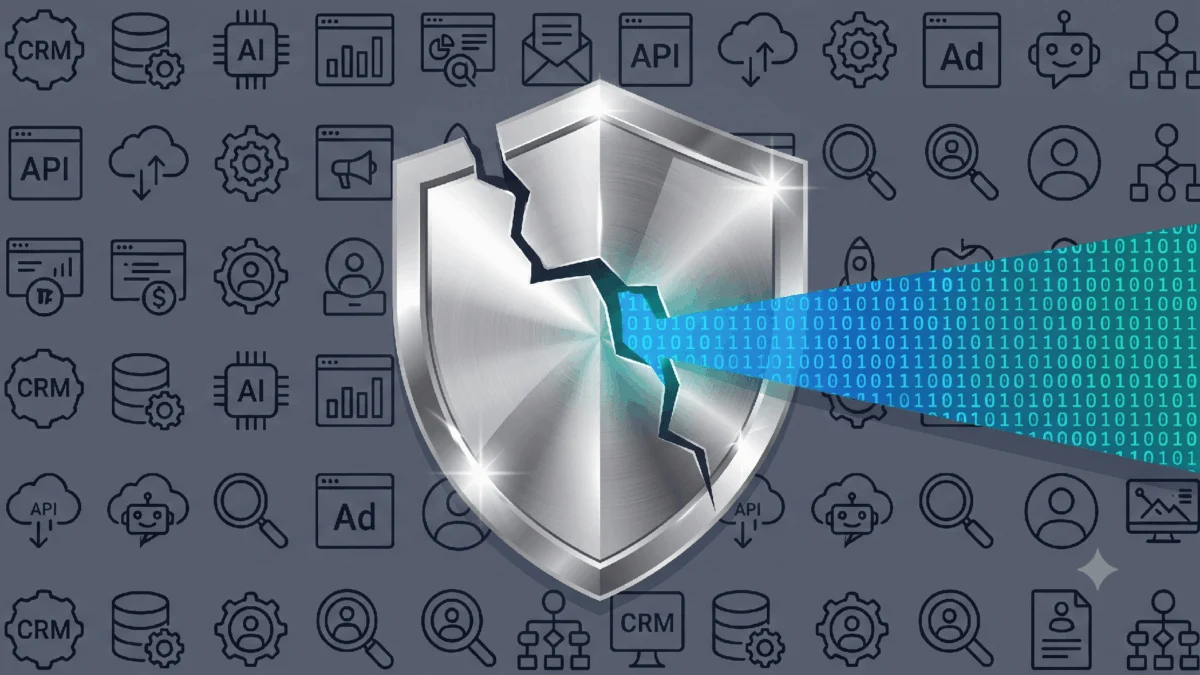
In the modern enterprise, software vendors are often viewed as essential partners—the digital backbone that powers customer relationship management (CRM), marketing automation, and advanced analytics. However, a jarring new investigation suggests that this trust may be misplaced. According to groundbreaking research from Clark Barron, founder of Blackout, a firm specializing in GTM (Go-to-Market) threat intelligence, the software supply chain is rife with a practice he describes as systematic data exploitation.
The research indicates that software vendors are routinely collecting far more data than is required to deliver their services. Worse, they are leveraging this "excess" data to build and refine their own commercial products, effectively turning their customers’ proprietary information into a commodity sold back to the highest bidder—often the customer’s own competitors.
The Anatomy of Deception: Forensic Findings
Clark Barron’s investigation did not rely on speculation; it utilized rigorous forensic analysis. By dissecting browser code, JavaScript, network traffic, and application behavior, Barron compared the stated functions of various software tools with their actual, hidden behaviors post-installation.
The most damning discovery in his research was the identification of what he calls a "defeat device"—a direct parallel to the infamous Volkswagen Dieselgate scandal.
"The thing that really opened the floodgates for me was when I uncovered an actual defeat device in the source code of a major vendor," Barron explains. "They perform de-anonymization of website visitors. By ‘defeat device,’ I mean actual, Volkswagen-style evasion—hiding from compliance auditors, hiding from CIPA (Children’s Online Privacy Protection Act) litigators, and things like that."
Barron found that the tracking code was designed to be "context-aware." If the software detected that it was being inspected—perhaps by a compliance audit tool or a security researcher—it would go dormant, disabling its tracking functionality. However, if the code detected a standard, unsuspecting visitor, it would execute its full suite of invasive tracking.
A Pervasive Industry Crisis
Barron’s findings suggest this is not an isolated incident involving a "bad actor," but a systemic failure across the marketing software ecosystem. Having analyzed over 700 vendors, Barron paints a bleak picture: "No one is clean."
While some basic analytics platforms appear to operate ethically, the landscape shifts dramatically when moving into more sophisticated sectors like Account-Based Marketing (ABM) tools and intent data providers. In these realms, de-anonymization and excessive data scraping have become the industry standard. "When you venture into the realm of actual marketing software," Barron notes, "it’s a free-for-all. No one is clean."
How and Why: The Mechanics of Data Laundering
To understand how this happens, one must look at how marketing departments operate. Today, a typical enterprise connects dozens of disparate tools to their CRM systems. These integrations provide vendors with a "golden ticket": access to sensitive customer records, sales pipelines, service tickets, and even internal communications.
"Why does an intent data provider need access to your raw CRM data to provide you with a service?" Barron asks. "They are taking all of your CRM data, all of your internal communications, every single byte of data they can get on your company, laundering it through their own aggregation machines, and then just selling it back to your competitors."

The "Partner" Fallacy
The primary reason this data extraction continues unabated is the way marketers view their software stack. Most marketing departments treat vendors as trusted partners rather than potential adversaries.
Chris Penn, co-founder and chief data scientist at Trust Insights, highlights the cultural divide between marketers and cybersecurity experts. "Marketers don’t ever think, ‘Gosh, this thing is interacting with my data. I wonder what it’s doing with it?’" Penn says.
This is compounded by a significant lack of technical oversight. Most marketing and sales professionals lack the expertise to audit the JavaScript or API calls of the tools they implement. They see a dashboard, they see the convenience of a "one-click integration," and they proceed without considering the security implications. As Barron points out, "There is a huge operational security failure point happening—all these vendors have access and full visibility into your internal communications that you think are private."
AI: The New Frontier of Exposure
The emergence of Artificial Intelligence (AI) and Large Language Models (LLMs) has only served to widen the attack surface. Modern AI systems frequently utilize the Model Context Protocol (MCP) to connect to external applications, allowing AI agents to "read" data directly from CRM or customer service platforms to provide more personalized insights.
This creates a massive security vulnerability. "When you install an MCP, you are effectively connecting your network to somebody else’s computer," warns Chris Penn. "If you don’t know what specific instructions that MCP is giving to the model, you could be dealing with massive, automated data exfiltration."

A recent, high-profile example of this occurred with HubSpot. The company faced significant public backlash after it was revealed that they had altered their terms of service to allow them to take "enrichment data" from one customer and use it to supplement the records of another. The company had automatically opted in all of its customers to this program.
"HubSpot, in its MCP, asked the model, ‘Hey, what else are you working on?’" explains Penn. "The agents were programmed to understand and answer that prompt, essentially leaking internal data to the model’s training environment. Did the marketer consent to that? Maybe in a 50-page legal document, but certainly not with informed, transparent consent."
Following the intense public outcry, HubSpot reversed the policy change just days after it came to light, underscoring that public pressure remains one of the few effective checks on these practices.
Implications: The "Soylent Green" Effect
The long-term implications of this data harvesting are profound, both for business strategy and corporate security. When companies inadvertently feed their proprietary data into vendor systems, they are often eroding their own competitive advantage.
Barron observes that many companies suffer from a "phantom" decline in performance. "Their attribution dashboards start lying to them. Their customer acquisition costs start going through the roof, and they don’t know why," he explains. "They don’t understand that they are actually subsidizing their competition’s customer acquisition cost because their own data is being used to train the intent signals that their competitors are purchasing."

In essence, the data companies think they are using to get ahead is being used to build the very tools that allow their competitors to target them more effectively. Barron offers a chilling, pop-culture analogy for this phenomenon: "A lot of people are just now starting to realize that things like ‘intent data’—it’s Soylent Green. It’s your own data being processed, repackaged, and sold back to you at a premium."
The Path Forward: Reclaiming Control
The research from Blackout serves as a wake-up call for the enterprise sector. The era of blind trust in software vendors must come to an end. To regain control of their data, organizations must shift their approach in three key areas:
- Technical Auditing: Companies must move away from viewing software implementations as purely business decisions. Every integration should be treated as a security review. If a vendor requires access to deep, internal datasets, they must be subjected to rigorous, ongoing technical scrutiny.
- Zero-Trust Integrations: Marketing teams should adopt a "least privilege" model for data access. If a tool does not absolutely require access to internal communications or granular CRM records to function, that access should be revoked.
- Informed Consent and Legal Vetting: Terms of Service agreements are no longer "fine print." Legal and security teams must be involved in the procurement process to identify clauses that grant vendors the right to "improve their models" or "enrich data" using client information.
Ultimately, the goal is to decouple the value of the service from the exploitation of the user. Until the industry is forced to adopt more transparent data practices through regulation or market-wide demand, the onus remains on the enterprise to guard the gates of their internal information.
The "Soylent Green" cycle of data exploitation is efficient for vendors, but it is fundamentally destructive for the customers who pay the bills. As the digital landscape becomes increasingly automated, the price of ignorance will only continue to rise. Companies must decide whether they are willing to continue subsidizing the very entities that are actively mining their data, or if it is time to build a more secure, private, and autonomous future for their internal business intelligence.


 Ali Ikhwan
 Layla Zulfa
 Lina Irawan
 Ammar Sabilarrohman
 Nana Wu

 Suro Senen
 Jia Lissa