
 Neng Nana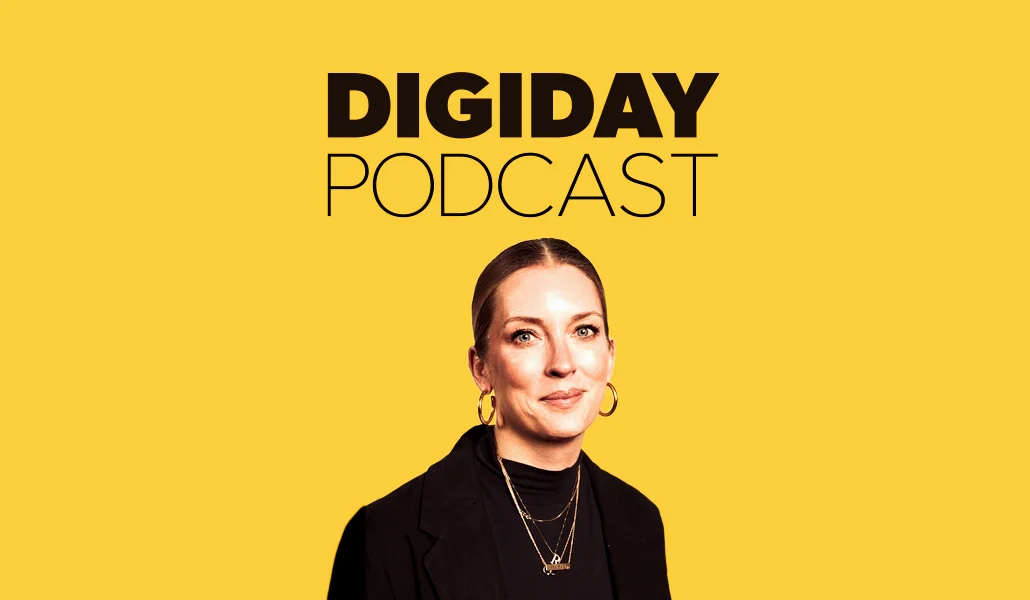
By Kimeko McCoy | May 12, 2026
The advertising industry stands at a precarious, yet exhilarating, crossroads. As the hype cycle surrounding artificial intelligence matures into practical application, the debate within the programmatic ecosystem has shifted. The question is no longer whether AI agents—autonomous or semi-autonomous software entities capable of executing complex tasks—have a place in the marketing stack. Instead, the industry is grappling with a more existential inquiry: How much autonomy are brands willing to cede to the machine?
At the recent Digiday Programmatic Marketing Summit (DPMS), held May 6–8 in Palm Springs, California, this tension was palpable. As marketers navigate the transition from manual labor to machine-led execution, a clear dichotomy has emerged. On one side are the "techno-optimists," pushing for full-scale integration of agents into the bidding and creative optimization process. On the other are the "cautious pragmatists," who view AI as a sophisticated brainstorming tool but insist that the final, high-stakes decision-making must remain firmly in human hands.
The Middle Ground: Duluth Trading Company’s Balanced Approach
Duluth Trading Company, the apparel brand known for its distinctive voice and pragmatic marketing, finds itself carving out a unique middle path. Ellie Uberto, director of marketing at Duluth, offered a candid look at the brand’s strategy during a live recording of the Digiday Podcast at DPMS.
For Uberto, the value proposition of AI is not about replacing human ingenuity, but about offloading the cognitive tax of routine operations. "AI can get you to the finish line, and you get to spend all your energy crossing the finish line," she explained.
Duluth’s strategy is rooted in a clear division of labor. The brand empowers AI agents to handle high-volume, low-nuance tasks, specifically in the realms of programmatic bidding and creative iteration management. By automating these mechanical processes, the marketing team is freed from the drudgery of reporting and slide-deck creation, allowing them to refocus on high-level strategy and brand growth.
However, the "brand ethos"—the specific sense of humor, tone, and emotional resonance that defines Duluth’s relationship with its customers—remains strictly under human control. "We’re comfortable with it because we know that our agency knows us very well," Uberto noted, referring to the brand’s unnamed agency partner, which manages the agentic bidding process. "They understand our goals, our objectives, and all the different pieces that our marketing needs to hit."
Chronology: The Evolution of Programmatic Intelligence
To understand where we are, one must look at how the programmatic landscape has shifted over the past two years:
- 2024: The Era of Generative Assistance. The initial wave of AI in marketing was dominated by LLM-powered chatbots and basic creative generation. Agencies and brands treated AI as a "co-pilot," using it to draft copy or summarize data sets.
- 2025: The Rise of Specialized Agents. The technology evolved from static chatbots to "agentic" systems. These agents could connect to APIs, execute buys in real-time, and manage cross-channel campaign adjustments without constant human prompting.
- 2026: The Governance Crisis. As we enter the current period, the focus has shifted from capability to governance. Brands are now debating agency compensation models—specifically, if an agency’s fee structure should change when an AI agent, rather than a human trader, is doing the heavy lifting.
Supporting Data and Industry Perspectives
While Duluth embraces a collaborative model with its agency, the industry is far from a consensus. During the summit, the contrast in philosophy was highlighted by the perspective of Glenniss Richards, senior director of digital media activation at Bayer.
Bayer, operating within a highly regulated industry where precision and brand safety are paramount, maintains a more conservative stance. According to Richards, Bayer’s in-house media team is not yet ready to delegate the "keys to the kingdom" to autonomous agents.
"It’s making us quicker, faster, certainly more agile, giving us data to digest, consume, and inform our media campaigns," Richards stated at DPMS. "But it’s not owning or controlling our campaigns."
This skepticism centers on a critical weakness in current AI models: the lack of human nuance. For global brands, a minor misalignment in ad placement or a tone-deaf creative iteration can lead to significant reputational damage. While AI can analyze data patterns with superhuman speed, it cannot yet replicate the cultural intelligence required to manage a brand’s long-term reputation in a volatile social climate.
Implications for the Agency-Brand Relationship
The rise of agentic media buying is fundamentally reshaping the agency-client dynamic. In the traditional model, agencies billed based on headcount and hours spent managing campaigns. If an AI agent can execute a 100-hour manual task in 10 minutes, the old billing models become obsolete.
1. The Trust Gap
As seen with Duluth, the relationship is moving away from "How are you doing this?" to "Are you delivering the outcomes?" Uberto noted that she is less interested in the specific prompts used or the proprietary models selected by the agency. Instead, the focus is on the efficiency gains and the strategic output. This suggests that the future agency-brand contract will be based on performance KPIs and transparency, rather than the "hours worked" model.
2. The Transparency Requirement
Despite the efficiency gains, the "black box" nature of AI agents remains a point of contention. As agents take more control over bidding, brands are increasingly asking for audit trails. How did the agent decide to reallocate $50,000 of the budget at 3:00 AM? Without clear, explainable AI, many enterprise brands will remain hesitant to grant full autonomy.
3. The Shift in Talent Acquisition
If agents handle bidding and reporting, the skill sets required for marketing teams will change. The future "media buyer" will be less of a manual trader and more of a "systems architect" or "agent manager"—someone capable of overseeing the AI’s performance, auditing its logic, and injecting human strategy into the automated process.
The Road Ahead: Beyond Low-Hanging Fruit
The industry consensus emerging from the Programmatic Marketing Summit is that we have moved past the "low-hanging fruit" phase. We are no longer just using AI to write headlines or summarize meeting notes. Agents are now actively participating in the programmatic workflow, managing budgets, and optimizing creative assets in real-time.
The path forward for brands will likely involve a tiered approach to risk:
- Tier 1: Fully Automated. Low-risk, high-volume tasks like routine bidding, A/B testing, and performance reporting.
- Tier 2: Human-in-the-Loop. Creative strategy, high-budget media allocation, and brand-voice consistency, where AI suggests options and humans provide the final sign-off.
- Tier 3: Human-Led. Crisis management, brand repositioning, and high-stakes creative development where the nuance of human experience remains irreplaceable.
As Duluth’s Ellie Uberto suggested, the goal is not to eliminate the human element, but to liberate it. By delegating the mechanical to the machine, marketers may finally have the bandwidth to do what they have always intended to do: think deeply about the brand, the customer, and the strategy that connects the two.
Whether the industry settles on a standard for agentic autonomy remains to be seen. What is certain, however, is that the brands that figure out how to balance machine efficiency with human soul will be the ones that define the next decade of advertising. The "finish line" is moving, and those who master the art of the AI-human hybrid are the ones best positioned to cross it.


 Nana
Nana
 Dwi Wanna
 Nila Kartika Wati
 Jia Lissa
 Basiran
 Sagoh
Sagoh

 Lina Hope