
 Ali Ikhwan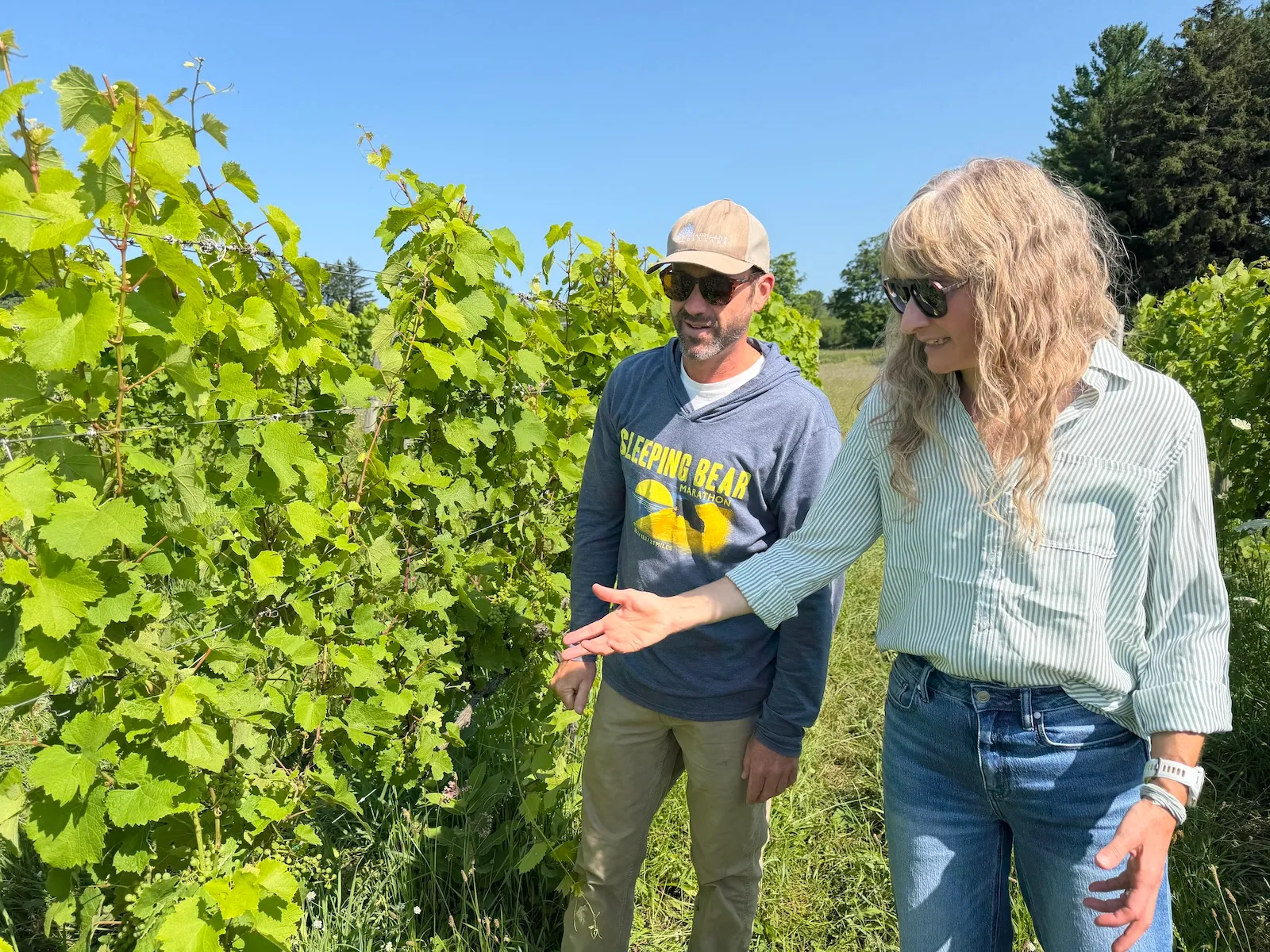
This coverage is made possible through a partnership between Grist and Interlochen Public Radio in northern Michigan.
When a dense, ethereal haze descended upon the rolling vineyards of northern Michigan last month, Kasey Wierzba, general manager and executive winemaker at Shady Lane Cellars, felt as though she had been transported to an alien landscape. The Leelanau Peninsula, celebrated for its picturesque “little finger” geography and world-class viticulture, was suddenly veiled in a sickly, monochromatic filter.
“That kind of pinky, peachy haze really was filtering through the whole vineyard,” Wierzba recalled, standing among rows of vines that have become the bedrock of the local economy. “The visibility was really minimal. It was eerie, and it immediately made me think about the fruit.”
While the smoke cleared, it left behind a lingering sense of unease. For winemakers like Wierzba, the incident served as a stark, visceral reminder that the existential threats facing the West Coast and Australia’s wine regions are no longer confined to the horizon. As global warming intensifies, the frequency and scale of wildfires are shifting the climate paradigm in the Midwest, forcing an industry built on tradition and patience to contend with the volatile reality of "climate chaos."
The Anatomy of the Threat: Smoke Taint
At the heart of the growers’ anxiety is a phenomenon known as "smoke taint." When vineyards are blanketed by wildfire smoke for extended periods, the grapes absorb volatile phenols—compounds that bind to the skins and tissues of the fruit. While these grapes may look healthy, the damage is often hidden. It is only during the fermentation process that these compounds are released, manifesting as off-putting, medicinal, or ashy flavors often described as “burnt bacon” or “barbecued food.”
For the nearly $9 billion Michigan wine industry, the potential for such widespread spoilage is a nightmare scenario. Unlike a frost or a hail storm, which causes visible, immediate physical damage, smoke taint is a silent infiltrator. It is a chemical transformation that turns a vintage into a liability, potentially rendering an entire season’s harvest unsellable.
Chronology of a Close Call
The events of last month began with massive, record-breaking wildfires burning in distant Ontario and Minnesota. As the jet stream shifted, it funneled thick plumes of smoke across the Great Lakes, settling over the Leelanau and Old Mission peninsulas.
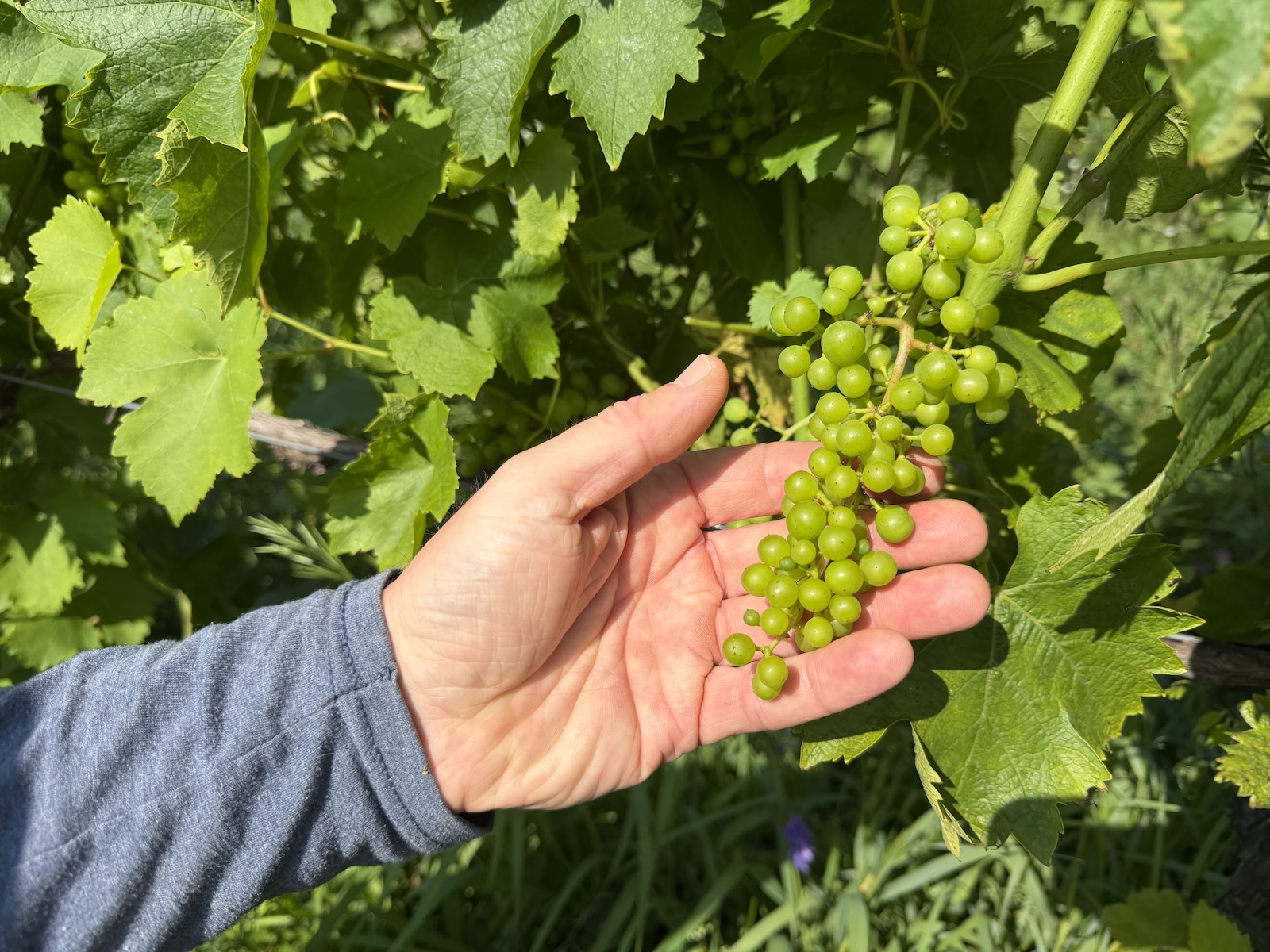
- The Exposure Window: Northern Michigan’s growers were fortunate in one critical aspect: timing. The smoke arrived during the “buckshot berry” stage of development. At this point, the grapes are small, hard, and lack the sugar and skin chemistry that makes them susceptible to absorbing heavy smoke particles.
- The Reaction: Within days of the smoke settling, winemakers like Wierzba were on the phones with colleagues and experts, including Paolo Sabbatini, a viticulture professor at Michigan State University. Sabbatini reported receiving a flurry of calls—at least ten in a matter of days—from growers worried about the long-term impact on their crops.
- The Mitigation: Growers quickly monitored the fires’ progression, thankful that the smoke dissipated before the grapes reached véraison—the critical period in late summer when grapes change color and become highly porous and chemically reactive to smoke.
Supporting Data and Scientific Perspective
The science of smoke taint is notoriously difficult to navigate. According to researchers, there is no “smoke meter” for a vineyard. Because the taint is a result of fermentation, the damage is effectively invisible until the wine is produced.
“You need to wait for the finished wine,” Sabbatini explained. “During the season, unless your vineyard catches on fire and you see physical damage on the berries, you can’t even measure anything with current field technology.”
This leaves growers in a state of purgatory. While lab testing exists, it is often reactive rather than predictive. Ben Montpetit, chair of the department of viticulture and enology at the University of California, Davis—a leading institution in smoke taint research—notes that there are currently no silver bullets for mitigation.
“Treatments to remove some of the unwanted flavors could impact the overall wine quality or introduce secondary, equally unpleasant tastes,” Montpetit said. “As much as we can prepare, there are going to be fires in the future, and unfortunately, they will impact wine regions.”
The numbers, however, are sobering. The fires in Ontario and Minnesota have already consumed more than 64,000 acres of forest. Globally, the situation is even more dire; in southwestern France, wildfires recently scorched more than 160 square miles of forest near Bordeaux, bringing flames to the very edge of the world’s most prestigious vineyards.
Official Responses and Policy Shifts
The rising threat of smoke taint has not gone unnoticed at the federal level. Recognizing that wine is not just a luxury product but a massive agricultural economic driver, the U.S. government is beginning to codify research support. The latest draft of the U.S. farm bill includes a specific directive to increase funding for research and development into the relationship between wildfire smoke and wine grapes.
This policy shift is crucial. As the U.S. Forest Service continues to combat larger, more intense fires, the agricultural sector is effectively lobbying for better monitoring, early warning systems, and potential chemical treatments that could shield grapes from absorbing smoke-derived phenols.
Implications for the Future: "Climate Chaos"
For the growers of northern Michigan, the smoke incident has triggered a shift in mindset. It is no longer a matter of if a major weather event will occur, but when.
Brian Hosmer, winemaker at Chateau Chantal on Old Mission Peninsula, views the challenge through a pragmatic lens. “We’re talking about places where the fire is literally up to the edge of the vineyards, or even a couple miles away,” he said, referencing global trends. “That’s the reality we have to start preparing for.”
The New Farming Normal
The industry is now facing a "triple threat":
- Variable Weather: Fluctuating temperatures and extreme precipitation patterns that disrupt the traditional growing cycle.
- Early Season Hazards: The increasing frequency of spring frosts, which have been a recurring headache for Michigan vintners.
- The Smoke Variable: The unpredictable, long-range impact of wildfire smoke from outside the region.
Andy Fles, the vineyard manager at Shady Lane Cellars, captures the sentiment of a generation of farmers forced to evolve. “Global warming doesn’t mean everywhere is going to be warmer every single year,” Fles noted. “I think what it means for us is that it’s climate chaos, and it’s very hard to predict what is going to happen. It’s something you can’t necessarily control, which is frustrating at times. So this is just a new hurdle, and we’ll find ways to deal with it when we have to.”
A Resilient Industry
Despite the looming threats, the spirit in Michigan’s wine country remains largely resilient. The region was settled by vintners who chose the area specifically for the moderating, protective influence of Lake Michigan, which extends the growing season and buffers against extreme cold. This inherent adaptability is now being tested by a new set of environmental pressures.
As Wierzba prepares for the remainder of the season, she is already planning for future smoke events. She intends to invest in lab resources to test for smoke compounds if future haze rolls in, transforming from a passive observer of climate change to an active participant in climate defense.
“I think having the smoke incident at this time in the grape growing, when they wouldn’t be affected, spurred me to think, ‘Wow, I need to be prepared,’” Wierzba said.
Ultimately, winemaking remains, as Hosmer puts it, a form of "legalized gambling." It is an industry predicated on the belief that despite the volatility of the natural world, the combination of human ingenuity and the right terroir can produce something enduring. As the climate continues to change, that endurance will be tested by the smoke of a warming world, forcing growers to decide not just how to make wine, but how to ensure their heritage survives the fire.

 Ammar Sabilarrohman
 Nana Wu
 Lina Irawan

 Suro Senen
 Jia Lissa