
 Evan Lee Salim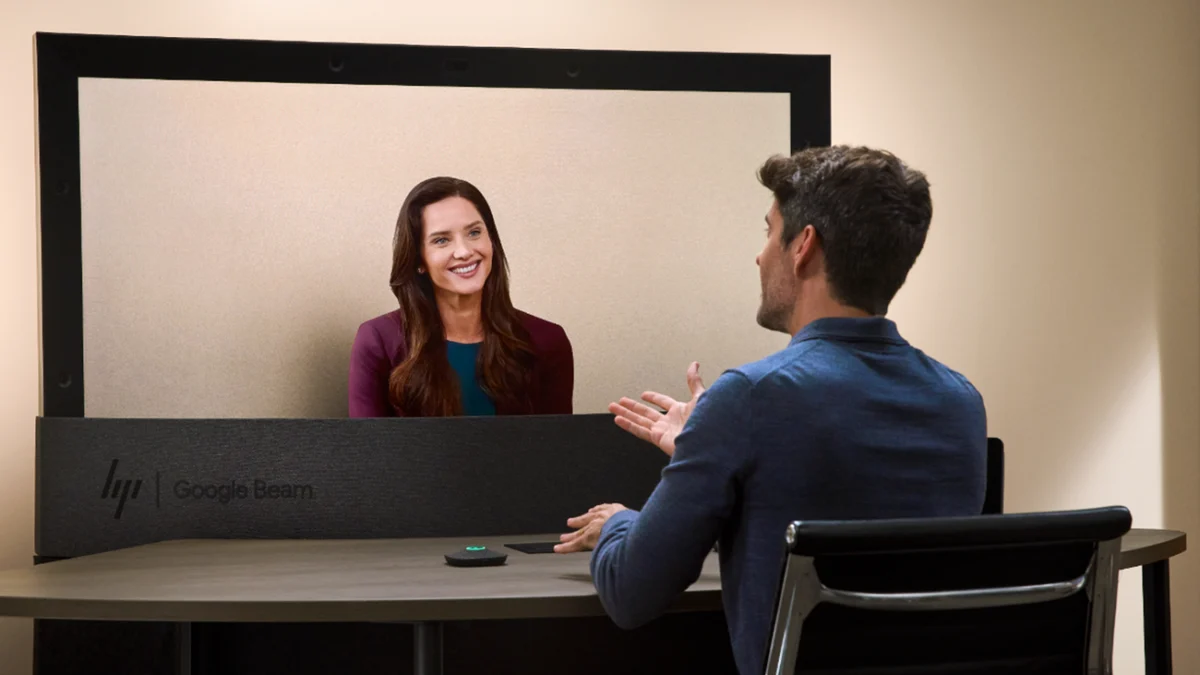
By: Editorial Staff
In an era where the traditional office has been replaced by a fluid, hybrid, and often fragmented work environment, the challenge of maintaining genuine human connection has become the "holy grail" of enterprise technology. Today, Google is taking a significant step toward solving this distance dilemma by announcing a major expansion of its "Google Beam" initiative. By scaling its global footprint, launching a first-of-its-kind extended network with Industrious, and sharing compelling data on productivity, Google is positioning Beam not just as a video conferencing tool, but as a fundamental shift in how we perceive remote presence.
The Core Vision: Beyond the 2D Screen
Since its inception, the vision behind Google Beam has been to dissolve the friction of geography. Traditional video conferencing—the "grid" of faces on a flat screen—often lacks the nuance of physical presence. Beam is designed to bridge this gap, offering a sense of "co-presence" that allows individuals to interact as if they were sharing the same physical space.
By leveraging sophisticated hardware—specifically the "HP Dimension with Google Beam"—the platform is built for the modern enterprise. It integrates seamlessly with industry-standard ecosystems like Google Meet and Zoom, ensuring that organizations do not need to overhaul their existing software investments to enjoy the benefits of this high-fidelity connection.
Global Expansion and the Ecosystem Approach
Google’s announcement confirms a strategic move toward mass adoption. Google Beam units are now shipping to customers across six major countries: the United States, Canada, the United Kingdom, France, Germany, and Japan.
However, hardware distribution is only one piece of the puzzle. To ensure that businesses can implement this technology effectively, Google has cultivated a robust global ecosystem of 18 dedicated channel partners. These audiovisual integrators and distributors are fully trained to manage the deployment, installation, and ongoing technical support for Beam, providing enterprise clients with the peace of mind required for large-scale infrastructure upgrades.
Chronology of Innovation: From Internal Pilot to Global Scale
The journey of Google Beam serves as a case study in "eating your own dog food." The development process was characterized by a rigorous cycle of testing and iteration:
- Phase 1: Internal Incubation: Beam was first refined within Google’s own offices. By using the technology to connect distributed teams, Google engineers and executives were able to iron out the latency and ergonomic issues that often plague high-end telepresence hardware.
- Phase 2: Data Collection: A pivotal eight-week internal study provided the empirical foundation for the current rollout. The study measured how Beam affected the quality of collaboration, revealing that internal teams felt 50% more connected to their counterparts.
- Phase 3: Strategic Partnerships: Partnering with industry leaders like Bain & Company allowed Google to test the technology in high-stakes environments, such as executive recruiting and client consulting.
- Phase 4: The Extended Network: With the partnership with Industrious, Google is now moving from the private office into the flexible, shared workspace market, democratizing access for startups and nomadic professionals.
Proving the Impact: Data-Driven Collaboration
Critics of new collaboration hardware often point to "Zoom fatigue" and the inefficiency of virtual meetings. Google’s recent data, however, suggests that Beam is actively reversing these trends.
In addition to the 50% increase in feelings of connection, Google reported two other critical metrics: participants found it 33% easier to ensure their feedback was clearly understood, and teams observed a 21% reduction in the need for follow-up meetings. These numbers are significant. In a corporate environment, the "follow-up meeting" is often a symptom of miscommunication or lack of rapport in the initial discussion. By creating a more authentic, face-to-face environment, Beam effectively cuts through the noise, allowing for higher information density and clearer decision-making.
Official Perspectives: The Value of Nuance
The professional impact of Beam is perhaps best summarized by those on the front lines of high-stakes communication. Keith Bevans, EVP and Partner at Bain & Company, noted the difficulty of assessing candidates via standard video calls.
"One of the most challenging things for us to assess with candidates is how they’ll be with clients," Bevans explained. "There are so many nuances in body language and eye contact, and Google Beam allows us to virtually understand how people will engage in person, which is critically important for their success at Bain and the success of our mission with our clients."
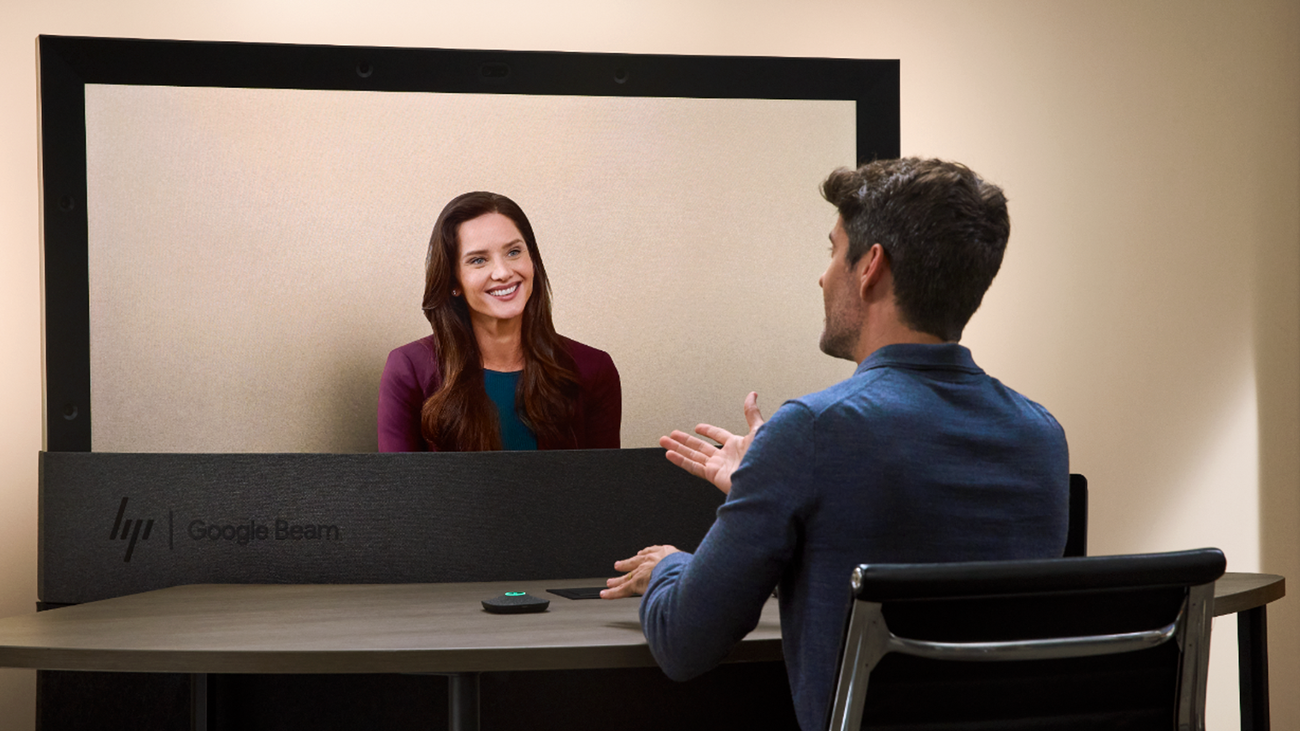
This sentiment underscores the primary value proposition of the hardware: it captures the "soft" data—the non-verbal cues, the micro-expressions, and the spatial awareness—that are currently lost in traditional video calls.
Breaking Down Barriers with the Industrious Partnership
One of the most notable aspects of the current expansion is the collaboration with Industrious. By integrating HP Dimension with Google Beam into premium flexible workspaces, Google is moving beyond the "enterprise-only" model.
Starting this October, companies of all sizes—from bootstrapped startups to regional offices of global firms—can book Beam-enabled spaces in select cities including Atlanta, Chicago, New York City, and Palo Alto. This "on-demand" model is designed to facilitate client consultations, manager check-ins, and sensitive interviews without the overhead of purchasing and installing the equipment permanently. It effectively lowers the barrier to entry, allowing businesses to "try before they buy" or simply use the technology for critical project milestones.
Implications for the Future of Work
The implications of this rollout are far-reaching. As businesses continue to grapple with the tension between remote flexibility and the need for in-office culture, technologies like Google Beam offer a third path.
1. The Death of Distance in Recruiting
As demonstrated by the Bain & Company pilot, the ability to conduct a truly "face-to-face" interview from thousands of miles away changes the talent acquisition landscape. Companies are no longer restricted to the local talent pool, nor do they need to exhaust travel budgets to verify cultural fit.
2. The Evolution of the "Third Space"
The partnership with Industrious suggests that the future of the office may not be a single headquarters, but a network of "presence hubs." If a startup in Chicago can hold a meeting with a firm in London using Beam, the need for a traditional, permanent office space is significantly diminished.
3. Sustainability and Travel
While the primary goal of Beam is connectivity, there is an inherent secondary benefit: a reduction in the carbon footprint associated with corporate travel. If a meaningful, high-stakes meeting can be held via Beam, the flight to the client’s office becomes optional rather than mandatory, supporting corporate ESG (Environmental, Social, and Governance) goals.
Challenges and Considerations
Despite the optimism surrounding the expansion, Google faces the challenge of adoption. The market for telepresence is crowded, and even high-fidelity hardware requires a behavioral shift. Users must be willing to transition from the "passive" nature of a standard laptop camera to the "active" nature of a dedicated Beam environment. Furthermore, as the network expands, maintaining a consistent user experience across different geographic regions and partner sites will be the ultimate test for the ecosystem Google is building.
Conclusion: A New Standard for Human Connection
The expansion of Google Beam signals that the tech giant is committed to a long-term future where technology mimics, rather than replaces, human intuition. By focusing on the nuances of body language, eye contact, and the "natural" flow of conversation, Google is attempting to solve the psychological toll of remote work.
As more companies like Netflix and Capital Group join the ranks of early adopters, the industry will be watching closely to see if the data-backed promises of increased connectivity and reduced friction hold true at scale. For now, the message from Google is clear: the way we work is evolving, but the fundamental human need for presence remains unchanged. Whether through a dedicated office installation or a booked session in an Industrious workspace, the goal is to ensure that no matter how far apart we are, we are never truly "at a distance."
For those interested in exploring the technology further, Google has launched a central hub at beam.google, where they continue to document new use cases and provide updates on the ongoing expansion of the network. As the modern workplace continues to transform, Google Beam stands at the vanguard of a new, more connected era of collaboration.


 Pevita Pearce
 Suro Senen
 Laily UPN
 Iffa Jayyana
 Rifan Muazin

 Lina Hope
 Lina Irawan