
 Dwi Wanna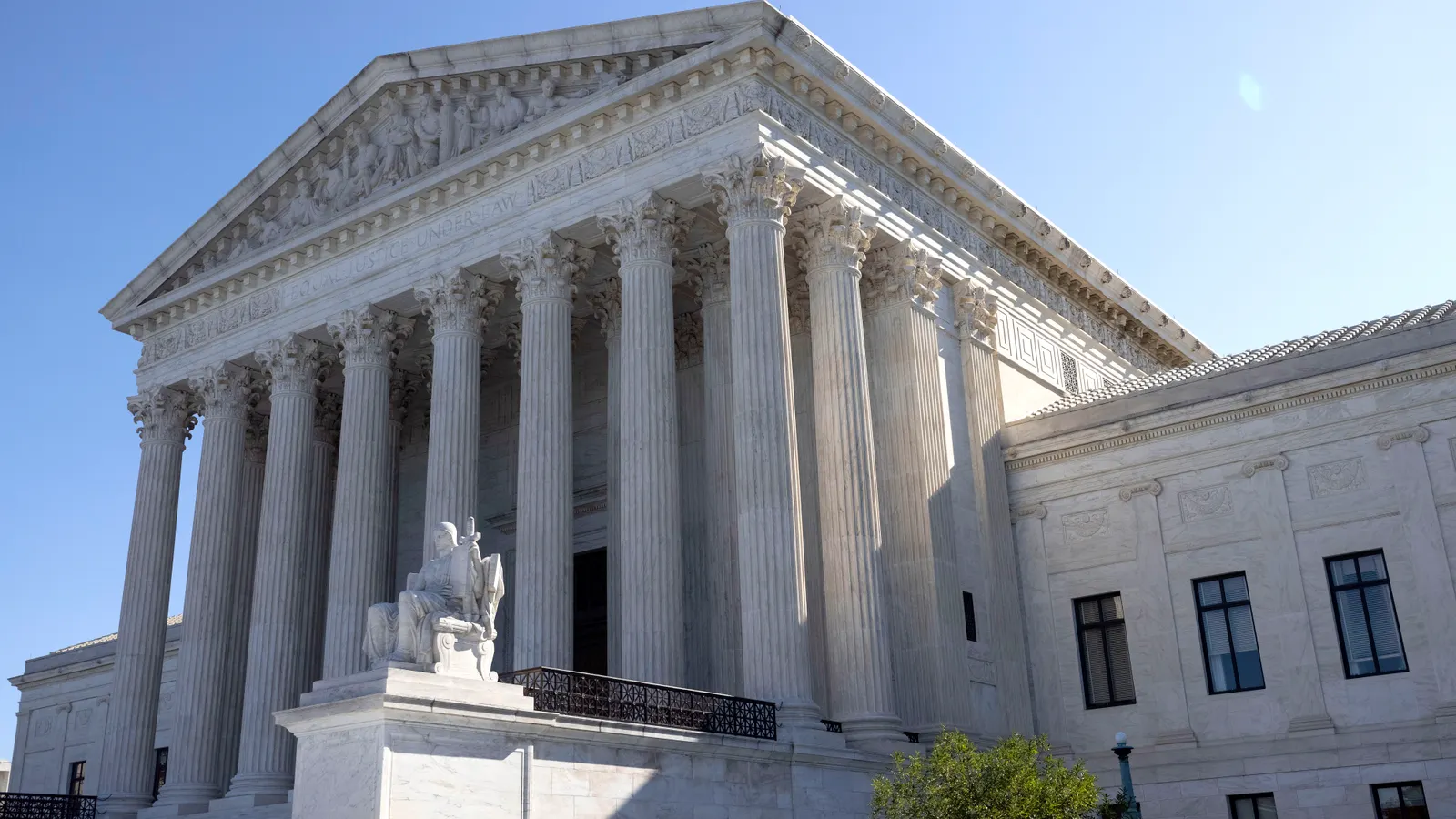
Washington D.C. – As the U.S. Supreme Court gears up for its upcoming 2026-2027 term, the justices have recently opted to sidestep a series of contentious employment law cases, including several involving allegations of discrimination and workplace mandates. This pattern of denials, with numerous petitions rejected in recent weeks, particularly on a busy Tuesday, signals a potential shift in the legal challenges that will reach the nation’s highest court and may leave significant questions of employment law unresolved at the federal level.
The decisions to not hear these cases will have a tangible impact on how employers and employees navigate critical issues ranging from disability accommodation and racial discrimination in hiring to the lasting effects of COVID-19 workplace policies and the complexities of immigrant worker rights. While the Court’s docket will undoubtedly continue to evolve, these recent rejections provide a glimpse into the types of legal battles the justices are currently unwilling to adjudicate, thereby allowing lower court rulings to stand and shaping the prevailing legal interpretations across different circuits.
Key Employment Law Disputes Sidestepped by the High Court
The Supreme Court’s recent actions underscore a deliberate decision to allow existing legal precedents to persist in several high-stakes employment arenas. Among the most significant rejections are those pertaining to disability discrimination, where two prominent cases highlighted the ongoing debate surrounding the scope of federal protections.
Disability Discrimination Under Scrutiny
In the case of Greer v. Benton School District, petitioners sought to clarify whether Section 504 of the Rehabilitation Act, a cornerstone of anti-discrimination law for federally funded programs, extends its protections to independent contractors. The Supreme Court’s refusal to hear this appeal means that the ruling from the Supreme Court of Arkansas, which held that Section 504 does not cover independent contractors, will remain the binding precedent in that jurisdiction. This decision is particularly impactful for a substitute teacher who had previously secured a jury verdict against a state school district, only to have their case dismissed based on the appellate court’s interpretation of the Act’s reach. The implications are far-reaching, potentially limiting recourse for independent contractors facing discriminatory practices in federally funded educational institutions.
A similar case, Redding v. Mullin, also saw the Court decline to intervene. This petition was brought by a former air marshal who challenged her reassignment by the U.S. Department of Homeland Security. The reassignment occurred after the plaintiff requested disability retirement. The core of her appeal questioned the legality of the reassignment itself and whether the appellate court had appropriately assessed her failure-to-accommodate claims under disability discrimination laws. By not taking up this case, the Supreme Court is allowing the lower court’s decision to stand, leaving the specific circumstances and legal reasoning of that ruling to govern similar situations.
Racial Discrimination and Diversity Initiatives
The Court’s reluctance to delve into cases involving allegations of racial discrimination, particularly in the context of corporate diversity, equity, and inclusion (DEI) initiatives, is also noteworthy. In Armstrong v. Warner Bros., a White petitioner alleged he was denied employment due to his race, citing the entertainment company’s stated DEI commitments as evidence of discriminatory intent. The central question presented to the Supreme Court was whether intentional discrimination against a White individual under a DEI policy satisfied the "but for" causation standard required by Title VII of the 1964 Civil Rights Act. The 9th U.S. Circuit Court of Appeals had previously ruled in favor of Warner Bros. The Supreme Court’s decision not to hear this case effectively upholds the lower court’s finding and leaves a significant question about the interplay between DEI policies and anti-discrimination laws unresolved at the federal appellate level.
Adding to this theme, the Court also declined to hear Lowery v. Mills. In this case, a University of Texas professor alleged he was subjected to disciplinary actions in retaliation for speaking out against DEI policies. The professor sought to have the Supreme Court consider whether his employer’s threats to his salary, institutional affiliation, and research opportunities constituted a sufficient basis for a First Amendment retaliation claim. This denial leaves open questions about the extent to which employees can voice opposition to institutional policies without fear of reprisal, particularly when those policies are framed as diversity initiatives.
Navigating the Aftermath of COVID-19 Workplace Mandates
The lingering legal challenges stemming from COVID-19 vaccine and testing mandates have also been largely sidestepped by the Supreme Court, despite their prevalence in federal appeals courts over the past year. Several petitions concerning these mandates were denied, signaling a preference for leaving these matters to the existing appellate framework.
Religious Exemptions and Testing Requirements
In Colson v. Hennepin County, Minn., petitioners asked the Supreme Court to determine whether an employer’s threat of discipline for non-compliance with a weekly COVID-19 testing requirement, and forcing an employee to choose between their religious beliefs and their job, constitutes an adverse employment action under Title VII. The 8th Circuit had dismissed the case in a 2-1 decision. The Supreme Court’s refusal to review this outcome means that employers in the 8th Circuit may have greater latitude in enforcing such mandates, even when they intersect with religious objections.
Similarly, Troogstad v. City of Chicago, Ill. saw a group of employees petitioning the Court to consider whether Chicago’s vaccine mandate for city employees violated their substantive due process rights. The Supreme Court’s denial of this petition allows the city’s policy to remain in effect without federal appellate review of its constitutionality.
Furthermore, in Petersen v. Snohomish Regional Fire and Rescue, the 9th Circuit had ruled that a Washington state firefighting department did not discriminate against firefighters who sought religious exemptions from its COVID-19 vaccine mandate. The employer had argued that accommodating these requests would impose an undue hardship on its operations. The Supreme Court’s denial of certiorari in this case reinforces the 9th Circuit’s precedent, potentially making it more challenging for employees to secure religious exemptions when employers claim undue hardship.
A Spectrum of Labor Law Disputes Rejected
Beyond discrimination and mandates, the Supreme Court has also turned away a diverse array of labor law disputes, leaving complex questions of worker rights and employer obligations to be settled in lower courts.
Immigrant Worker Rights and Undocumented Employment
A significant case originating from New Jersey, Marmic, presented a critical question regarding the rights of undocumented workers. The employer petitioner asked the Supreme Court to decide whether an unauthorized immigrant worker who intentionally used a false Social Security number to obtain employment was eligible to recover pay for work performed, as per the Immigration Reform and Control Act of 1986. The New Jersey Supreme Court had previously held that such an employee could indeed be eligible for back pay. The Supreme Court’s refusal to hear this case allows the New Jersey ruling to stand, potentially creating a circuit split on this issue and impacting how the rights of undocumented workers are treated in different states.
Bargaining in Bad Faith and Agency Deference
The Court also declined to review a petition from the former owners of the Pittsburgh Post-Gazette. This petition raised two key questions concerning the National Labor Relations Act (NLRA). First, it questioned whether the National Labor Relations Board (NLRB) could find an employer to have bargained in bad faith solely based on the substance of its proposals on mandatory collective bargaining subjects, without any evidence of bad-faith conduct away from the negotiation table. Second, it challenged the 3rd Circuit’s "highly deferential" review of the NLRB’s interpretation of its statutory authority, questioning whether this conflicted with the Supreme Court’s own decision in Loper Bright Enterprises v. Raimondo. This landmark ruling had emphasized that federal courts are not obligated to defer to agency interpretations of laws simply due to statutory ambiguity.
The implications of denying this petition are substantial. It suggests that the NLRB may continue to have broad discretion in determining bad-faith bargaining, and the standard of judicial review for NLRB decisions, particularly in light of Loper Bright, remains a point of contention that the Supreme Court is not yet ready to clarify.
In a related vein, the Supreme Court denied certiorari in Garten Trucking LC v. NLRB, another case that cited Loper Bright. In this instance, petitioners argued that the 4th Circuit showed excessive deference to the NLRB, which had reversed an administrative law judge’s decision to find that an employer had an obligation to bargain with its employees. This denial further suggests the Supreme Court’s current stance on the extent of judicial deference to NLRB rulings, potentially allowing for a more robust application of the principles outlined in Loper Bright to be tested in lower courts before reaching the Supreme Court.
Implications and the Road Ahead
The Supreme Court’s recent decisions to deny certiorari in these numerous employment law cases have significant implications. Firstly, it allows lower court rulings to become the prevailing law in their respective circuits, potentially leading to a patchwork of legal interpretations across the country on critical issues such as disability discrimination, the scope of protections for independent contractors, and the application of anti-discrimination laws in the context of DEI initiatives.
Secondly, the refusal to hear cases related to COVID-19 mandates means that the legal battles over religious exemptions, testing requirements, and vaccine policies will continue to be fought out in federal appeals courts, with varying outcomes likely. This leaves employers and employees in a state of uncertainty regarding the enforceability and legality of such mandates.
Finally, the consistent denials in labor law disputes, particularly those touching upon immigrant worker rights and the powers of the NLRB, suggest that the Supreme Court is either satisfied with the current state of affairs or is waiting for a more compelling case to present itself. The ongoing tension between the principles of Loper Bright and agency deference, for example, will likely continue to be a focal point in administrative law, with future challenges to NLRB decisions potentially reaching the high court.
As the 2026-2027 term takes shape, the Supreme Court’s recent rejections signal a period of consolidation rather than expansion of federal employment law jurisprudence. The practical effect is that many of the complex and often contentious issues that arise in the workplace will remain subject to the interpretations of lower federal courts, shaping the employment landscape for the foreseeable future without definitive national guidance from the nation’s highest court. Employers and legal practitioners will need to closely monitor decisions within their specific circuits to understand the evolving legal landscape.

 Pevita Pearce
 Suro Senen
 Laily UPN
 Iffa Jayyana
 Rifan Muazin

 Lina Hope
 Lina Irawan