
 Asep Darmawan
In the rapidly shifting landscape of enterprise software, a provocative question has emerged from the trenches of corporate consulting: Are Advanced Planning Systems (APS)—the software stalwarts that have anchored supply chain management since the 1980s—nearing the end of their lifecycle?
The debate, brought to the forefront by a candid inquiry from a senior consultant at a major firm, challenges the fundamental utility of platforms provided by industry giants like o9, Kinaxis, and Blue Yonder. The core assertion is that the "untidy application overhead" required to invoke solvers is no longer justifiable in an era demanding agile, cross-functional decision-making. As the industry grapples with the promise of Agentic AI and the reality of fragmented enterprise architectures, the consensus is shifting: the traditional APS model is no longer fit for purpose.
The Chronology of a Stagnant Architecture
To understand the current crisis, one must look at the historical trajectory of supply chain planning. APS solutions were birthed in a different era, designed primarily to deliver functional excellence. In the 1980s and 90s, the goal was to optimize specific silos—procurement, manufacturing, or distribution—independently.

However, this design philosophy created an inherent flaw. Because the supply chain is a non-linear, complex system, optimizing one function often degrades the performance of another. Despite this, companies spent decades pouring resources into these systems, hoping that "more data" would solve the problem.
- The 1990s-2000s (The Era of Functional Silos): Software vendors focused on localized optimization engines. Reward systems for employees were tied to these specific departmental metrics, cementing the "functional excellence" trap.
- The 2010s (The Rise of Control Towers): Recognizing the lack of visibility, firms invested heavily in control towers and risk management dashboards. These tools, however, primarily addressed symptoms rather than the root cause of systemic misalignment.
- The 2020s (The AI Disruption): Today, the promise of Agentic AI has reignited the conversation. Yet, most APS providers are merely applying a thin veneer of AI over legacy architectures—a practice often described as "putting lipstick on an old pig."
Supporting Data: The Reality of Latency and Misalignment
The primary argument against current APS platforms is not just technical; it is ontological. Most platforms lack a fundamental understanding of how cross-functional decisions are made in the real world.
The Latency Trap
A critical bottleneck in modern supply chains is data latency. While marketing materials for APS platforms boast of "real-time" decision-making, the reality is far bleaker. Data from outsourced manufacturing and warehousing—often the most critical nodes in the network—frequently lags by days or even weeks. Only 30% to 40% of warehouse and contract management data is accessible on a same-day basis. Any AI agent attempting to optimize a supply chain on such stale data is, by definition, working with a flawed model.

The Metric Gap
Furthermore, organizational misalignment remains the elephant in the room. Most CFOs continue to view supply chains as cost centers to be squeezed, rather than engines for growth. When the metrics used to judge performance do not align across departments, employees are effectively incentivized to avoid collaboration. An APS platform that claims to offer "enterprise-wide decision-making" is, under these conditions, a "pipe dream" that ignores the underlying human and financial architecture of the company.
Official Perspectives: The Case for a "Reset"
Industry experts, including veteran analysts, argue that the path forward for APS vendors is binary: they must either evolve into "headless solvers" or pivot toward becoming a truly unified enterprise platform. However, the latter is viewed with deep skepticism given the vendors’ lack of expertise in enterprise ontology, master data management, and the nuances of cross-functional workflows.
"I have advocated for linking horizontal processes using interoperability principles for years," notes Lora Cecere, a leading voice in supply chain strategy. "But I have given up on the idea that current APS architectures will evolve to meet this need. The inertia of functional excellence is simply too strong."
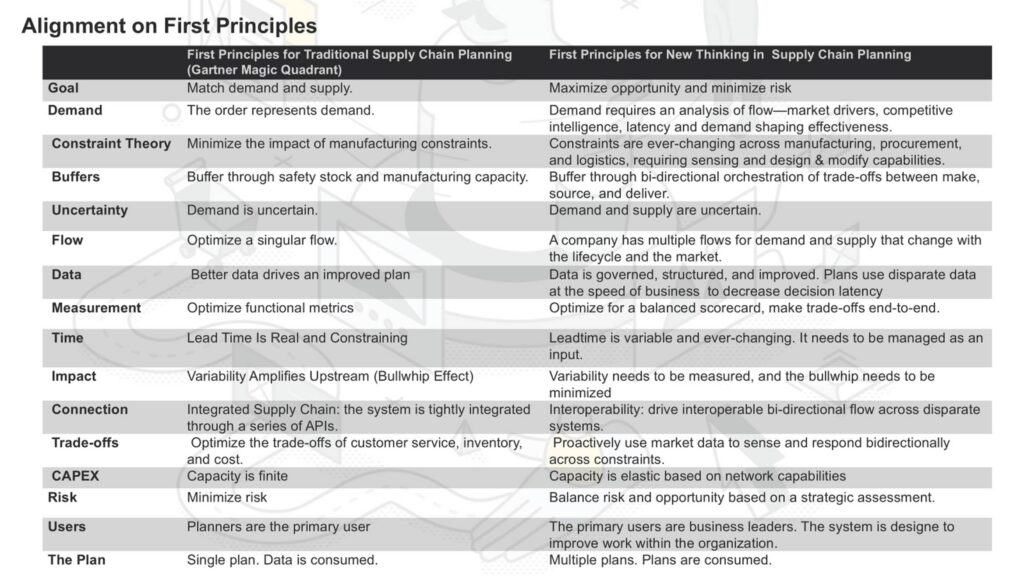
Instead, the proposed path forward involves a radical departure from "planner-centric" design. Current systems are built for a human planner to sit in front of a screen and tweak variables. The future, however, must be "organization-centric." This means shifting from an enterprise application mindset to an "outside-in value network" approach, which focuses on:
- Semantic Reconciliation: Ensuring that data from disparate sources actually speaks the same language.
- Ontological Frameworks: Moving beyond simple data tables to systems that understand the causal relationships between supply chain events.
- Design Thinking: Redefining work processes to prioritize the health of the entire ecosystem over the efficiency of a single department.
Implications for the Future of Business
The failure to transition away from legacy APS models has profound implications. Companies that continue to rely on these tactical, project-based deployments are effectively choosing to remain reactive. The "hero mentality"—where teams constantly chase issues within the operational horizon—has become a cultural default, often jokingly referred to as the "Dalmatian mascot" syndrome.
The Role of Agentic AI
While the allure of Agentic AI is undeniable, the industry must be wary of premature automation. Automating bad processes is a recipe for disaster. Before deploying agents to make operational decisions, organizations must first address data latency and ensure that their metrics are aligned with corporate outcomes.
The Shift to Experimentation
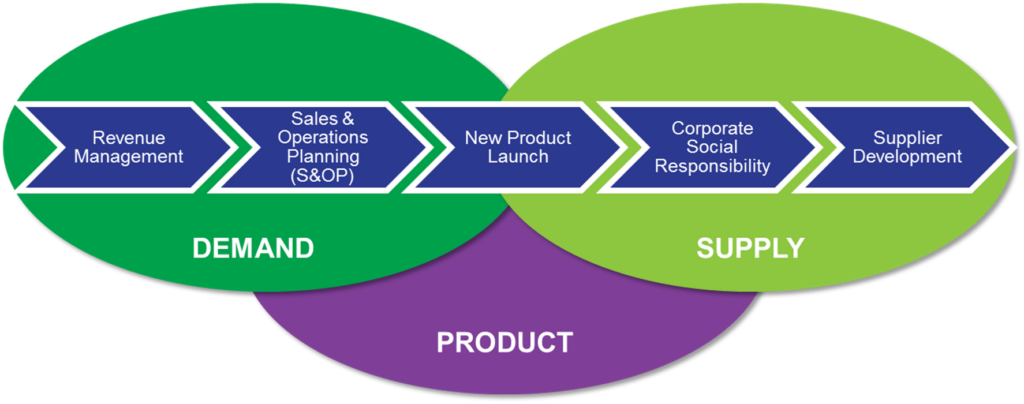
The recommendation for forward-thinking organizations is to move away from "rolling your own" solutions, which often lead to insurmountable technical debt. Instead, companies should experiment with:
- Unified Data Models: Creating a single, reliable source of truth.
- Machine Learning for Insights: Using ML to uncover patterns that humans cannot see, rather than just automating manual tasks.
- Outside-In Value Networks: Focusing on the flow of value to the customer rather than internal throughput.
Conclusion: A New Horizon for Planning
The "lipstick on an old pig" approach to APS is rapidly losing its efficacy. As AI continues to evolve at a breakneck pace, the window for legacy vendors to reinvent their architectures is closing.
For the modern enterprise, the challenge is clear: stop treating planning as a software implementation project and start treating it as a fundamental redesign of how the business operates. The future belongs not to those who can buy the most sophisticated "solver," but to those who can align their organizational goals, fix their data latency, and embrace an outside-in, value-network perspective. The era of the monolithic, siloed APS is coming to an end; the era of the autonomous, interconnected value chain has yet to fully arrive, but it is the only viable destination.


 Laily UPN
 Rifan Muazin
 Pevita Pearce
 Dwi Wanna
 Lina Hope
 Layla Zulfa

 Azzam Bilal Chamdy