
 Asep Darmawan
A simple search for a “cordless drill” on Walmart’s website today reveals more than just hardware; it provides a masterclass in the quiet, high-stakes tug-of-war currently defining the future of enterprise ecommerce.
When a consumer types that query into the search bar, the results page that unfolds is not merely a curated list of tools—it is a battleground. A Greenworks-sponsored brand module currently occupies the prime "above the fold" real estate, showcasing four distinct products. The three listings immediately beneath this module are also sponsored placements. For the average shopper, an organic, non-sponsored result does not appear until the seventh position.
This landscape highlights an unavoidable reality: as retailers pivot to become media powerhouses, they are fundamentally altering the physics of the digital shopping experience. When advertising dollars determine the hierarchy of visibility, the lines between deliberate merchandising strategy and revenue-driven media placement begin to blur, creating a complex governance challenge for the world’s largest retailers.
The Collision of Two Objectives
At the heart of the modern ecommerce platform lie two distinct, yet often competing, mandates.
The first is the Merchandising Mandate. The goal here is simple: optimize the digital storefront to maximize conversion rates, move inventory, and highlight products that align with seasonal trends, high margins, or specific brand partnerships. Merchandisers rely on complex algorithms that track "relevance" and "sales velocity"—if a drill is a best-seller and has a high customer satisfaction rating, the algorithm naturally wants to place it in front of the shopper to ensure a purchase.
The second is the Media Mandate. Retailers have realized that their digital traffic is a goldmine. By offering brands the ability to bid for top-of-page placement, retailers can unlock high-margin advertising revenue. This is "retail media," and it has become a primary driver of growth for platforms like Amazon, Walmart, and Target.
When these two objectives meet, friction is inevitable. Search results pages and category landing pages are the most valuable pieces of digital real estate a retailer owns. When a media team sells that space to an advertiser, they are technically "displacing" the product that the merchandiser—and potentially the shopper—would have preferred to see.
Chronology of a Shift
The rise of retail media did not happen overnight. Its evolution can be traced through three distinct stages:
- The Incubation Phase: Early ecommerce relied on simple, organic search algorithms. Retailers focused on user experience (UX) and conversion. Advertising was relegated to static banner ads on the periphery of the site.
- The Integration Phase: Recognizing the value of intent-based marketing, retailers began integrating sponsored listings into the product grid. Initially, these were clearly marked and relatively few in number, serving as a supplement to the user experience.
- The Monetization Explosion: Today, we are in the third phase. Retail media is no longer a "side hustle"; it is a central pillar of the retail P&L. With Wall Street demanding higher margins, retailers are aggressively expanding their ad inventory, leading to the "sponsored-first" search results pages we see today.
This transition has moved from a "value-add" for shoppers to a "revenue-capture" strategy for corporations. The Walmart example serves as a microcosm: if the ad load continues to increase, at what point does the shopper stop feeling "helped" and start feeling "marketed to"?
Supporting Data and Economic Realities
The economic incentive for retailers to lean into media is staggering. Advertising revenue often carries profit margins north of 70% to 80%, far exceeding the single-digit margins typically found in the sale of physical goods.
However, there is a hidden cost. When a sponsored product—which might be less relevant or have a lower conversion rate than an organic counterpart—is pushed to the top of the page, the retailer may experience a "conversion tax."
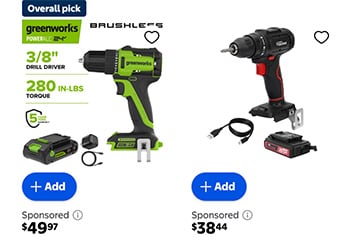
If a shopper searches for a premium brand but is met with three sponsored slots for a lower-tier brand, they may bounce, become frustrated, or take longer to find their desired product. While the retail media team records a successful ad impression, the merchandising team sees a slight dip in category conversion. The challenge is that these two metrics rarely talk to each other in real-time. Ad revenue is immediate and highly visible on a quarterly earnings report; the loss in "customer lifetime value" due to a degraded search experience is diffuse, lagged, and notoriously difficult to quantify.
Official Perspectives: The Role of Relevance
Industry leaders are keenly aware of this friction. Sherry Smith, President of Retail Media at Criteo, emphasizes that the strategy must be rooted in user utility rather than sheer volume.
"Retailers also need to be thoughtful about where and how they introduce advertising," Smith noted in response to industry queries. "More inventory doesn’t necessarily mean more value. The focus should be on placements that perform for advertisers, remain useful to shoppers, and create incremental value for the retailer once the costs of running the program are taken into account."
Smith’s perspective underscores the "relevance" defense. If a sponsored product is exactly what the user was looking for, the conflict vanishes. In the case of the Greenworks drill, the ads were highly relevant. The shopper wanted a drill; they were shown four high-quality drills. In this instance, the media placement didn’t "break" the user experience—it arguably accelerated it. The tension only arises when the advertising algorithm pushes a product that the user didn’t ask for, merely because the advertiser paid for the privilege of being seen.
Governance: Who Owns the Page?
The most critical implication of this trend is the need for new internal governance. In most large retail organizations, the Media and Merchandising teams operate in silos. This structure is a recipe for internal conflict.
To resolve this, leading retailers are beginning to implement "Rules of Engagement" for their digital shelves:
- The Relevance Threshold: Establish a minimum relevance score for any sponsored placement. If a product does not meet a specific keyword-match threshold, it cannot be promoted, regardless of how much the brand is willing to pay.
- The "Conversion Parity" Rule: If a sponsored product causes a statistically significant drop in category conversion, the system should automatically throttle the ad frequency for that slot, favoring the higher-converting organic product.
- Unified Attribution: Retailers must stop treating media revenue and merchandising margin as separate buckets. True "Total Store" reporting is required to see the net impact of an ad placement on the total basket size and long-term customer retention.
The Future: Merchandising as Media
Ultimately, the goal for retailers should be the synthesis of these two disciplines. The most successful retailers of the next decade will be those who treat "Retail Media" not as an intrusion, but as a component of the merchandising strategy itself.
When a retailer can use first-party shopper data to serve ads that feel like personalized recommendations, the boundary between the two disappears. Advertising becomes a service that helps the customer find what they need, while simultaneously driving the high-margin revenue the retailer requires.
"Retail media gives retailers another way to create value from assets they already have," Smith adds. "That opportunity is greatest when advertising adds to the commerce business rather than simply occupying the space that business created."
The "quiet struggle" on the Walmart search results page is a signal of a broader transition. Retailers are currently learning that while the "media" side of the house may be the engine of growth for the next several years, the "merchandising" side is the foundation of trust. If the balance is handled with sophistication, the digital shelf will become more relevant and useful. If it is handled purely as an auction, retailers risk commoditizing their own platforms, turning their search bars into digital billboards that shoppers will eventually learn to ignore.
For now, the cordless drill search remains a perfect example of the delicate equilibrium required in modern retail. The ads are there, they are prominent, and they are relevant. So far, the system holds—but as competition for digital visibility intensifies, the retailers who define clear governance rules today will be the ones who win the customer loyalty of tomorrow.


 Ammar Sabilarrohman
 Basiran
 Pevita Pearce
 Dwi Wanna
 Lina Hope
 Layla Zulfa
 Azzam Bilal Chamdy