
 Laily UPN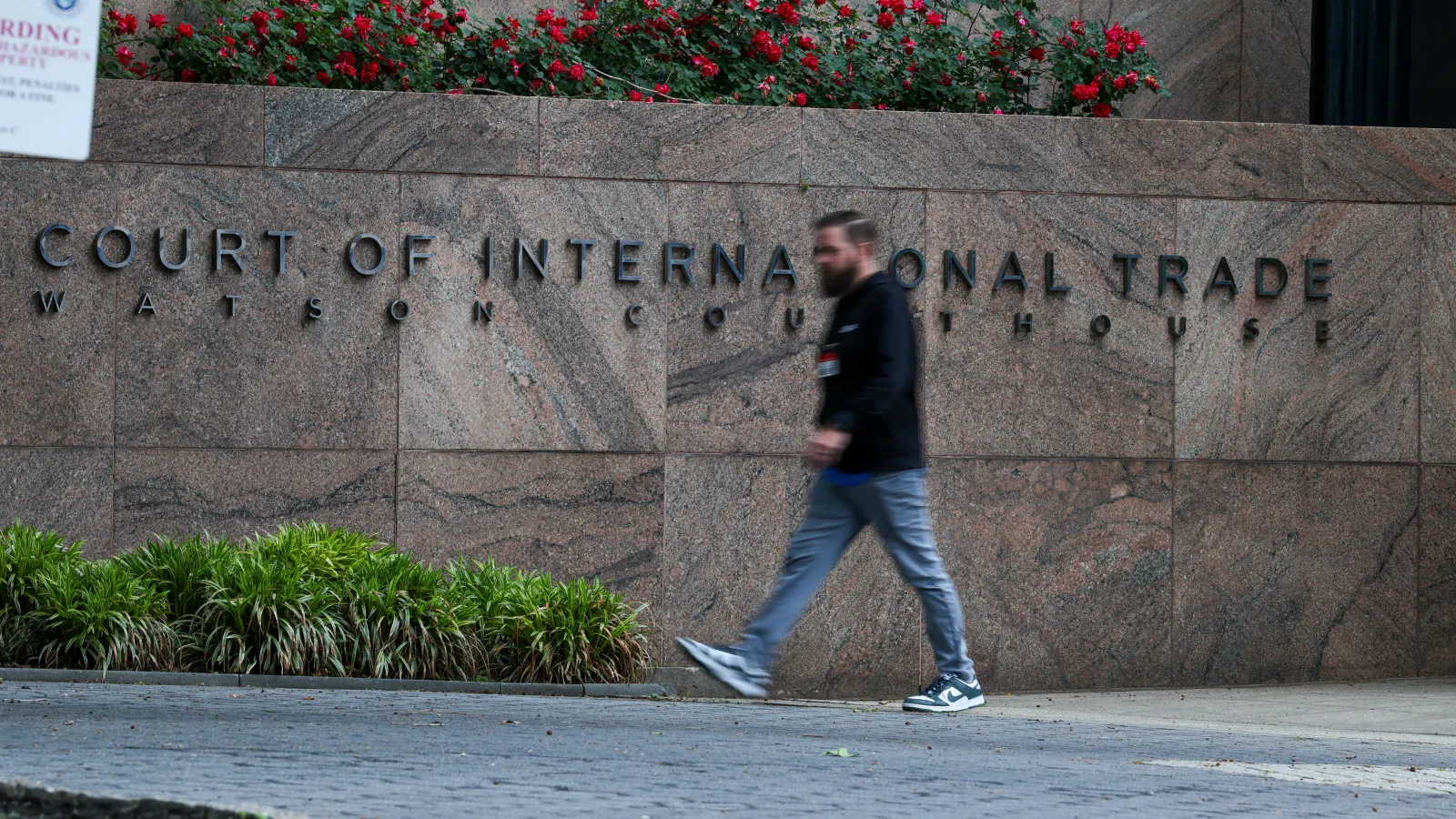
In a landmark decision that could reshape the landscape of international trade litigation, the U.S. Court of International Trade (CIT) has officially certified a class-action lawsuit aimed at recovering billions of dollars in invalidated tariffs. This judicial maneuver offers a potential lifeline to thousands of importers—particularly smaller enterprises—who have remained on the sidelines of the complex and costly process of seeking refunds for duties collected under the now-defunct International Emergency Economic Powers Act (IEEPA) mandates.
The court’s slip order, issued this past Thursday, marks a significant departure from the previous, individual-based litigation strategy that has characterized the post-Supreme Court legal battle over trade levies. By consolidating the claims of eligible importers, the court is effectively pressuring the federal government to streamline the return of an estimated $30 billion in outstanding duties that might otherwise have remained in the U.S. Treasury indefinitely.
The Chronology of a Legal and Economic Conflict
The roots of this massive litigation stretch back to the imposition of IEEPA-based tariffs, which were subsequently challenged in federal courts. The conflict escalated in February, when the Supreme Court issued a definitive ruling declaring those tariffs illegal. This decision sent shockwaves through the global supply chain, triggering a frenzied scramble for reimbursement.
Following the Supreme Court’s mandate, the Court of International Trade acted swiftly, ordering U.S. Customs and Border Protection (CBP) to initiate a refund process for the approximately $166 billion in tariffs collected under the invalidated authority. To facilitate this, the CBP launched the Consolidated Administration and Processing of Entries (CAPE) portal.
However, the path to recovery proved to be a bureaucratic gauntlet. Throughout the spring and summer of 2025, the legal process remained fragmented. While over 4,000 individual lawsuits were filed by major corporations and well-resourced importers, thousands of smaller businesses found the cost of legal representation and the administrative burden of the CAPE portal prohibitive. The recent class certification serves as a judicial correction to this imbalance, aiming to ensure that the recovery process is not limited only to those with the deepest pockets.
Supporting Data: The Scale of the Refund Effort
The economic stakes of this litigation are immense. According to official data, the CBP has already processed and paid out over $100 billion in refunds to importers who successfully navigated the CAPE portal or filed individual litigation. Despite this progress, the court noted that a significant segment of the importing community has been left behind.
The court’s order explicitly addresses the disparity in recovery rates:
- The "Small Importer" Gap: The court acknowledged that many small-to-mid-sized importers have not engaged with the CAPE system. The reasons cited include a lack of awareness regarding the program, the complex technical requirements for filing, and the disproportionate cost of compliance relative to the potential refund amount.
- The $30 Billion Threshold: Court documents suggest that roughly $30 billion remains tied up in the system, potentially unrecovered by the entities that paid it. Without the mechanism of a class-action suit, the court estimated that these funds would likely never reach their rightful owners, effectively remaining in government coffers despite the illegality of the initial collection.
- Liquidated Entry Expansion: As of this week, the CBP has expanded the scope of the CAPE portal to include finally liquidated entries—a major milestone for those seeking comprehensive relief. However, this expansion has initially been restricted to the subset of importers already engaged in active litigation, further highlighting the need for the newly certified class action.
Official Responses and Legal Perspectives
The legal community has reacted with cautious optimism, viewing the class certification as a significant, albeit preliminary, step toward a more equitable resolution.
James Kim, an international trade partner at ArentFox Schiff, noted in a recent professional assessment that the court’s decision should not be mistaken for an immediate disbursement order. "The decision doesn’t immediately expand refund eligibility or direct payment," Kim explained. "It does, however, create a potential path forward for non-litigants, toward a single order requiring refunds to be issued to importers that have not pursued individual lawsuits."
The government’s position remains adversarial. The U.S. Department of Justice (DOJ) is currently appealing the broader order that compels the CBP to refund all finally liquidated entries. The DOJ’s legal argument hinges on a strict interpretation of jurisdictional authority, contending that the court lacks the mandate to force refunds for any entity that has not formally initiated its own legal action. This appeal remains a significant hurdle, casting a shadow of uncertainty over the finality of the court’s recent certification.
The Path Forward: Implications for Importers
For the thousands of importers caught in the middle of this legal tug-of-war, the next few months will be critical. The CIT has scheduled a closed conference for October 13 to deliberate with the parties involved. This will be followed by an October 22 deadline for the submission of a proposed schedule for the class-action proceedings.
Implications for Small and Medium Enterprises (SMEs)
For SMEs, the class certification is arguably the most significant development since the Supreme Court ruling. By grouping these businesses into a single class, the court is effectively providing "pro bono" or low-cost access to the judicial relief process. This shifts the burden of proof and administrative advocacy away from individual, resource-strapped companies and onto a centralized legal effort.
Implications for Global Trade Policy
Beyond the immediate refund issue, this case raises profound questions about the limits of executive power under the IEEPA. The fact that the court has taken such an aggressive stance in ensuring that refunds reach even the smallest entities suggests a judicial intent to hold the executive branch accountable for the full scope of economic damage caused by the invalidation of these trade levies.
Risks and Uncertainties
Despite the progress, the road ahead is fraught with risks:
- The DOJ Appeal: If the Justice Department prevails in its appeal, the scope of the refund program could be significantly narrowed, potentially excluding class members who haven’t filed individual suits.
- Administrative Bottlenecks: Even if the court issues a favorable final ruling, the administrative capacity of the CBP to process a massive influx of class-member claims remains an untested variable.
- Legal Hurdles: The transition from certification to a "sweeping refund directive" requires overcoming complex procedural hurdles that the DOJ is expected to contest at every stage.
Conclusion: A Test of Judicial Oversight
The U.S. Court of International Trade has signaled that it intends to see the restitution process through to its conclusion, regardless of the administrative friction or the opposition from the Department of Justice. By certifying the class, the court is prioritizing the principle of equitable restitution over the narrow jurisdictional arguments that have historically allowed the government to retain funds collected under illegal mandates.
As the October deadlines approach, the international trade community will be watching closely. For the importers who have endured years of uncertainty, the class-action lawsuit represents the final, best hope of reclaiming billions in capital. Whether this will lead to a systemic return of the $30 billion in question or trigger a prolonged constitutional battle over the court’s authority remains to be seen. What is certain, however, is that the legal framework for international trade in the United States has entered a new, more scrutinized era where the costs of executive overreach are being calculated—and demanded—in real time.


 Rifan Muazin
 Siti Muinah
 Pevita Pearce
 Dwi Wanna
 Lina Hope
 Layla Zulfa
 Asep Darmawan
 Azzam Bilal Chamdy