
 Basiran
By [Your Name/Journalistic Byline]
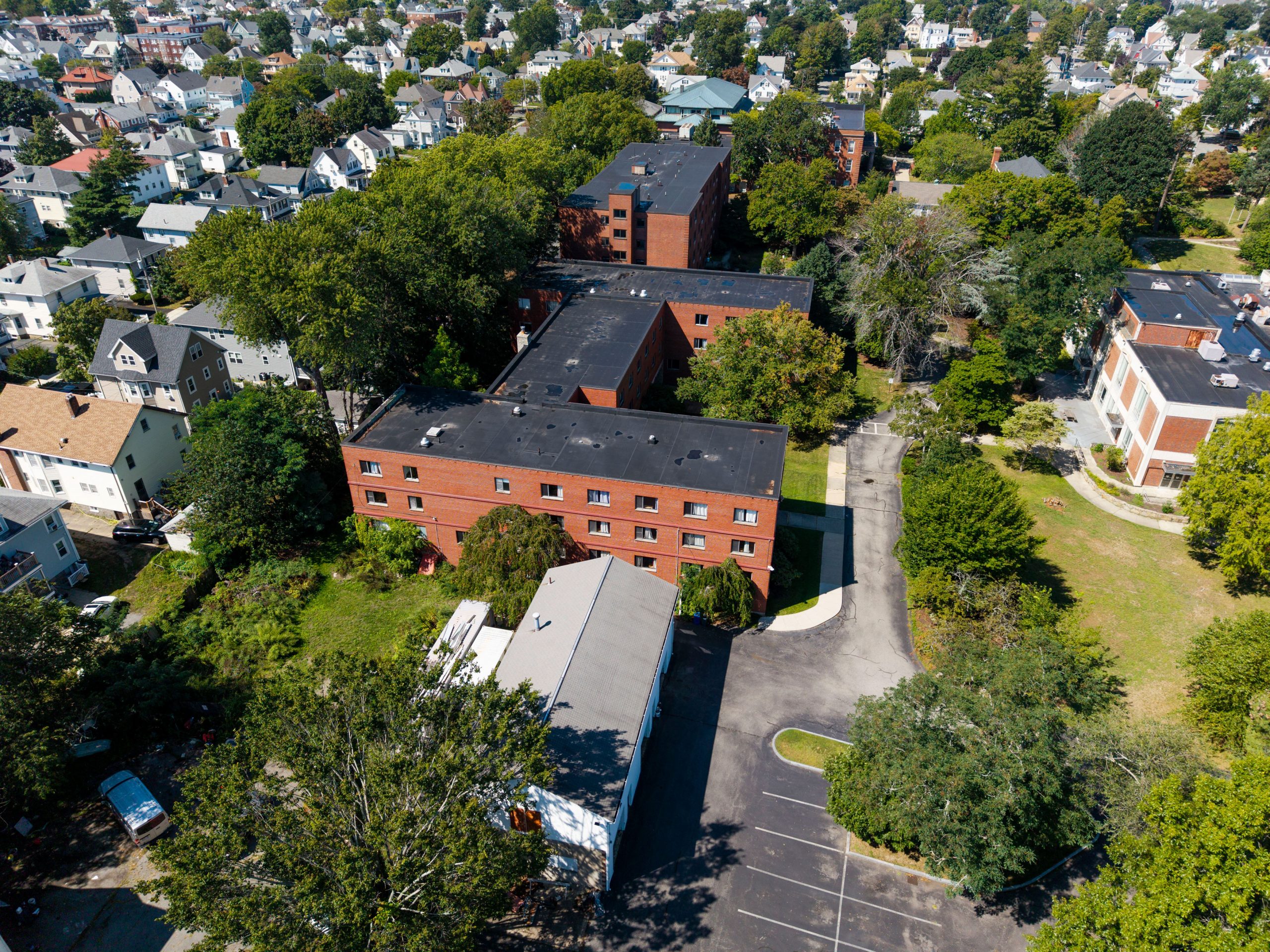
In the quiet, residential streets of Quincy, Massachusetts, the signs of a slow-motion transformation are everywhere—though perhaps not the kind the neighbors were hoping for. Waist-high weeds have begun to colonize the cracked asphalt of the tennis courts at Eastern Nazarene College. Ivy, once decorative, now aggressively snakes across the padlocked doors of a former women’s dormitory. Where students once scurried between lectures, Canada geese now graze on the baseball field, and wild turkeys pick through the encroaching underbrush.
Nature is reclaiming what remains of the 27-acre campus, which shuttered its doors last year following a staggering collapse in enrollment and an accumulation of liabilities that reached an unsustainable $18 million. It is a scene being replicated across the American landscape. As the “higher education cliff” turns from a demographic theory into a fiscal reality, a growing number of colleges are closing, leaving behind vast, empty tracts of land that remain frozen in time for years, or even decades.
While trustees struggle to settle with creditors and local governments spar over zoning, the United States faces an acute, systemic shortage of housing. Economists and urban planners are increasingly pointing to these abandoned campuses as a vital, if untapped, resource. They argue that converting these sites into residential housing is a logical, high-impact solution to a dual crisis: the blight of abandoned institutional properties and the desperate national need for millions of new homes.
The Magnitude of the Crisis: A Nationwide Shortage
The housing math is stark. According to data from the mortgage giant Freddie Mac, the United States faces a structural deficit of approximately 3.7 million homes. In Massachusetts, the situation is particularly acute; state officials estimate that at least 222,000 new units must be constructed by 2035 to accommodate population growth and affordability demands.
In the city of Quincy, a suburb of 100,000 people just south of Boston, the shortfall is estimated at 4,400 homes, according to reports from the U.S. Chamber of Commerce and the American Enterprise Institute. For residents like Donna Glynn, a teacher who has lived across the street from the Eastern Nazarene campus for five decades, the sight of the decaying site is both a frustration and a missed opportunity.
"I don’t want to see it wasted," Glynn said, gesturing toward the silent, red-brick buildings. "We could have nice, new, clean housing. Why would you throw this resource away?"
A Chronology of Stalled Progress
The path to reusing the Eastern Nazarene site serves as a cautionary tale for the complexity of adaptive reuse. Before the college held its final commencement, an agreement was reportedly reached to sell the campus to a private equity and development firm owned by an alumnus. The vision was ambitious: the construction of more than 600 residential units, effectively turning the college into a new neighborhood.

However, the project hit a wall of local resistance. Mayor Tom Koch expressed concerns that the high-density proposal was out of sync with the surrounding neighborhood. When the developer’s deal eventually dissolved, the city attempted to step in. The Mayor proposed that the city of Quincy acquire the property for approximately $23 million, with plans to redevelop it with a significantly lower density of housing.
That plan, however, collapsed in June when the city council voted to reject the purchase, citing concerns over the high price tag. Since then, the site has remained in limbo. The debate has become deeply polarized, with the developer, city officials, and the college’s transition board remaining tight-lipped, declining to comment on the ongoing stalemate.
The Technical and Political Hurdles
While turning a library into lofts or a dorm into studio apartments may sound like a straightforward solution, the reality is fraught with logistical, legal, and political obstacles.
Zoning and Infrastructure
Most college campuses are zoned for institutional, not residential, use. Transitioning these properties requires significant political maneuvering to change zoning laws—a process that often invites the ire of "NIMBY" (Not In My Backyard) advocacy groups. In Quincy, red signs reading "Save our Neighborhood" have sprouted on lawns surrounding Eastern Nazarene, signaling that neighbors are wary of the potential noise, traffic, and density that a large-scale housing project might bring.

The "Dormitory Dilemma"
Even when zoning is resolved, physical infrastructure remains a hurdle. Many of these colleges were struggling financially for years before closing, meaning that maintenance was often deferred. Buildings are frequently outdated, failing to meet modern accessibility standards, and possessing interior layouts that are notoriously difficult to convert. Traditional dormitory designs—often featuring long hallways with shared bathrooms—do not easily translate into modern, self-contained apartment units.
The Financial and Legal Quagmire
The closure of a college usually triggers a cascade of legal battles. Creditors, unpaid staff, and students seeking tuition refunds often line up to claim assets. At Limestone University in South Carolina, which closed last year under $38 million in debt, the campus has been derisively labeled a "field of weeds" by local media, as it remains caught in a web of lawsuits and creditor disputes. In Virginia, the former Virginia Intermont College has sat vacant for 12 years; its decline was accelerated in 2024 when a massive fire leveled four of its buildings, leaving behind a pile of rubble that remains an eyesore for the local community.
The Cazenovia Blueprint: A Path Forward
Despite the failures, there are success stories. When Cazenovia College in New York defaulted on $25 million in debt and closed in 2023, the village leadership realized they could not wait for a perfect solution.
"We could not find a successful example, especially in small towns," said Mayor Kurt Wheeler. "So we said, ‘We’re going to be the first.’ Because this problem is not going to go away."

The village took a proactive approach: they conducted a feasibility study and proactively rezoned the property. This lowered the barrier for entry, allowing a group of local investors to purchase the buildings and begin the process of converting them into a "town square" that blends housing with commercial space. Wheeler’s message to other mayors is one of pragmatism: "If we don’t want this really awful outcome of the weeds and the falling-apart buildings, we all have to be a little bit flexible."
Evidence of Potential: Scaling the Model
The potential for success is not theoretical. Several projects across the country are proving that the campus-to-housing pipeline is viable when the right stakeholders are aligned.
- Oakland, California: A developer is moving forward with a plan to build 165 homes on the 60-acre site of the former Holy Names University.
- Omaha, Nebraska: A nonprofit is repurposing the former Dana College campus to provide apartments for former foster youth, with additional plans for senior living.
- Denver, Colorado: A closed branch of Johnson & Wales University has successfully been converted into low-cost apartment housing.
- Greater Boston: Approximately 160 units of high-end senior housing have already been built on the site of the former Newbury College.
- Western Massachusetts: A partnership between alumni, local nonprofits, and residents is underway to create affordable housing on the 275-acre former Bard College at Simon’s Rock campus.
Implications for the Future
Experts from the Huron Consulting Group warn that as many as 442 private, nonprofit colleges are at risk of closing or needing to merge over the next decade. This indicates that the "campus closure" phenomenon is not a temporary anomaly but a long-term trend.
Chris Ales, a real estate developer currently working on the adaptive reuse of the Iowa Wesleyan University campus, believes that the solution lies in a shift in mindset. "It’s a good solution, despite the challenges," Ales said. "A lot of college campuses are well-suited in their footprint for an adaptive reuse into apartments."

Ales points out that the inclusion of senior housing—a common choice for these conversions—often provides a double benefit: it fills a desperate need for accessible housing for an aging population while freeing up single-family homes in the community for younger buyers. Furthermore, because campuses are typically rich in green space, the conversions often preserve the park-like atmosphere that local neighbors cherish, mitigating some of the traditional opposition to new development.
Conclusion: A Call for Proactive Governance
The fundamental issue, according to many observers, is a lack of foresight. Few college governing boards have clear exit strategies that include the disposition of land, and few municipalities have master plans for what to do if their local anchor institution fails.
As the pace of college closures accelerates, the stakes continue to rise. Leaving these campuses to decay is not merely an aesthetic problem; it is a waste of developed, transit-accessible land in a country that is effectively starving for inventory.
"I’ve stood before many a city council that was skeptical," said Ales. "And in the end, you get where you need to be. Because it’s common sense."

For now, the gates at Eastern Nazarene College remain shut. The silence of the campus stands in stark contrast to the growing volume of the national debate. Whether these sites become the next generation of vibrant residential neighborhoods or permanent monuments to institutional decline remains a question of political will and creative planning. The land is there, the buildings are standing, and the need is undeniable. The only missing piece is the courage to bridge the gap between what was and what could be.

 Sagoh
Sagoh
 Jia Lissa
 Laily UPN
 Iffa Jayyana
 Rifan Muazin
 Suro Senen
 Lina Hope
 Lina Irawan