
 Raul Delapena Setiawan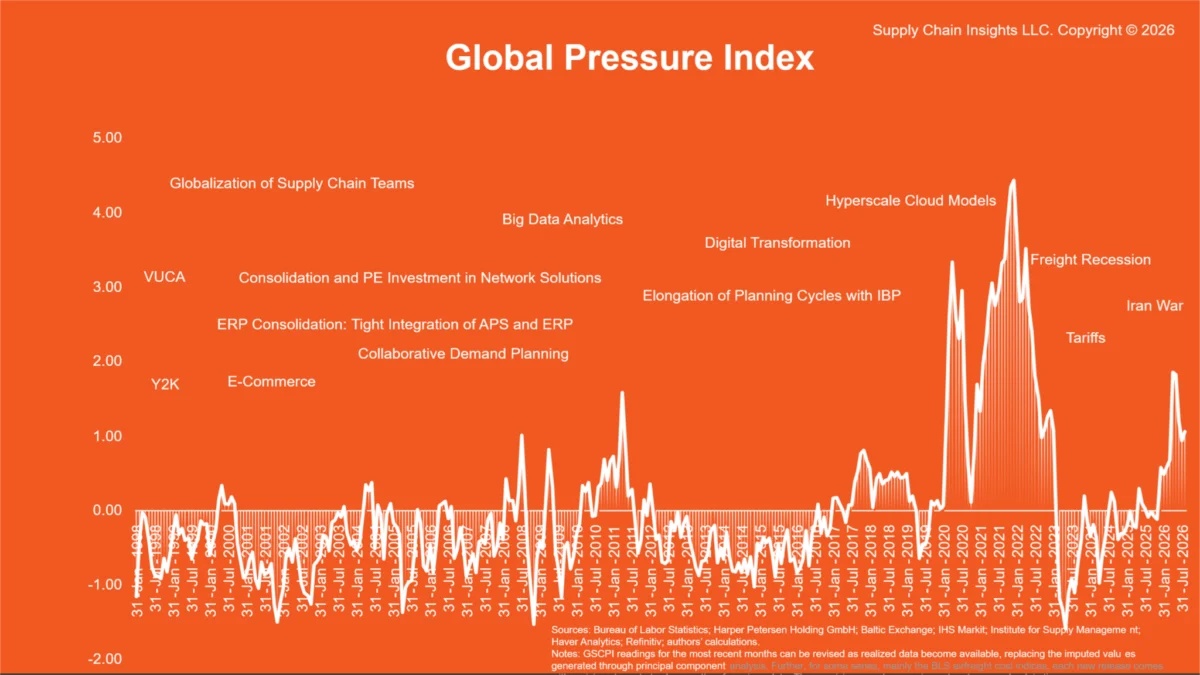
The classic parable of the boiling frog—where a creature, slowly subjected to rising temperatures, fails to realize the danger until it is too late—has become an eerie mirror for the state of global supply chain management. As market volatility and operational complexity surge, many organizations are attempting to solve 21st-century problems by doubling down on 20th-century processes.
Instead of jumping out of the pot, industry leaders are attempting to "automate" inefficiency, applying sophisticated AI agents to outdated, rigid workflows. This article explores why the current path of incrementalism is a recipe for stagnation and how companies can fundamentally redefine their supply chain architectures to survive the heat.
The Illusion of Progress: Automation vs. Transformation
There is a dangerous trend sweeping across boardrooms: the rush to deploy "agentics" and AI agents without first questioning the underlying processes they are intended to support. Companies frequently mistake historical practices for "best practices," digitizing existing workflows that were never designed for the current era of hyper-volatility.
When an organization automates a flawed process, it does not achieve innovation; it merely achieves faster failure. The rush to implement Artificial Intelligence—specifically LLMs and agent-based systems—often ignores the prerequisite of a stable, data-driven foundation. Before an AI agent can effectively "act" on behalf of a supply chain manager, the enterprise must define what "good" looks like. Without clear behavioral parameters, these agents risk exacerbating the very volatility they were hired to mitigate.
The Global Pressure Index
To navigate this, we must look at the Global Pressure Index. Historically, supply chains operated in predictable cycles. Today, the index reveals a permanent shift toward non-linear, high-frequency shocks. Ignoring these metrics is equivalent to the frog ignoring the thermometer in the water. The data suggests that companies must transition from reactive monitoring to predictive orchestration.
A Five-Step Roadmap for Structural Change
To avoid the fate of the frog, organizations must pivot from mere automation to structural transformation. This requires a rigorous five-step framework:
- Redefine the Core: Stop automating legacy processes. Evaluate whether a process is necessary before applying technology to it.
- Establish Data Semantics: Move beyond "data lakes" toward a functional semantic layer that allows different systems to speak the same language.
- Clarify Governance: Eliminate the "Major Scrum"—the disorganized, chaotic struggle for decision-making power that plagues large-scale supply chain operations.
- Upscale Talent: Invest in fundamental supply chain education to ensure that the human workforce understands the mechanics of the systems they manage.
- Strategic AI Integration: Distinguish between hype and utility. Focus on AI as a tool for insight and value creation, not just a shortcut for task execution.
Redefining the Relationship with Data: The Semantic Necessity
In the current supply chain landscape, "orchestration" has become a hollow buzzword. Many technology leaders confuse the mechanics of data movement with the holistic orchestration of processes, technology, and organizational workflows.
The industry is currently sitting on a goldmine: roughly 80% of supply chain data remains unused. This data is often unstructured, trapped in emails, contracts, and internal communications, while the systems of record focus exclusively on structured transactional data. To bridge this gap, companies must build a semantic layer—a framework that maps unstructured data to business outcomes.

Key Paradigms to Challenge:
- Transactional Efficacy vs. Business Outcomes: A transaction is not a strategy. Focusing solely on order throughput often hides underlying compliance issues.
- The System of Record Fallacy: Just because data is in an ERP does not mean it is useful for decision-making.
- The Myth of the Integrated Supply Chain: A "tightly integrated" supply chain is often a fragile one. Over-connection to an ERP can amplify the bullwhip effect, turning minor demand fluctuations into massive supply shocks.
The "Major Scrum": Governance as a Competitive Advantage
If you watch a group of four-year-olds playing soccer, you see a "scrum"—a frantic, disorganized pile of bodies chasing the ball. Many global corporations operate their supply chain planning meetings with this same level of chaotic lack of direction.
The larger the organization, the more acute the problem. In my consultations, I consistently find that companies lack a clear "Decision Matrix." There is no clarity on who is responsible for a decision, who influences it, and who must be informed. When governance is ill-defined, the planning process becomes a political exercise rather than a value-driven operation. To solve this, organizations must explicitly define the roles of global, divisional, and regional teams for every planning horizon.
The AI Strategy: Beyond the Agentic Hype
When executives talk about AI, they are almost exclusively talking about "Agents." While the ability for an AI to act autonomously is exciting, it is the lowest-hanging fruit and potentially the most dangerous.
Categorizing AI Advancements:
- Agents and Agentics: The ability to execute tasks.
- Insights (LLMs/JEV): The ability to synthesize and interpret complexity.
- Deep Learning/Neurosymbolic AI: The "brains" behind the operation, providing better engines for forecasting and optimization.
- Data Transformation: The foundational layer that makes everything else possible.
The error lies in attempting to build the "Agent" before building the "Brain." You cannot expect an agent to behave intelligently if the enterprise hasn’t defined the required behaviors, the governance, and the semantic rules of engagement.
Rethinking "Connect": The Hidden Contractual Gap
In 2002, during a Gartner analyst call, a group of over 100 experts struggled to define the difference between a Purchase Order and a Sales Order. The realization was striking: from a transactional perspective, they are mirrors of one another. However, from a contractual and governance perspective, they are worlds apart.
The supply chain industry is mired in the "Wild West" of contract compliance. Deductions, penalties, and terms of service are rarely tracked in a system of record. Because order-to-cash processes are disconnected from the unstructured data found in legal contracts, companies suffer from constant revenue leakage.

True connectivity is not just about linking systems; it is about linking meaning. It is about connecting the structured transactional data (the order) with the unstructured contractual data (the terms). Until this is achieved, "touchless" supply chains will remain a fantasy, perpetually mired in price, credit, and master data exceptions.
Implications and Future Outlook
The lesson for the modern supply chain leader is clear: the temperature in the pot is rising. Those who continue to rely on the "integrated" models of the 2010s are failing to see the volatility inherent in today’s landscape.
The path forward requires a shift in mindset. We must stop prioritizing the "how" (automation) over the "why" (business outcomes). We must demand better governance, build robust semantic layers for our data, and treat contractual compliance as a first-class citizen of the supply chain.
Industry Collaboration
For those looking to deepen their engagement with these concepts, events like CSCMP Edge offer a crucial forum for cross-industry learning. By bringing together leaders from manufacturing and IT, we can begin to dismantle the silos that prevent real innovation.
Furthermore, leveraging advanced analytical tools—such as the AskLora.AI platform—can provide the objective benchmarking needed to assess organizational maturity. By utilizing ten years of financial data, maturity models, and risk assessments, companies can move from guessing to knowing.
The era of the "boiling frog" is drawing to a close. The organizations that thrive will be those that have the courage to jump out of the pot, redefine their core, and build a supply chain that is not just connected, but truly intelligent.


 Evan Lee Salim
 Nila Kartika Wati
 Dwi Wanna
 Muslim
 Nana Wu
