
 Siti Muinah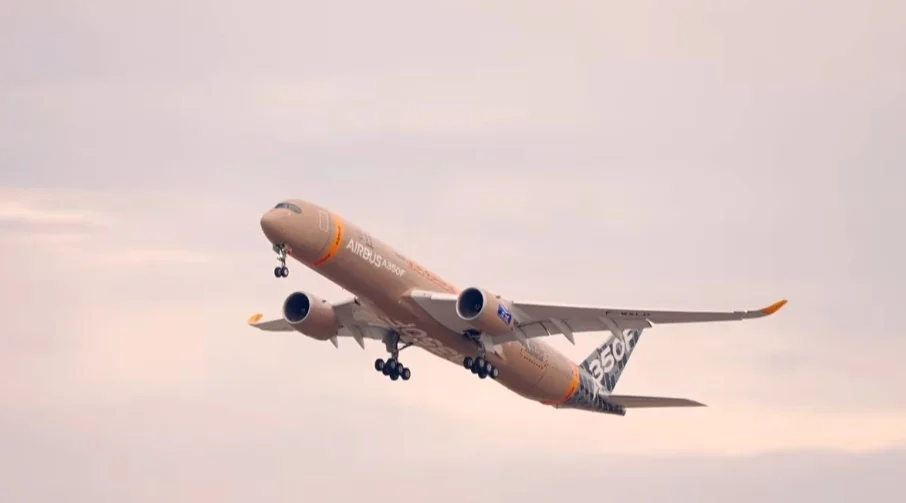
By: Editorial Desk
The global air cargo sector is abuzz with speculation following reports that US-based cargo specialist Kalitta Air is the clandestine customer behind a significant order for eight Airbus A350 freighters. While the order was officially logged in Airbus’s August data as an "undisclosed" transaction, industry insiders and financial analysts are increasingly pointing to the Michigan-based carrier as the buyer. This potential move signals a seismic shift in strategy for an airline historically dominated by Boeing’s iconic widebody platforms.
The Mystery Behind the August Order
In late August 2026, Airbus published its monthly order and delivery report, revealing that an unnamed customer had placed a firm order for eight of its next-generation A350F aircraft. Given the A350F’s positioning as a premium, long-haul freighter designed to replace older, less fuel-efficient models, the identity of the buyer became the subject of intense speculation across the aerospace industry.
According to reports citing Reuters, Kalitta Air—a cornerstone of the US air freight market—is the firm behind the contract. The order represents a strategic pivot for the company, which has traditionally relied on a fleet composed almost exclusively of Boeing aircraft. If confirmed, this would mark a major victory for Airbus in the North American market, further intensifying the rivalry between the European manufacturer and its US counterpart, Boeing, in the lucrative freighter segment.
A Calculated Approach: The Official Response
Despite the widespread reporting, Kalitta Air has maintained a posture of caution and neutrality. When approached for comment, a spokesperson for the airline opted for a carefully measured response, confirming that the carrier is indeed looking toward the future of its fleet but stopping short of acknowledging a signed contract.
"Kalitta Air is evaluating the Airbus A350F platform as part of our long-term fleet planning," the spokesperson stated. "At this time, we remain in the evaluation phase and have no aircraft order to announce."
This diplomatic non-denial is standard in aviation circles, where commercial negotiations are often subject to strict confidentiality agreements. Analysts suggest that the carrier’s focus is currently on balancing its immediate operational needs with long-term carbon emission targets and fuel efficiency mandates—a balancing act that the A350F is specifically designed to address.
Chronology of Fleet Evolution: From 747s to 777s and Beyond
To understand why Kalitta Air might be considering the A350F, one must look at the recent history of its fleet transformation. For decades, Kalitta Air has been synonymous with the Boeing 747, utilizing the "Queen of the Skies" to anchor its global cargo network. However, as the 747 program reached its conclusion and environmental regulations tightened, the carrier initiated a deliberate transition toward more efficient twin-engine widebodies.

2025: The 777-300ER Pivot
The most significant step in this evolution occurred in 2025, when Kalitta Air entered into an agreement with lessor AerCap to introduce the Boeing 777-300ERSF (Extended Range Special Freighter). This "Big Twin" program was designed to provide the capacity of a 747 with the operating economics of a modern twin-engine jet.
By the end of 2026, aircraft tracking data from Planespotters.net confirms that all seven of the contracted 777-300ER conversions have been successfully delivered to Kalitta. These aircraft now operate alongside the airline’s existing fleet of eight production 777Fs and a substantial fleet of 19 Boeing 747-400s, which include both production freighters and converted units.
The integration of the A350F would be the natural progression of this modernization, offering a newer, cleaner, and potentially more efficient alternative as the airline prepares for the eventual retirement of its remaining 747-400 assets.
Supporting Data: The Airbus A350F Momentum
The A350F is gaining significant traction in the market. Since its launch, Airbus has secured 115 orders for the freighter variant from at least 14 different customers. The year 2026 has been particularly strong, with 34 firm orders booked in the first nine months alone.
The Prototype Milestone
The program hit a critical technical milestone on August 29, 2026, when the A350F prototype conducted its maiden flight from Toulouse, France. This successful test flight kicked off an intensive nine-month campaign designed to subject the airframe to rigorous real-world conditions.
Certification and Regulatory Hurdles
The aircraft is currently undergoing testing to meet the stringent safety requirements of both the European Union Aviation Safety Agency (EASA) and the US Federal Aviation Administration (FAA). Airbus is specifically targeting compliance with the latest Amendment 27 safety regulations, which include advanced fire suppression systems and structural integrity benchmarks. If the current timeline holds, the manufacturer expects to achieve certification by mid-2027, allowing for the first deliveries to commence shortly thereafter.
Strategic Implications: Why the A350F?
The potential addition of the A350F to the Kalitta fleet is not merely a replacement exercise; it is a strategic maneuver that carries several significant implications for the global air cargo landscape.
1. Fuel Efficiency and Sustainability
The primary driver for the A350F adoption is its superior fuel burn compared to older cargo aircraft. With the aviation industry under increasing pressure to reach "Net Zero" emissions by 2050, the A350F offers a significant reduction in CO2 emissions per tonne-mile. For a long-haul carrier like Kalitta, the cost savings associated with fuel efficiency are compounded by the ability to market "green" cargo capacity to sustainability-focused shippers.

2. Diversifying the Fleet Portfolio
By moving toward a mixed-manufacturer fleet, Kalitta Air may be looking to hedge its operational risk. Relying solely on one OEM (Original Equipment Manufacturer) can create vulnerabilities related to production delays, supply chain disruptions, or technical issues grounded in a single aircraft family. Introducing the Airbus platform allows the carrier to leverage the strengths of both Boeing and Airbus, potentially improving their negotiating position for future maintenance, repair, and overhaul (MRO) services.
3. Payload and Range Capabilities
The A350F is specifically designed to compete in the heavy-lift category. With its large main-deck cargo door and advanced composite fuselage, it is optimized for high-density, long-range routes. This aligns perfectly with Kalitta’s core business model, which involves moving time-sensitive, high-value freight across intercontinental routes. The ability to carry more payload further while consuming less fuel is the "holy grail" for cargo operators, and the A350F is marketed as exactly that.
4. The Competitive Landscape
The race between the Boeing 777-8F and the Airbus A350F is defining the next decade of air cargo. While Boeing has traditionally held a dominant share of the freighter market, the success of the A350F is forcing a re-evaluation of regional loyalties. If a bastion of US-based, Boeing-reliant aviation like Kalitta Air chooses to embrace the A350F, it could trigger a "domino effect," encouraging other major carriers to diversify their fleets as well.
Looking Ahead: The Path to 2027
As the industry looks toward 2027, the focus will remain on the certification progress of the A350F. For Kalitta Air, the coming months will likely involve deep internal analysis of how the aircraft fits into their network topology.
Whether the August order is indeed the start of a long-term partnership between Kalitta and Airbus or part of a broader, more complex strategic move, one thing is certain: the era of the 747 is slowly waning, and the race for the next generation of widebody freighters is now in full swing.
For the aviation community, the silence from Kalitta regarding the "undisclosed" order is just as loud as a formal announcement. In the high-stakes world of international cargo, the aircraft you choose to fly defines the market share you will command for the next twenty years. As Kalitta continues to modernize, the A350F stands as a formidable contender for the future of their fleet, promising a new chapter in the carrier’s illustrious history.


 Raul Delapena Setiawan
 Evan Lee Salim
 Dwi Wanna
 Muslim
 Nana Wu

 Rifan Muazin