
 Reynand Wu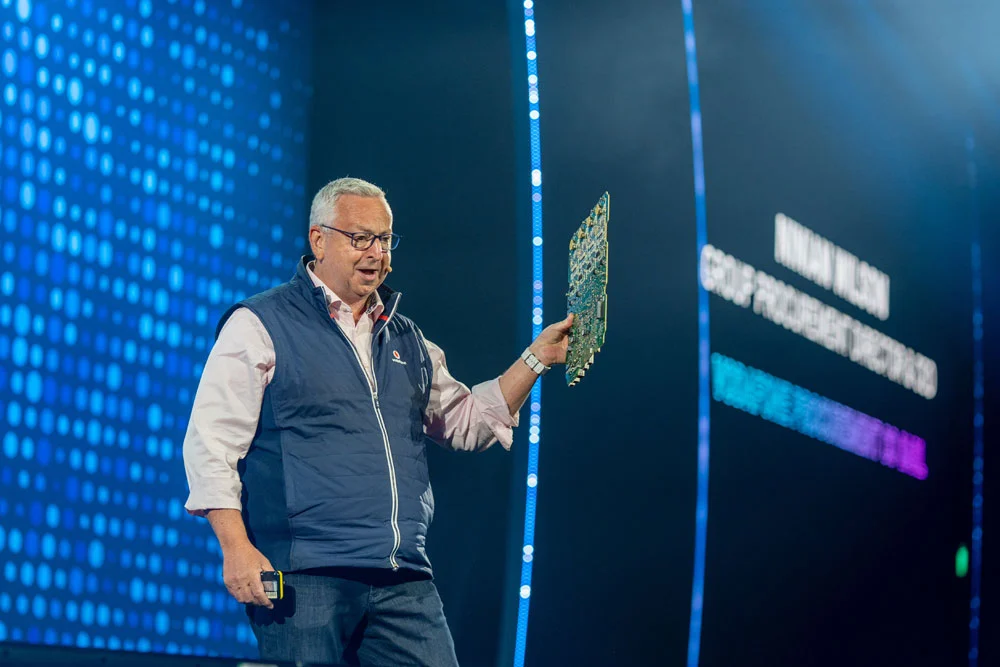
In the rapidly evolving landscape of global enterprise, the Chief Procurement Officer (CPO) finds themselves at a definitive crossroads. As artificial intelligence (AI) transitions from a speculative buzzword to an operational imperative, the procurement function is facing an existential audit. While some leaders are actively architecting the future of their departments, a prevailing sentiment of apprehension, skepticism, and inertia threatens to leave a significant portion of the profession behind.
The mandate is clear: for procurement leaders, the era of passive observation has ended. The choice is no longer between adopting AI or ignoring it; the choice is between seizing the reins of transformation or being forcibly reshaped by the currents of technological disruption.
The State of the Function: A Crisis of Confidence
It is a rarity in executive circles to encounter a CPO who is willing to publicly indict the collective inertia of their peers. Typically, boardroom discourse revolves around tactical implementation: how to launch a pilot program, how to calculate ROI, or how to redesign the operating model for an AI-native future. However, a recent, candid conversation with a prominent CPO revealed a far more uncomfortable reality: a culture of widespread fear and professional paralysis.
"What I’ve seen from an AI perspective with, I’d say, the majority of procurement people is very much that they are sticking their head in the sand," the executive noted. "There’s a phenomenal amount of fear out there."
This admission highlights a critical disconnect. While industry forums are flooded with white papers on generative AI and machine learning, the boots-on-the-ground reality in many global procurement teams is one of hesitation. This is not merely a lack of technical knowledge; it is a profound psychological barrier driven by institutional, financial, and personal pressures.
The Anatomy of Paralysis: Why Procurement Hesitates
To understand the current stagnation, one must look at the multi-layered dynamics fueling the reluctance of procurement leaders to embrace AI.
1. The Fear of Professional Obsolescence
The most visceral driver of this "head-in-the-sand" mentality is the existential threat to traditional procurement roles. As AI models demonstrate an increasing capacity for contract analysis, spend categorization, and automated sourcing, practitioners fear for the long-term viability of their own positions. This instinctive paranoia often manifests as a rejection of the technology itself, rather than an exploration of how it might augment the human practitioner.
2. The Burden of Legacy Failures
Procurement departments are still reeling from the "tech-debt" of the last two decades. The industry has a long, documented history of high-cost, high-complexity software rollouts that promised revolution but delivered only marginal gains. This legacy of unproven returns has left CFOs deeply skeptical of large-scale digital investments. Consequently, procurement leaders, wary of failing to meet ambitious KPIs, are hesitant to stake their professional reputation on yet another expensive, unproven technological pivot.
3. The Financial Friction
The economics of AI are proving to be a moving target. The token costs associated with high-performance LLMs (Large Language Models) are volatile, and the infrastructure costs required to integrate these tools into existing ERP environments are spiraling. For a function that is traditionally measured by its ability to drive cost savings, the high barrier to entry of enterprise-grade AI makes it a difficult sell to the C-suite.
4. The Myth of the "Silver Bullet"
Finally, there is the persistent, misplaced belief that a single, monolithic "box" will arrive to solve every procurement pain point. Many leaders are waiting for a comprehensive, plug-and-play solution that will manage everything from category management to risk mitigation. In reality, the AI revolution is being built through iterative, modular, and fragmented applications. The search for a perfect, singular solution is, in itself, a form of procrastination.
A Call to Action: The "Do It or Have It Done" Paradigm
The criticism leveled by this CPO is brutal, yet it serves as a vital wake-up call. It mirrors the sentiment expressed by Vodafone CPO Ninian Wilson at the World Procurement Congress 2025. Wilson’s message to the global procurement community was stark and uncompromising: "Adopt AI and bring it in. I encourage you all to seize the opportunity, seize the day and don’t sit and wait, because you either do it to yourselves or it gets done to you."
This "do it to yourselves" philosophy is the new litmus test for leadership. Those who proactively integrate AI into their procurement workflows are not just improving efficiency; they are defining the parameters of their future roles. Those who wait for the technology to reach a state of "maturity" or "perfect safety" will find their departments hollowed out by external forces, outsourced to automated service providers, or marginalized by more agile competitors.
Tomorrow’s Procurement Leader: The Path Forward
The path to transformation requires a shift in mindset. It demands that leaders stop viewing AI as an "IT project" and start treating it as a core competency for the modern supply chain professional.
Chronology of the Shift
- The Era of Automation (2010–2020): Procurement focused on digitizing records and streamlining procurement-to-pay (P2P) processes.
- The Era of Intelligence (2020–2024): Predictive analytics and basic machine learning entered the fold, mostly to assist in spend analysis and contract management.
- The Era of Generative Agency (2025–Present): AI is moving from a tool that analyzes data to an agent that executes tasks, negotiates with suppliers, and proactively manages supply chain risk.
The current challenge is that many organizations are still operating in the "Era of Automation" while the rest of the business world is sprinting into the "Era of Generative Agency."
Data-Driven Reality
According to recent industry benchmarks, procurement functions that have successfully integrated AI-driven insights report a 15–20% reduction in cycle times for contract renewals and a 10% improvement in spend compliance. Conversely, departments that rely on manual, legacy processes are reporting increasing "talent friction"—the inability to recruit top-tier analysts who refuse to work in environments that lack modern technological infrastructure.
Implications for Global Enterprise
The implications of this divide are far-reaching. If procurement remains the "brakes" of the organization—slowing down the enterprise due to technological obsolescence—it will lose its seat at the strategic table.
1. The Evolution of the CPO Profile
The CPO of 2030 will not be a transactional gatekeeper. They will be an architect of ecosystems, an expert in data governance, and a leader of change management. Those who are currently hiding from AI will lack the skills to lead these hybrid human-AI teams.
2. Redefining Value Creation
Value is no longer just about the unit price of goods. It is about speed-to-market, risk resilience, and the ability to extract actionable intelligence from vast, unstructured data sets. AI is the only tool capable of handling the scale and velocity of these requirements.
3. The Risk of Inaction
Inaction is no longer a neutral stance. By choosing not to invest in AI, leaders are effectively making a choice to increase their long-term cost structures, decrease their responsiveness to market volatility, and sacrifice their competitive advantage.
Powering the Future in Austin
The conversation around the future of procurement is not merely academic; it is taking center stage at industry-defining events. This week, the Procurement Leaders community congregates in Austin, Texas, for Tomorrow’s Procurement Leader 2026.
Featuring insights from global powerhouses like Flex, Clorox, Meta, and Cisco, the event is designed to bridge the gap between fear and action. It serves as a laboratory for the ideas that will define the next decade of supply chain excellence. For those attending, the goal is simple: to move beyond the paralyzing narratives of the past and start building the AI-enabled reality of the future.
Conclusion: The Choice is Yours
The harsh assessment provided by our anonymous CPO serves as a necessary provocation. It is easy to be paralyzed by the complexity of AI, the fear of job displacement, or the skepticism of the CFO. It is much harder—but ultimately more rewarding—to face those challenges head-on.
The era of the "passive practitioner" is over. The technology is here, the risks are well-documented, and the rewards for early adoption are becoming increasingly clear. As the industry moves toward a future defined by algorithmic agility, the message from the front lines is unequivocal: you can either lead the charge into the new frontier of procurement, or you can watch as the landscape changes around you.
The decision is yours. Will you seize the day, or will you be the one that gets done to?


 Raul Delapena Setiawan
 Evan Lee Salim
 Dwi Wanna
 Muslim
 Nana Wu

 Rifan Muazin